Obado Samson O, Bot Christopher, Nilsson Daniel, Andersson Bjorn, Kelly John M
Department of Infectious and Tropical Diseases, London School of Hygiene and Tropical Medicine, London, UK.
Genome Biol. 2007;8(3):R37. doi: 10.1186/gb-2007-8-3-r37.
Trypanosomes are parasitic protozoa that diverged early from the main eukaryotic lineage. Their genomes display several unusual characteristics and, despite completion of the trypanosome genome projects, the location of centromeric DNA has not been identified.
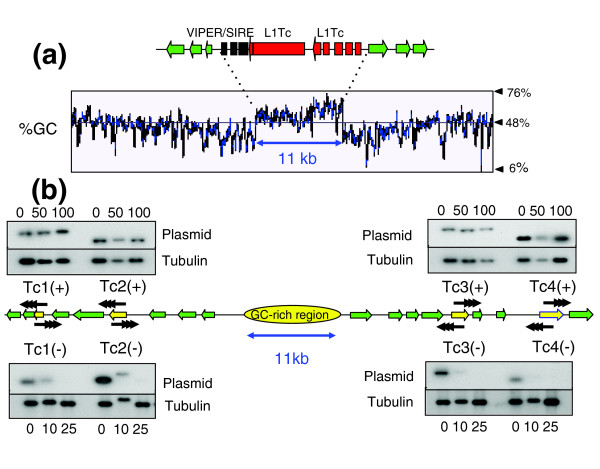
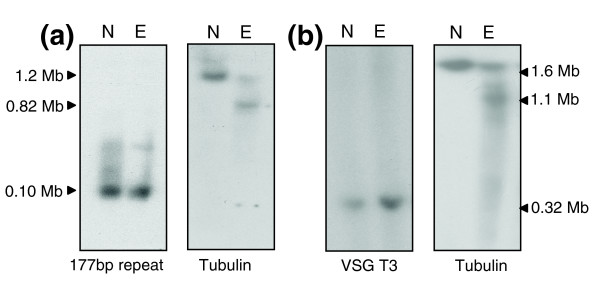
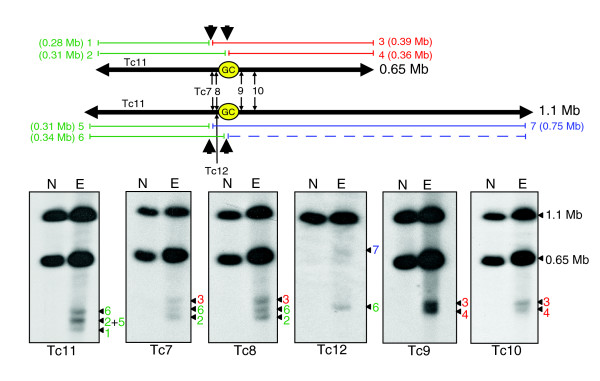
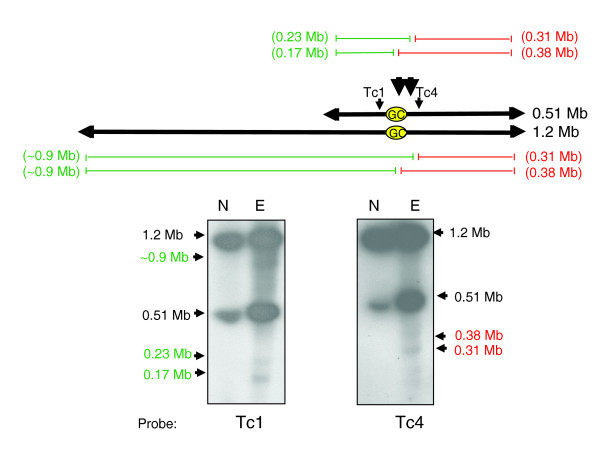
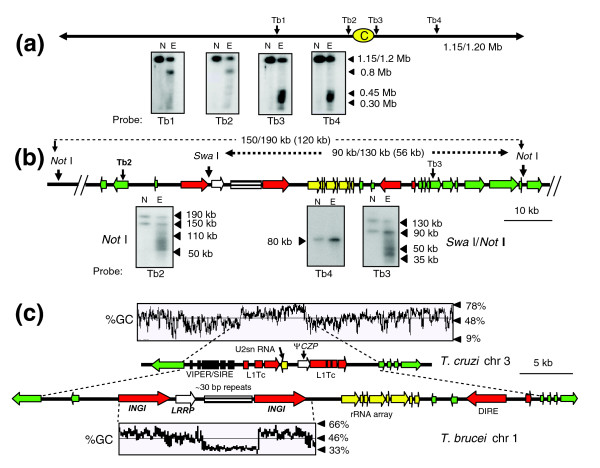
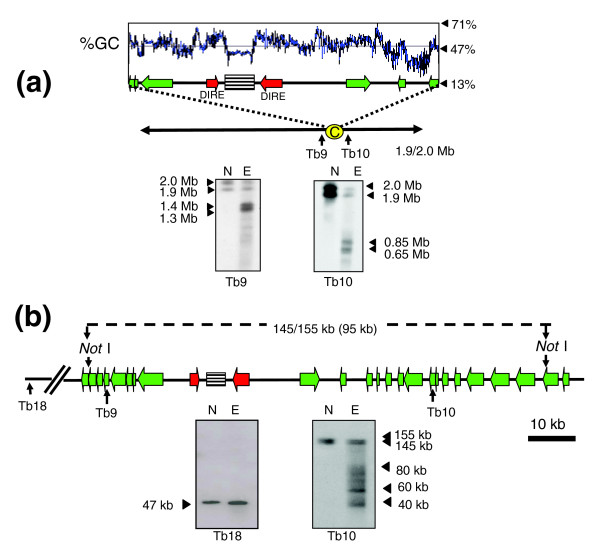
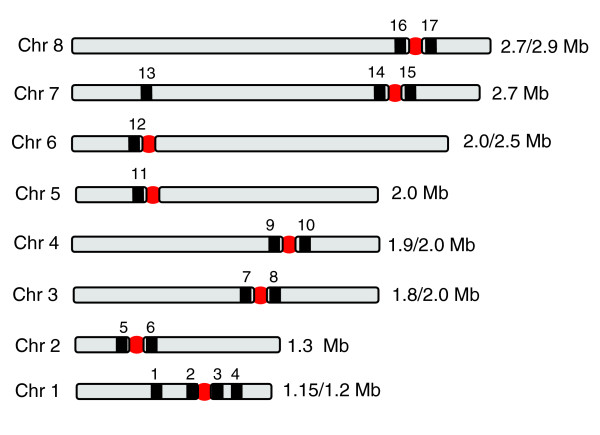
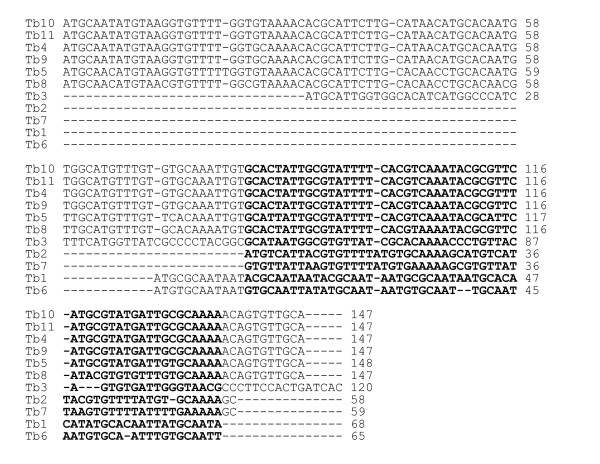
We report evidence on the location and nature of centromeric DNA in Trypanosoma cruzi and Trypanosoma brucei. In T. cruzi, we used telomere-associated chromosome fragmentation and found that GC-rich transcriptional 'strand-switch' domains composed predominantly of degenerate retrotranposons are a shared feature of regions that confer mitotic stability. Consistent with this, etoposide-mediated topoisomerase-II cleavage, a biochemical marker for active centromeres, is concentrated at these domains. In the 'megabase-sized' chromosomes of T. brucei, topoisomerase-II activity is also focused at single loci that encompass regions between directional gene clusters that contain transposable elements. Unlike T. cruzi, however, these loci also contain arrays of AT-rich repeats stretching over several kilobases. The sites of topoisomerase-II activity on T. brucei chromosome 1 and T. cruzi chromosome 3 are syntenic, suggesting that centromere location has been conserved for more than 200 million years. The T. brucei intermediate and minichromosomes, which lack housekeeping genes, do not exhibit site-specific accumulation of topoisomerase-II, suggesting that segregation of these atypical chromosomes might involve a centromere-independent mechanism.
The localization of centromeric DNA in trypanosomes fills a major gap in our understanding of genome organization in these important human pathogens. These data are a significant step towards identifying and functionally characterizing other determinants of centromere function and provide a framework for dissecting the mechanisms of chromosome segregation.
锥虫是早期从主要真核生物谱系中分化出来的寄生原生动物。它们的基因组表现出几个不同寻常的特征,尽管完成了锥虫基因组计划,但着丝粒DNA的位置尚未确定。
我们报告了关于克氏锥虫和布氏锥虫着丝粒DNA位置和性质的证据。在克氏锥虫中,我们利用端粒相关的染色体片段化,发现富含GC的转录“链开关”结构域主要由简并反转录转座子组成,是赋予有丝分裂稳定性区域的共同特征。与此一致的是,依托泊苷介导的拓扑异构酶II切割,一种活跃着丝粒的生化标记,集中在这些结构域。在布氏锥虫的“兆碱基大小”染色体中,拓扑异构酶II活性也集中在单个位点,这些位点包含含有转座元件的定向基因簇之间的区域。然而,与克氏锥虫不同的是,这些位点还包含延伸数千碱基的富含AT的重复序列阵列。布氏锥虫1号染色体和克氏锥虫3号染色体上拓扑异构酶II活性位点是同线的,这表明着丝粒位置在超过2亿年的时间里一直保守。缺乏管家基因的布氏锥虫中间染色体和微型染色体没有表现出拓扑异构酶II的位点特异性积累,这表明这些非典型染色体的分离可能涉及一种不依赖着丝粒的机制。
锥虫着丝粒DNA的定位填补了我们对这些重要人类病原体基因组组织理解上的一个主要空白。这些数据是朝着鉴定着丝粒功能的其他决定因素并对其进行功能表征迈出的重要一步,并为剖析染色体分离机制提供了一个框架。