McMahon Anne, Butovich Igor A, Mata Nathan L, Klein Martin, Ritter Robert, Richardson James, Birch David G, Edwards Albert O, Kedzierski Wojciech
Department of Ophthalmology, The University of Texas Southwestern Medical Center, Dallas, TX 75390-9057, USA.
Mol Vis. 2007 Feb 26;13:258-72.
Autosomal dominant Stargardt disease-3 (STGD3) is caused by mutations in elongase of very long chain fatty acids-4 (ELOVL4). The goal of this study was to generate and characterize heterozygous and homozygous knockin-mice that carry a human STGD3 pathogenic mutation in the mouse Elovl4 gene.
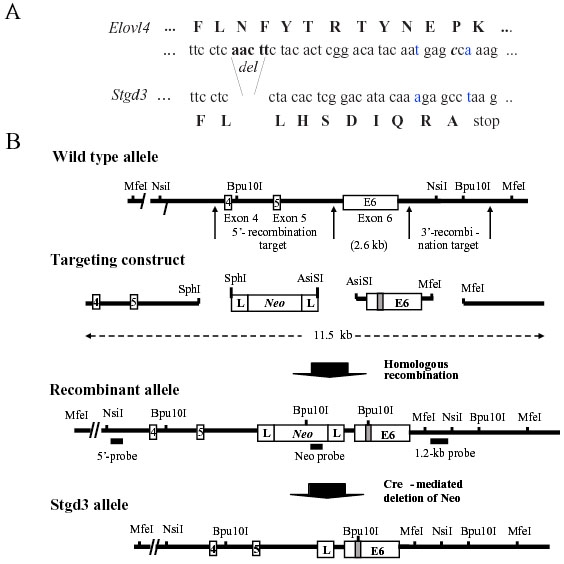
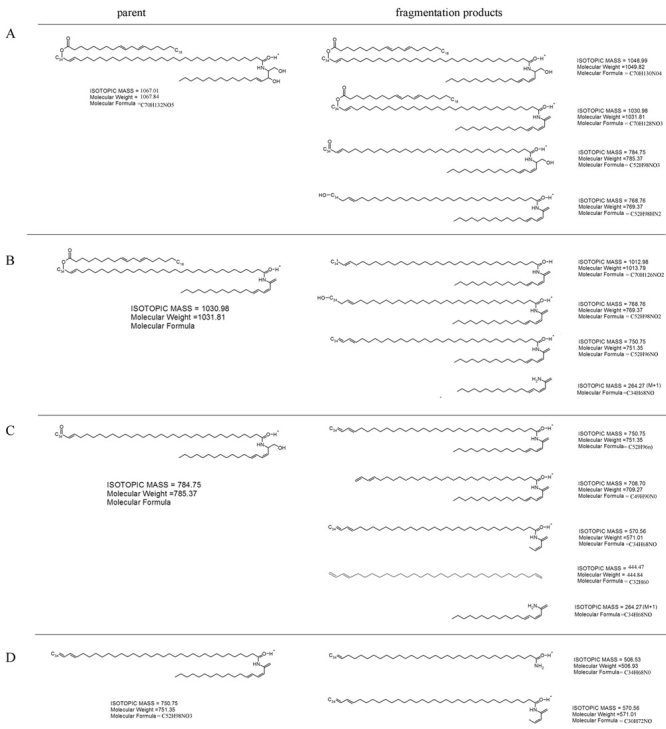
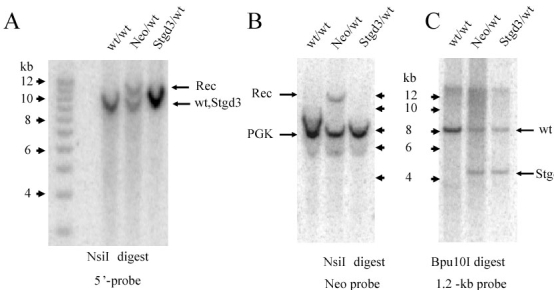
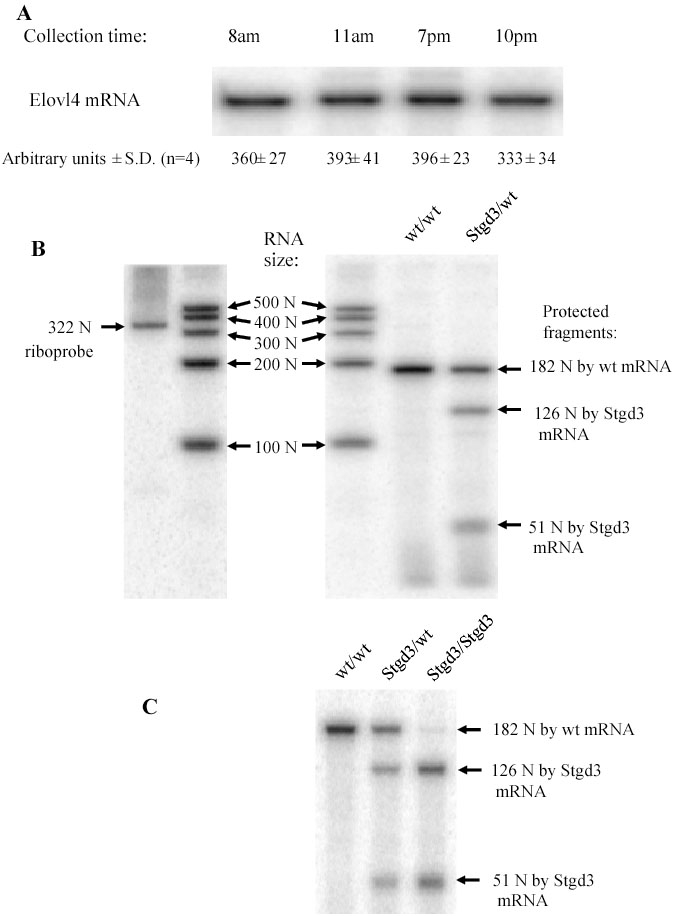
Recombinant Stgd3-knockin mice were generated using a DNA construct which introduced a pathogenic five-base pair deletion and two point mutations in exon 6 of the Elovl4 gene. Stgd3-mouse genotypes were confirmed by Southern blot analysis and expression of wild-type (wt) and mutated Elovl4 mRNAs assayed by nuclease protection assay. The retinal phenotype of heterozygous Stgd3 mice was characterized by morphological studies, elecroretinographic (ERG) analysis and assay of lipofuscin accumulation. Homozygous Stgd3 mice were examined for both retinal and gross morphology. They were also analyzed for skin morphology and skin barrier function, and for epidermal lipid content using high performance liquid chromatography (HPLC) combined with mass spectrometry (MS).
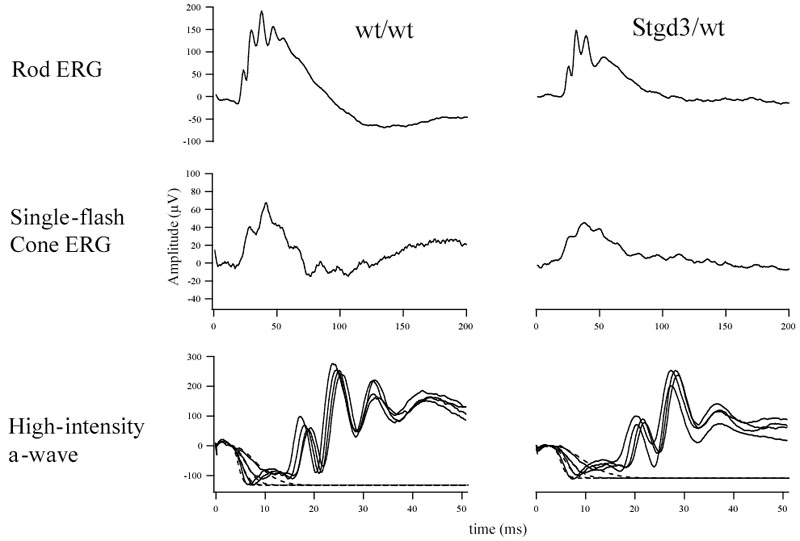
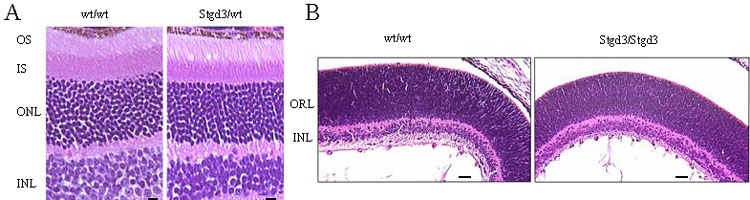
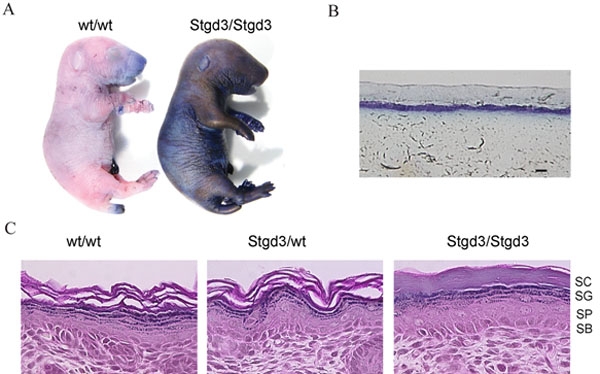
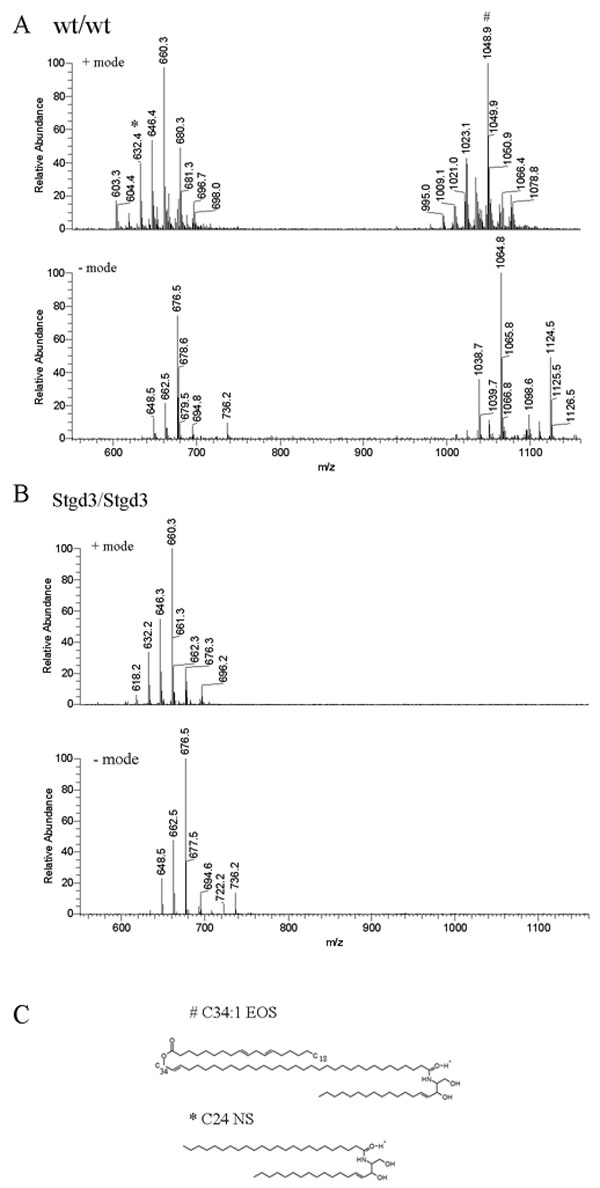
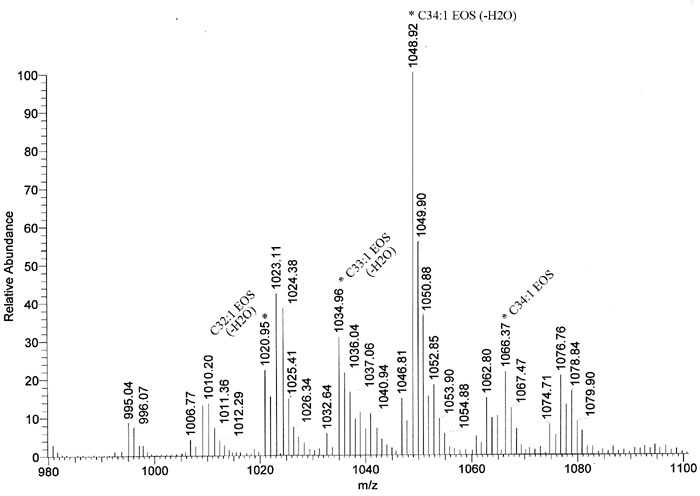
The Stgd3 allele codes for a truncated mouse Elovl4 protein, which also contains the same aberrant 8-amino acid C-terminus encoded by the human pathogenic STGD3 allele. Heterozygous Stgd3 mice expressed equal amounts of both wt and mutant Elovl4 mRNAs in the retina, showed no significant changes in retinal morphology, but did show accumulation of lipofuscin and reduced visual function. Homozygous Stgd3 mice were born with an expected Mendelian frequency, without any initial gross anatomical or behavioral abnormalities. By 6-12 h postpartum, they became dehydrated and died. A skin permeability assay detected a defect in epidermal barrier function. Homozygous mutant epidermis expressed a normal content of mutated Elovl4 mRNA and contained all four epidermal cellular layers. HPLC/MS analysis of epidermal lipids revealed the presence of all barrier lipids with the exception of the complete absence of acylceramides, the critical lipids for barrier function of the skin.
The generated Stgd3-knockin mice are a genetic model of human STGD3 and reproduce features of the human disease: accumulation of lipofuscin and reduced visual functions. Homozygous Stgd3 mice showed a complete absence of acylceramides from the epidermis. Their absence suggests a role for Elovl4 in acylceramide synthesis, and in particular, a role in the synthesis of the unique very long chain C30-C40 fatty acids present in skin acylceramides.
常染色体显性遗传性斯特格黄斑变性3型(STGD3)由超长链脂肪酸延长酶4(ELOVL4)突变引起。本研究的目的是构建并鉴定在小鼠Elovl4基因中携带人类STGD3致病突变的杂合子和纯合子敲入小鼠。
使用一种DNA构建体生成重组Stgd3敲入小鼠,该构建体在Elovl4基因的第6外显子中引入了一个致病的5个碱基对缺失和两个点突变。通过Southern印迹分析确认Stgd3小鼠的基因型,并通过核酸酶保护试验检测野生型(wt)和突变型Elovl4 mRNA的表达。通过形态学研究、视网膜电图(ERG)分析和脂褐素积累检测对杂合子Stgd3小鼠的视网膜表型进行鉴定。对纯合子Stgd3小鼠进行视网膜和大体形态学检查。还对其皮肤形态和皮肤屏障功能以及使用高效液相色谱(HPLC)结合质谱(MS)分析表皮脂质含量。
Stgd3等位基因编码一种截短的小鼠Elovl4蛋白,其还包含由人类致病STGD3等位基因编码的相同异常8个氨基酸的C末端。杂合子Stgd3小鼠在视网膜中表达等量的wt和突变型Elovl4 mRNA,视网膜形态无明显变化,但确实显示脂褐素积累和视觉功能降低。纯合子Stgd3小鼠以预期的孟德尔频率出生,没有任何初始的大体解剖或行为异常。产后6 - 12小时,它们出现脱水并死亡。皮肤通透性试验检测到表皮屏障功能缺陷。纯合子突变表皮表达正常含量的突变型Elovl4 mRNA,并包含所有四层表皮细胞层。表皮脂质的HPLC/MS分析显示除完全缺乏酰基神经酰胺外所有屏障脂质均存在,酰基神经酰胺是皮肤屏障功能的关键脂质。
所构建的Stgd3敲入小鼠是人类STGD3的遗传模型,并重现了人类疾病的特征:脂褐素积累和视觉功能降低。纯合子Stgd3小鼠的表皮完全缺乏酰基神经酰胺。它们的缺失表明ELOVL4在酰基神经酰胺合成中起作用,特别是在皮肤酰基神经酰胺中存在的独特超长链C30 - C40脂肪酸的合成中起作用。