Nguon K, Ladd B, Sajdel-Sulkowska E M
Adv Space Res. 2006;38(6):1138-1147. doi: 10.1016/j.asr.2006.09.007.
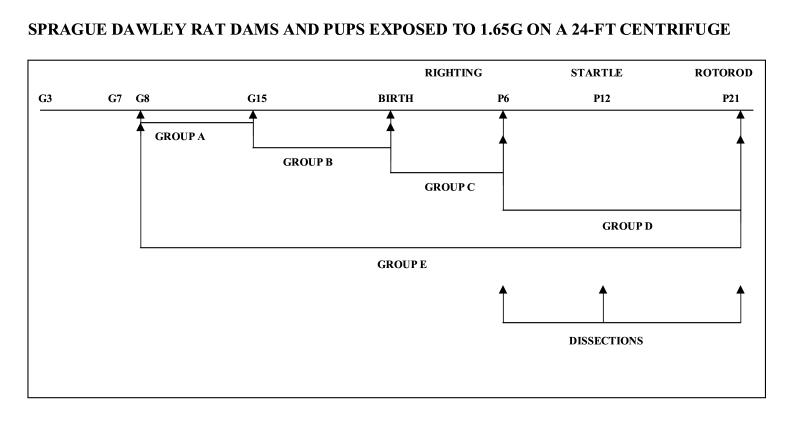
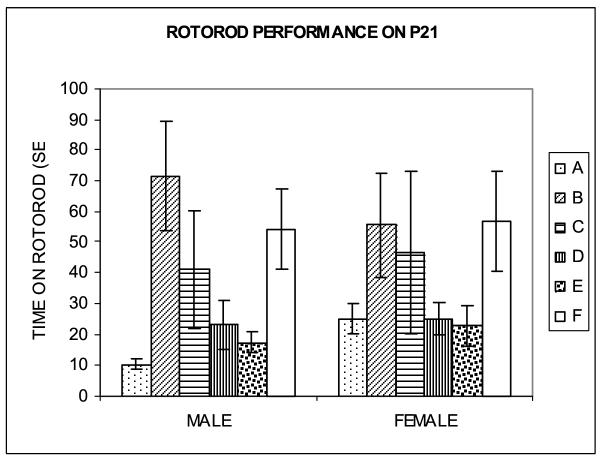
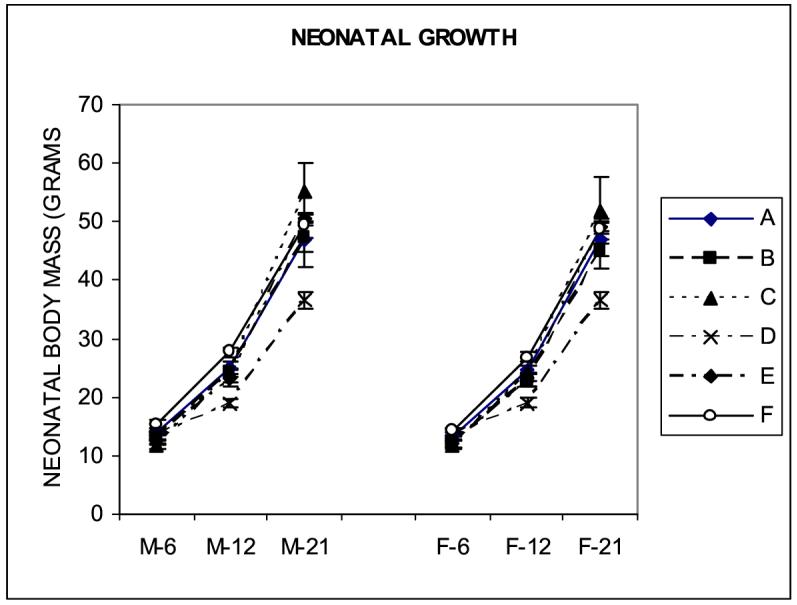
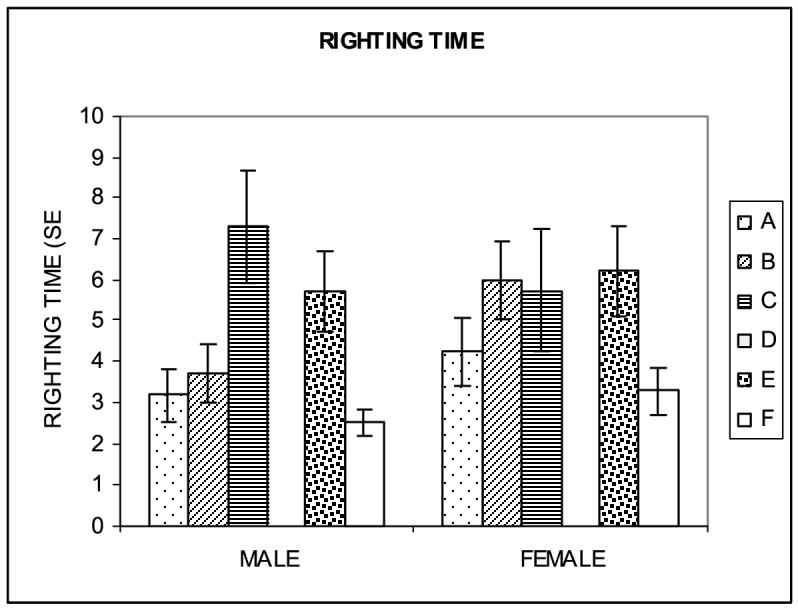
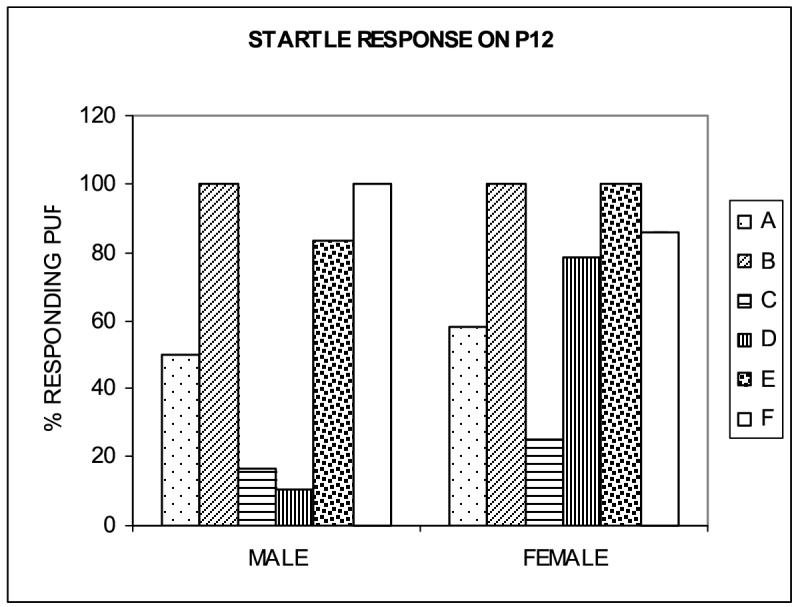
We previously reported that perinatal exposure to hypergravity affects cerebellar structure and motor coordination in rat neonates. In the present study, we explored the hypothesis that neonatal cerebellar structure and motor coordination may be particularly vulnerable to the effects of hypergravity during specific developmental stages. To test this hypothesis, we compared neurodevelopment, motor behavior and cerebellar structure in rat neonates exposed to 1.65 G on a 24-ft centrifuge during discrete periods of time: the 2(nd) week of pregnancy [gestational day (G) 8 through G15; group A], the 3(rd) week of pregnancy (G15 through birth on G22/G23; group B), the 1(st) week of nursing [birth through postnatal day (P) 6; group C], the 2(nd) and 3(rd) weeks of nursing (P6 through P21; group D), the combined 2(nd) and 3(rd) weeks of pregnancy and nursing (G8 through P21; group E) and stationary control (SC) neonates (group F). Prenatal exposure to hypergravity resulted in intrauterine growth retardation as reflected by a decrease in the number of pups in a litter and lower average mass at birth. Exposure to hypergravity immediately after birth impaired the righting response on P3, while the startle response in both males and females was most affected by exposure during the 2(nd) and 3(rd) weeks after birth. Hypergravity exposure also impaired motor functions, as evidenced by poorer performance on a rotarod; while both males and females exposed to hypergravity during the 2(nd) and 3(rd) weeks after birth performed poorly on P21, male neonates were most dramatically affected by exposure to hypergravity during the second week of gestation, when the duration of their recorded stay on the rotarod was one half that of SC males. Cerebellar mass was most reduced by later postnatal exposure. Thus, for the developing rat cerebellum, the postnatal period that overlaps the brain growth spurt is the most vulnerable to hypergravity. However, male motor behavior is also affected by midpregnancy exposure to hypergravity, suggesting discrete and sexually dimorphic windows of vulnerability of the developing central nervous system to environmental perturbations.
我们之前报道过,围产期暴露于超重环境会影响新生大鼠的小脑结构和运动协调性。在本研究中,我们探讨了一个假说,即新生大鼠的小脑结构和运动协调性在特定发育阶段可能对超重环境的影响尤为敏感。为了验证这一假说,我们比较了在不同时间段暴露于24英尺离心机上1.65 G超重环境下的新生大鼠的神经发育、运动行为和小脑结构:妊娠第2周(妊娠日(G)8至G15;A组)、妊娠第3周(G15至G22/G23出生;B组)、哺乳第1周(出生至出生后第(P)6天;C组)、哺乳第2周和第3周(P6至P21;D组)、妊娠第2周和第3周与哺乳期合并(G8至P21;E组)以及静止对照组(SC)新生大鼠(F组)。产前暴露于超重环境导致宫内生长迟缓,表现为每窝幼崽数量减少以及出生时平均体重降低。出生后立即暴露于超重环境会损害出生后第3天的翻正反射,而出生后第2周和第3周暴露于超重环境对雄性和雌性的惊吓反射影响最大。超重暴露还会损害运动功能,如在转棒试验中表现较差;虽然出生后第2周和第3周暴露于超重环境的雄性和雌性在出生后第21天的表现都很差,但妊娠第2周暴露于超重环境的雄性新生大鼠受影响最为显著,此时它们在转棒上记录的停留时间仅为SC组雄性的一半。小脑质量在出生后后期暴露于超重环境时减少最为明显。因此,对于发育中的大鼠小脑,与脑生长突增期重叠的出生后时期对超重环境最为敏感。然而,雄性运动行为也会受到妊娠中期暴露于超重环境的影响,这表明发育中的中枢神经系统对环境扰动存在离散且具有性别差异的易损期。