Yang Kun, Ma Wenzhe, Liang Huanhuan, Ouyang Qi, Tang Chao, Lai Luhua
Beijing National Laboratory for Molecular Sciences, State Key Laboratory for Structural Chemistry of Unstable and Stable Species, College of Chemistry and Molecular Engineering, Peking University, Beijing, China.
PLoS Comput Biol. 2007 Mar 23;3(3):e55. doi: 10.1371/journal.pcbi.0030055. Epub 2007 Feb 7.
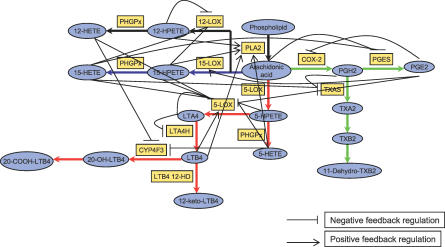
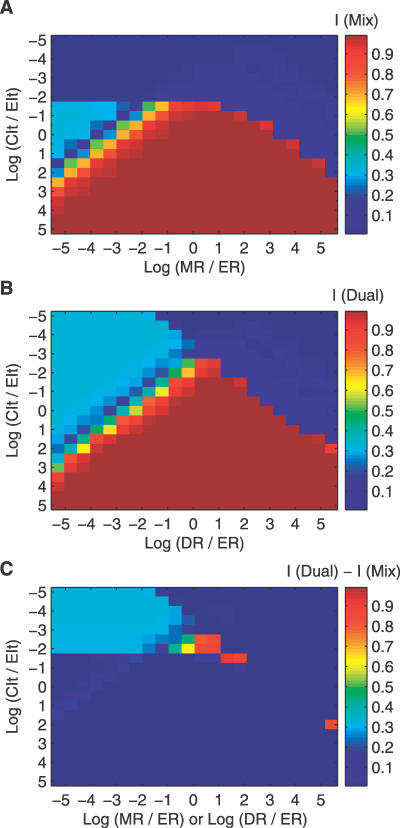
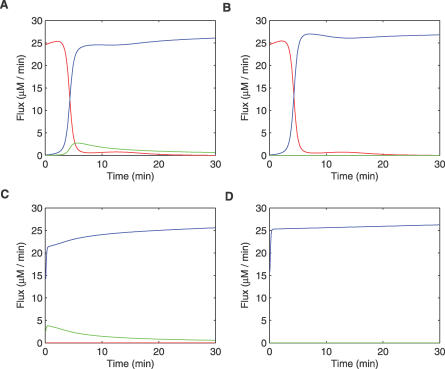
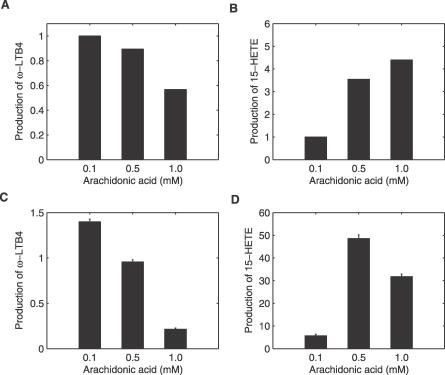
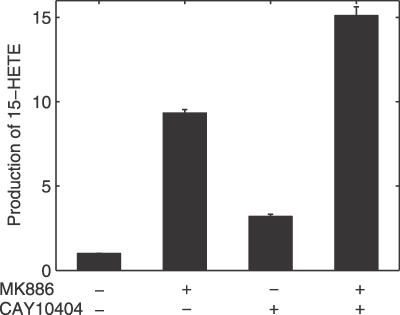
Drug molecules not only interact with specific targets, but also alter the state and function of the associated biological network. How to design drugs and evaluate their functions at the systems level becomes a key issue in highly efficient and low-side-effect drug design. The arachidonic acid metabolic network is the network that produces inflammatory mediators, in which several enzymes, including cyclooxygenase-2 (COX-2), have been used as targets for anti-inflammatory drugs. However, neither the century-old nonsteriodal anti-inflammatory drugs nor the recently revocatory Vioxx have provided completely successful anti-inflammatory treatment. To gain more insights into the anti-inflammatory drug design, the authors have studied the dynamic properties of arachidonic acid (AA) metabolic network in human polymorphous leukocytes. Metabolic flux, exogenous AA effects, and drug efficacy have been analyzed using ordinary differential equations. The flux balance in the AA network was found to be important for efficient and safe drug design. When only the 5-lipoxygenase (5-LOX) inhibitor was used, the flux of the COX-2 pathway was increased significantly, showing that a single functional inhibitor cannot effectively control the production of inflammatory mediators. When both COX-2 and 5-LOX were blocked, the production of inflammatory mediators could be completely shut off. The authors have also investigated the differences between a dual-functional COX-2 and 5-LOX inhibitor and a mixture of these two types of inhibitors. Their work provides an example for the integration of systems biology and drug discovery.
药物分子不仅与特定靶点相互作用,还会改变相关生物网络的状态和功能。如何在系统层面设计药物并评估其功能,成为高效低副作用药物设计中的关键问题。花生四烯酸代谢网络是产生炎症介质的网络,其中包括环氧合酶 -2(COX -2)在内的几种酶已被用作抗炎药物的靶点。然而,无论是百年历史的非甾体抗炎药,还是最近撤市的万络,都没有提供完全成功的抗炎治疗。为了更深入了解抗炎药物设计,作者研究了人类多形核白细胞中花生四烯酸(AA)代谢网络的动态特性。使用常微分方程分析了代谢通量、外源性AA效应和药物疗效。发现AA网络中的通量平衡对于高效安全的药物设计很重要。当仅使用5 -脂氧合酶(5 - LOX)抑制剂时,COX -2途径的通量显著增加,表明单一功能抑制剂不能有效控制炎症介质的产生。当COX -2和5 - LOX都被阻断时,炎症介质的产生可以完全关闭。作者还研究了双功能COX -2和5 - LOX抑制剂与这两种抑制剂混合物之间的差异。他们的工作为系统生物学与药物发现的整合提供了一个例子。