Yáñez Jaime A, Forrest M Laird, Ohgami Yusuke, Kwon Glen S, Davies Neal M
Department of Pharmaceutical Sciences, College of Pharmacy, Washington State University, Pullman, WA 99164, USA.
Cancer Chemother Pharmacol. 2008 Jan;61(1):133-44. doi: 10.1007/s00280-007-0458-z. Epub 2007 Mar 29.
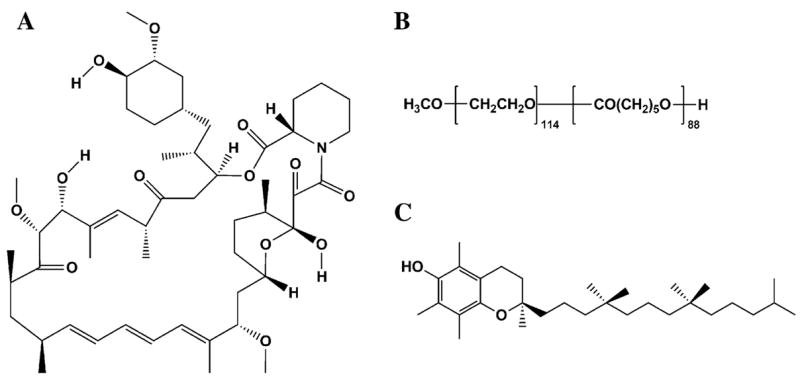
To determine the pharmacokinetics, tissue, and blood distribution of rapamycin PEG-block-poly(epsilon-caprolactone) (PEG-b-PCL) micelle formulations with and without the addition of alpha-tocopherol compared to control rapamycin in Tween 80/PEG 400/N,N-dimethylacetamide (DMA) (7:64:29).
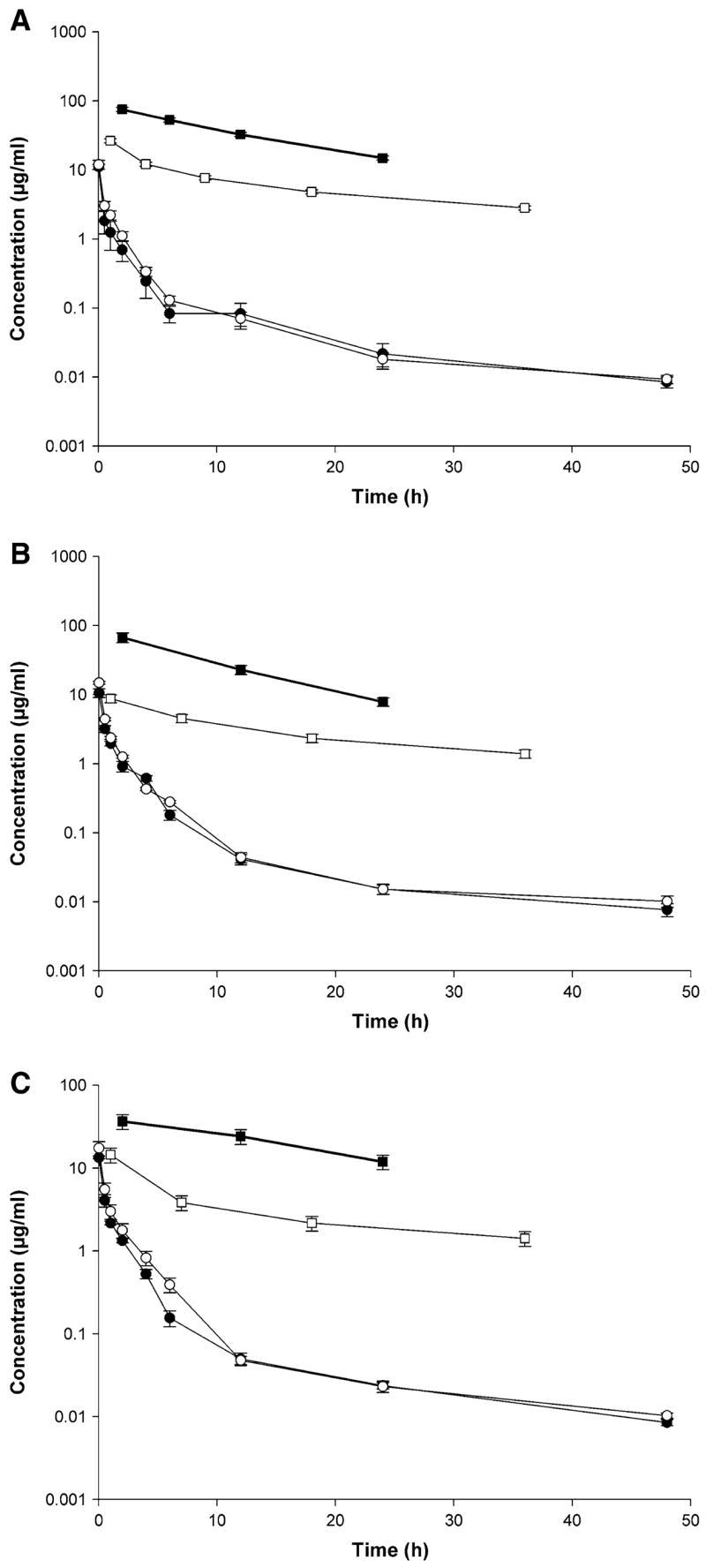
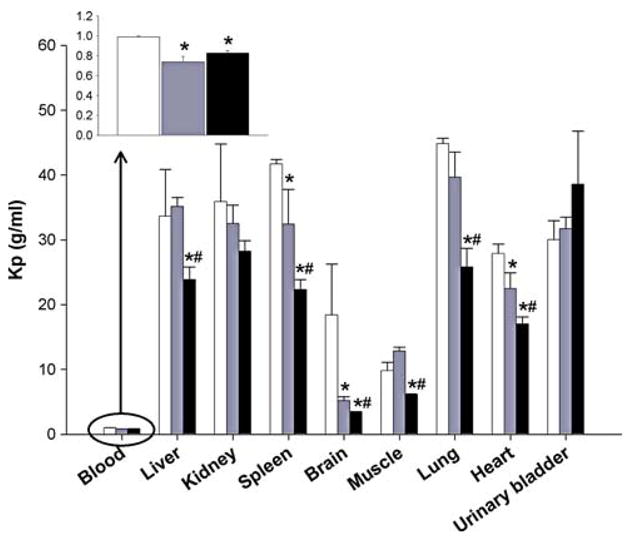
Rapamycin was incorporated at 10% w/w into PEG-b-PCL micelles (5:10 kDa) using a solvent extraction technique. The co-incorporation of 2:1 alpha-tocopherol:PEG-b-PCL was also studied. Rapamycin was quantified utilizing LC/MS in a Waters XTerra MS C18 column with 32-desmethoxyrapamycin as the internal standard. Male Sprague Dawley rats (N = 4 per group; approximately 200 g) were cannulated via the left jugular and dosed intravenously (IV) with the rapamycin control and micelle formulations (10 mg/kg, 1:9 ratio for rapamycin to PEG-b-PCL). For tissue distribution 24 h after IV dosing, whole blood, plasma, red blood cells, and all the representative tissues were collected. The tissues were rapidly frozen under liquid nitrogen and ground to a fine powder. The rapamycin concentrations in plasma and red blood cells were utilized to determine the blood distribution (partition coefficient between plasma and red blood cells). For the determination of the pharmacokinetic parameters, blood, plasma, and urine samples were collected over 48 h. The pharmacokinetic parameters were calculated using WinNonlin(R) (Version 5.1) software.
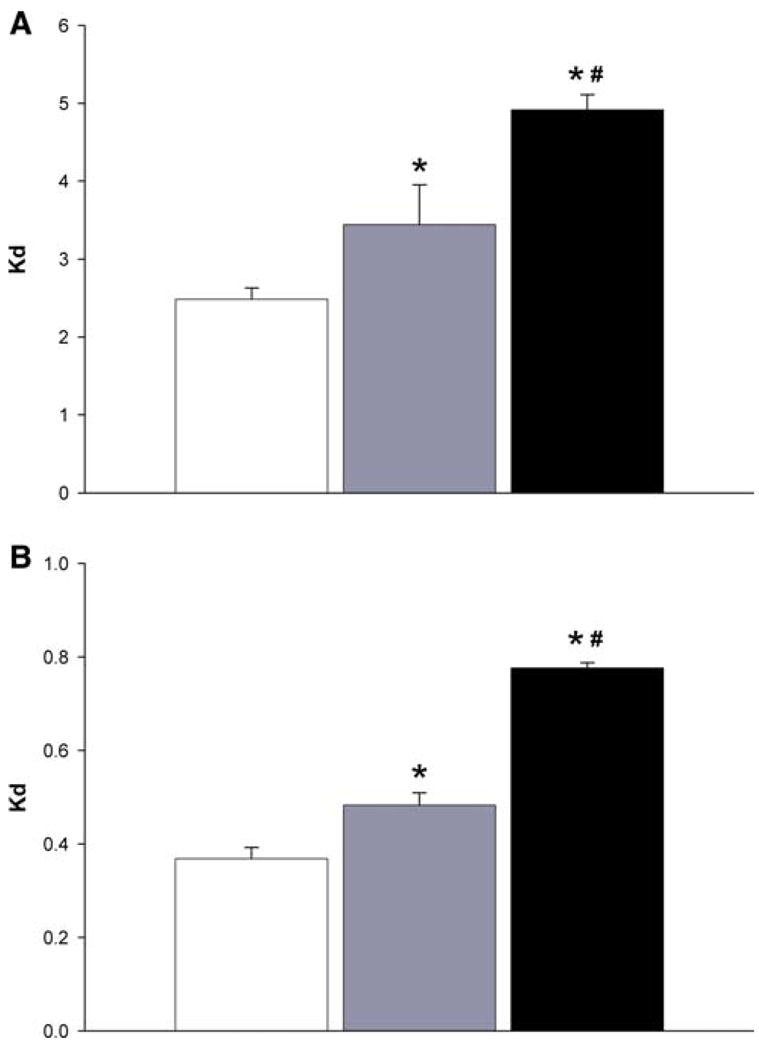
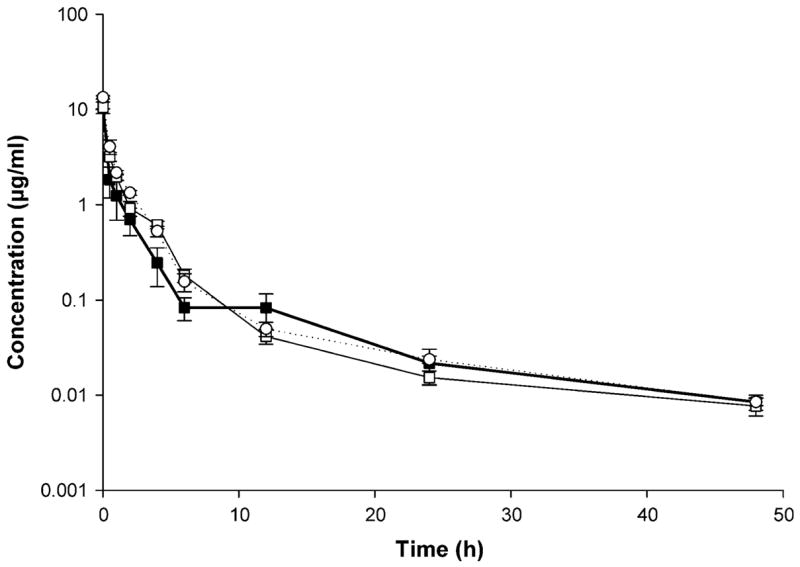
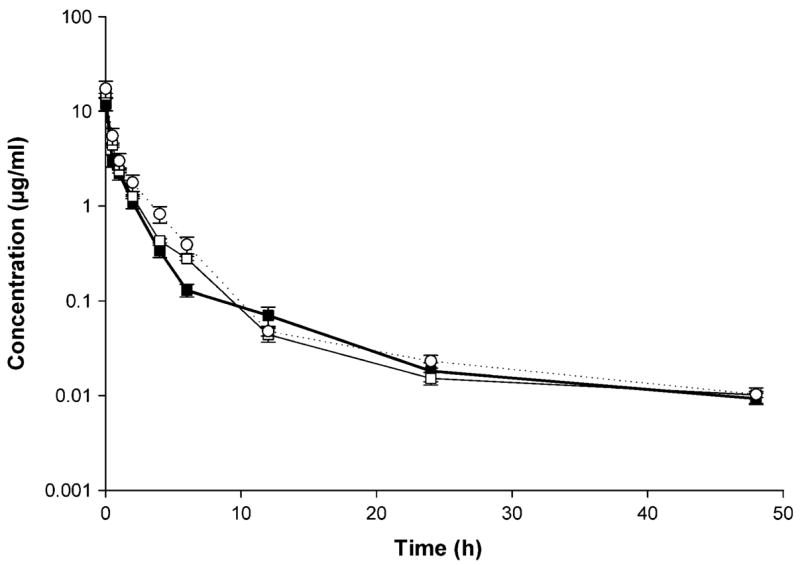
Rapamycin concentrations were considerably less in brain after administration of both micelle formulations compared to a rapamycin in the Tween 80/PEG 400/DMA control group. There was a 2-fold and 1.6-fold increase in the plasma fraction for rapamycin micelles with and without alpha-tocopherol. There was a decrease in volume of distribution for both formulations, an increase in AUC, a decrease in clearance, and increase in half life respectively for rapamycin in PEG-b-PCL + alpha-tocopherol micelles and in PEG-b-PCL micelles. There was no mortality with the micelle formulations compared to 60% mortality with rapamycin in Tween 80/PEG 400/DMA.
The decreased distribution into the brain of rapamycin in PEG-b-PCL micelles may ameliorate rapamycin neurotoxicity. Both micelle formulations increase rapamycin distribution in plasma, which could facilitate access into solid tumors. The micellar delivery systems of rapamycin impart in vivo controlled release, resulting in altered disposition, and dramatically reduced mortality.
与吐温80/聚乙二醇400/N,N - 二甲基乙酰胺(DMA)(7:64:29)中的对照雷帕霉素相比,确定添加和不添加α - 生育酚的雷帕霉素聚乙二醇 - 嵌段 - 聚(ε - 己内酯)(PEG - b - PCL)胶束制剂的药代动力学、组织和血液分布。
采用溶剂萃取技术,将10%(w/w)的雷帕霉素掺入PEG - b - PCL胶束(5:10 kDa)中。还研究了2:1的α - 生育酚:PEG - b - PCL的共掺入情况。以32 - 去甲氧基雷帕霉素为内标,利用液相色谱/质谱法在沃特世XTerra MS C18柱上对雷帕霉素进行定量。雄性Sprague Dawley大鼠(每组N = 4;约200 g)经左颈静脉插管,静脉注射(IV)雷帕霉素对照品和胶束制剂(10 mg/kg,雷帕霉素与PEG - b - PCL的比例为1:9)。静脉给药24小时后进行组织分布研究,收集全血、血浆、红细胞和所有代表性组织。组织在液氮下迅速冷冻并研磨成细粉。利用血浆和红细胞中的雷帕霉素浓度来确定血液分布(血浆与红细胞之间的分配系数)。为了确定药代动力学参数,在48小时内收集血液、血浆和尿液样本。使用WinNonlin®(版本5.1)软件计算药代动力学参数。
与吐温80/聚乙二醇400/DMA对照组中的雷帕霉素相比,两种胶束制剂给药后脑中的雷帕霉素浓度显著降低。含和不含α - 生育酚的雷帕霉素胶束的血浆分数分别增加了2倍和1.6倍。对于PEG - b - PCL + α - 生育酚胶束和PEG - b - PCL胶束中的雷帕霉素,两种制剂的分布容积均降低,AUC增加,清除率降低,半衰期增加。与吐温80/聚乙二醇400/DMA中雷帕霉素60%的死亡率相比,胶束制剂未导致死亡。
PEG - b - PCL胶束中雷帕霉素在脑中分布的减少可能会改善雷帕霉素的神经毒性。两种胶束制剂均增加了雷帕霉素在血浆中的分布,这可能有助于进入实体肿瘤。雷帕霉素的胶束递送系统在体内实现控释,导致处置改变,并显著降低死亡率。