Ruggero Mario A, Temchin Andrei N
Department of Communication Sciences and Disorders, The Hugh Knowles Center & Institute for Neuroscience, Northwestern University, Evanston, IL 60208, USA.
J Assoc Res Otolaryngol. 2007 Jun;8(2):153-66. doi: 10.1007/s10162-007-0081-z. Epub 2007 Mar 31.
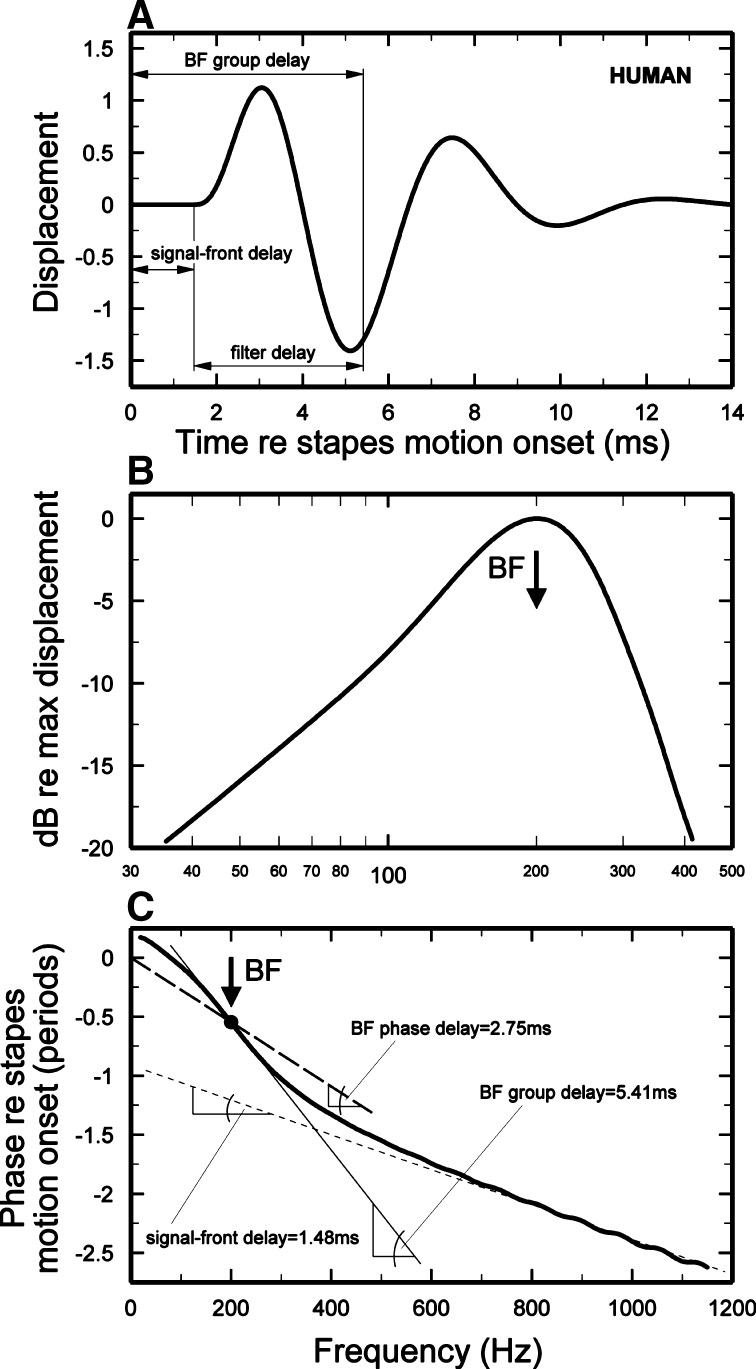
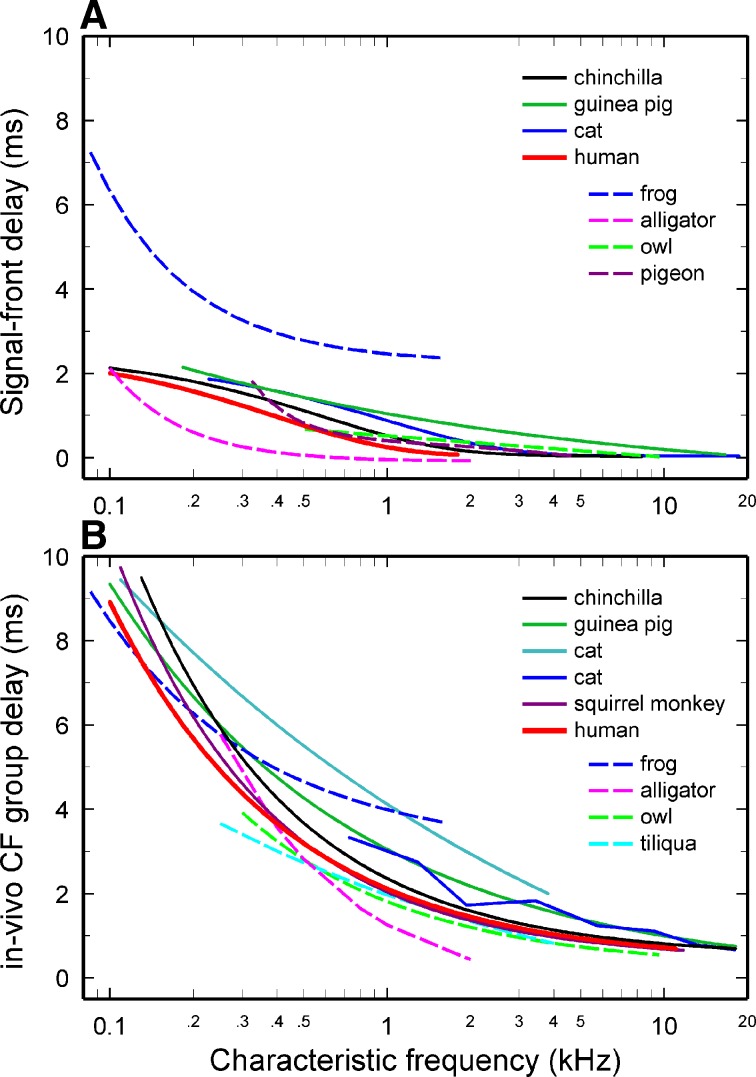
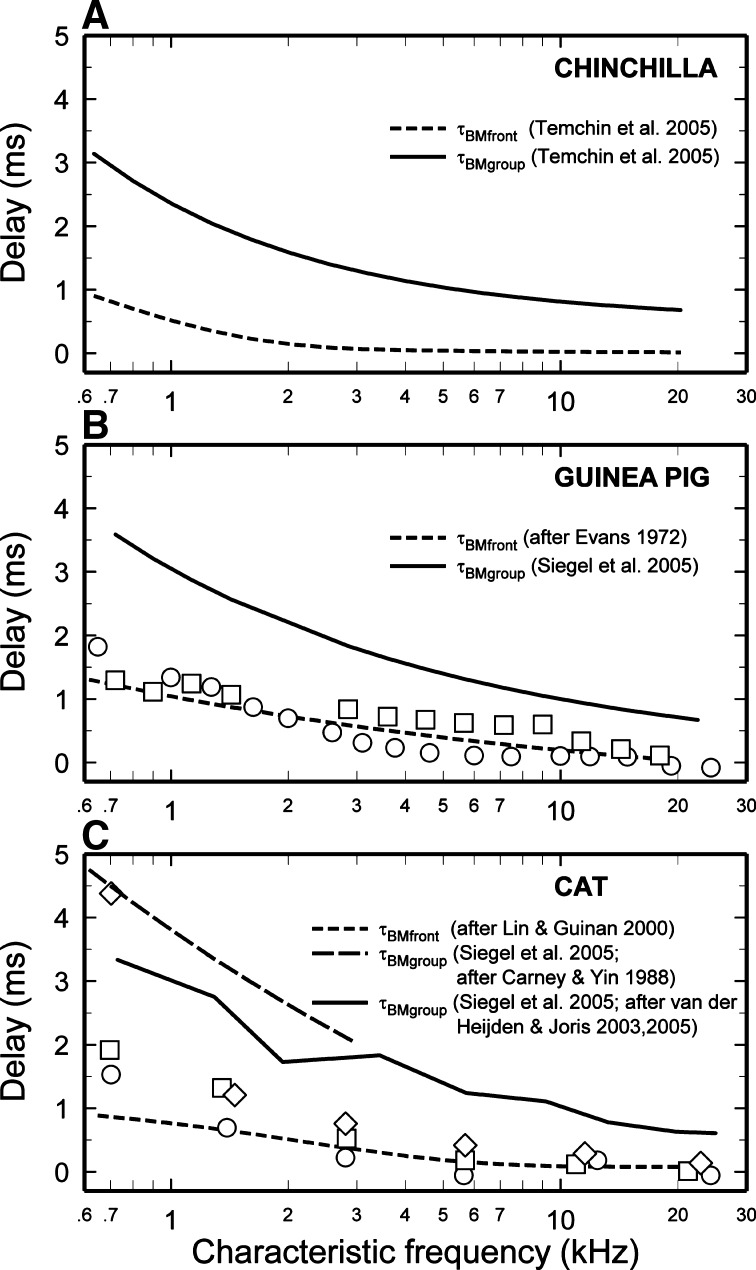
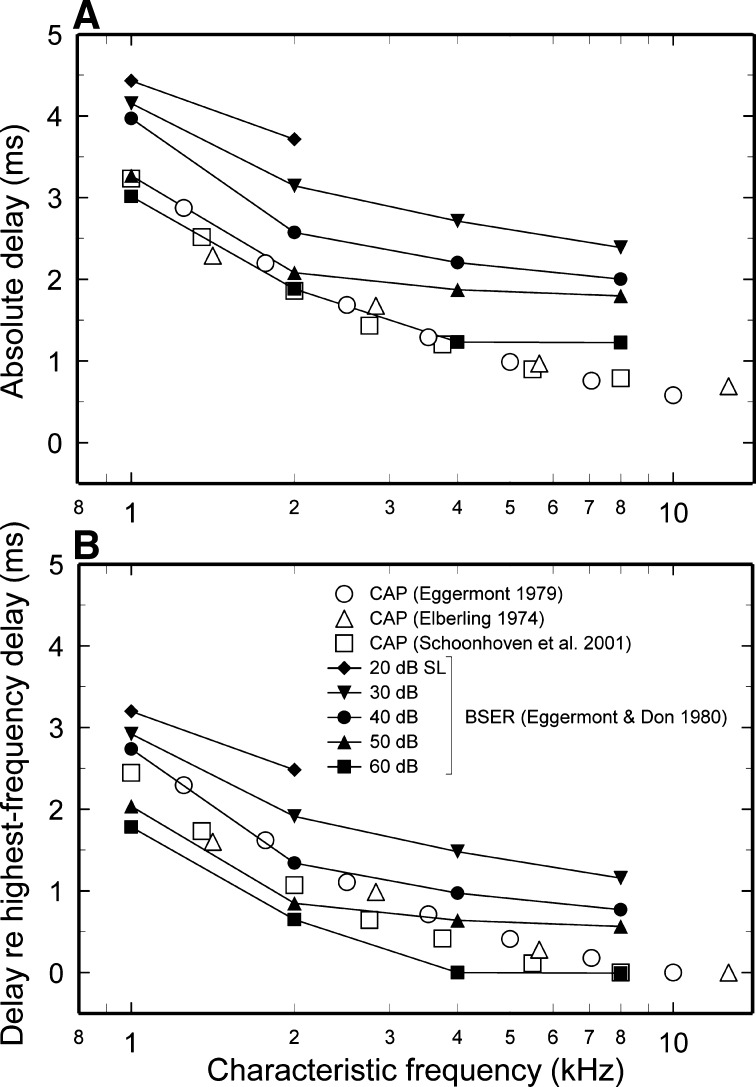
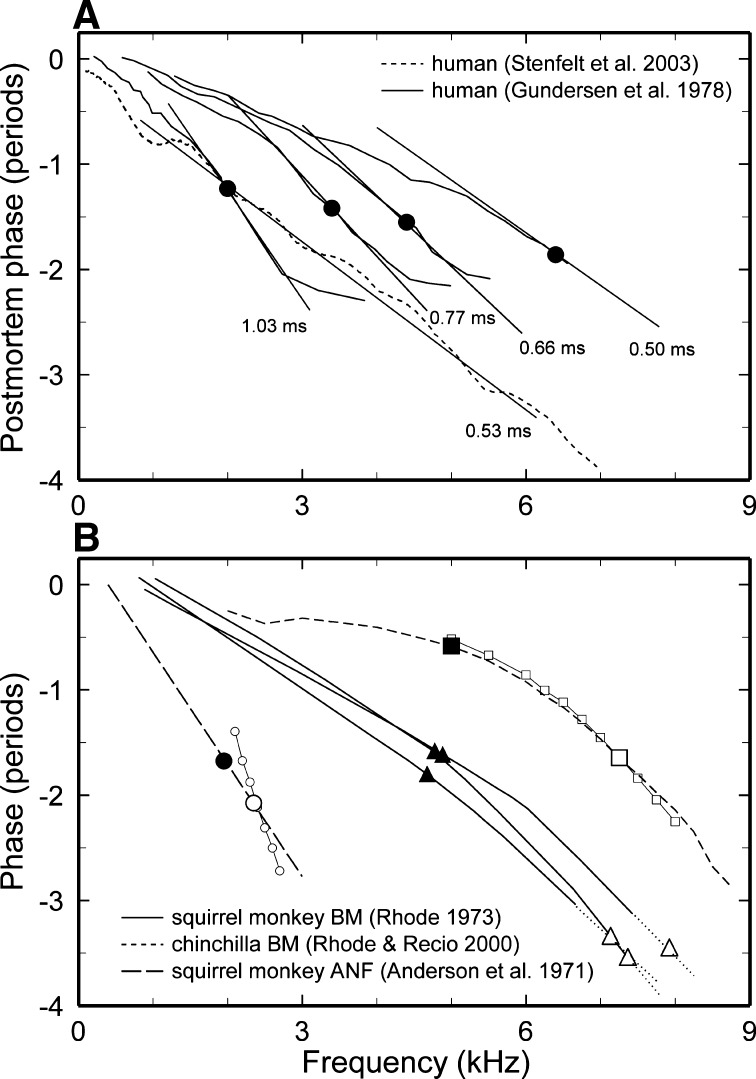
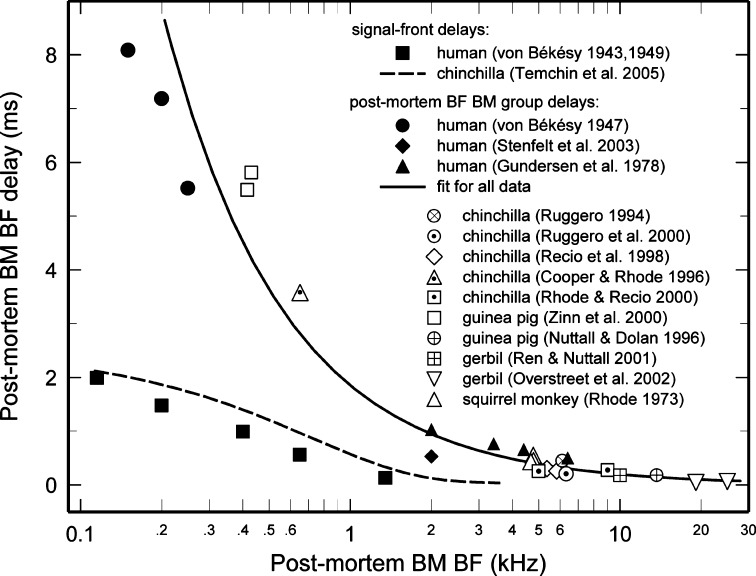
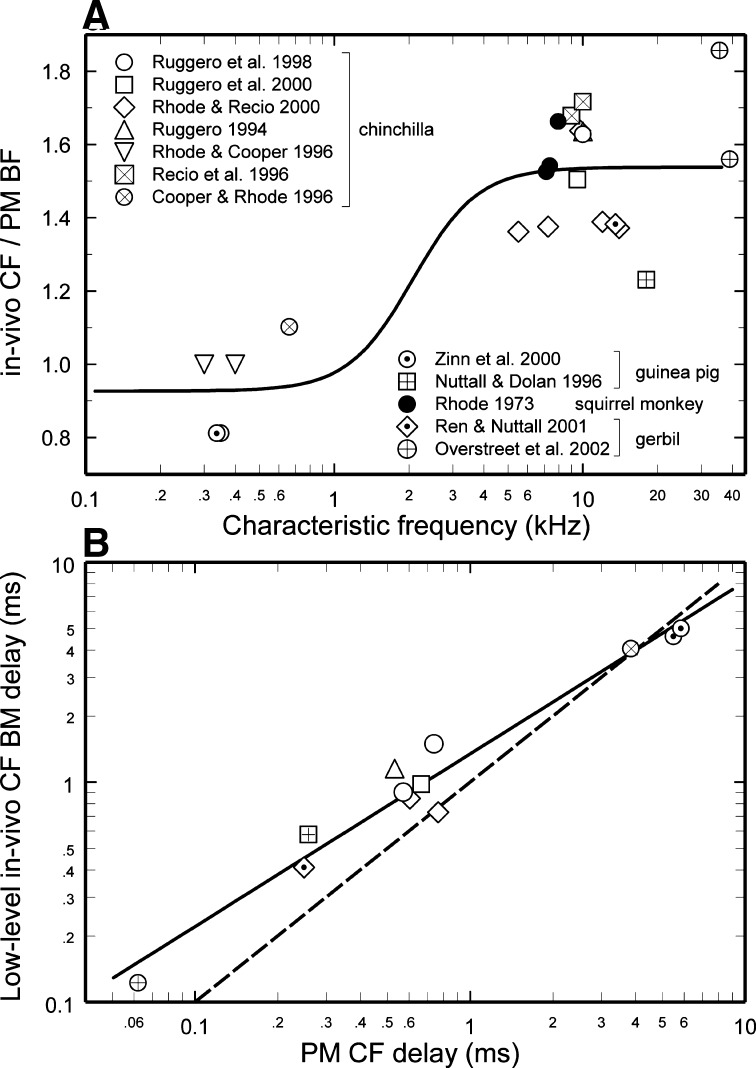
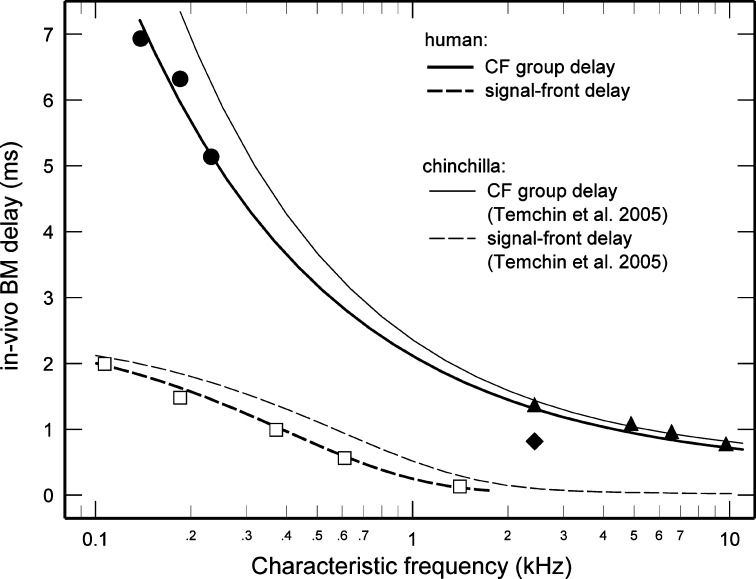
Transduction of sound in mammalian ears is mediated by basilar-membrane waves exhibiting delays that increase systematically with distance from the cochlear base. Most contemporary accounts of such "traveling-wave" delays in humans have ignored postmortem basilar-membrane measurements in favor of indirect in vivo estimates derived from brainstem-evoked responses, compound action potentials, and otoacoustic emissions. Here, we show that those indirect delay estimates are either flawed or inadequately calibrated. In particular, we argue against assertions based on indirect estimates that basilar-membrane delays are much longer in humans than in experimental animals. We also estimate in vivo basilar-membrane delays in humans by correcting postmortem measurements in humans according to the effects of death on basilar-membrane vibrations in other mammalian species. The estimated in vivo basilar-membrane delays in humans are similar to delays in the hearing organs of other tetrapods, including those in which basilar membranes do not sustain traveling waves or that lack basilar membranes altogether.
哺乳动物耳朵中的声音传导是由基底膜波介导的,这些波表现出的延迟会随着与耳蜗底部距离的增加而系统性地增加。目前大多数关于人类这种“行波”延迟的描述都忽略了死后基底膜的测量,而倾向于从脑干诱发反应、复合动作电位和耳声发射得出的间接体内估计值。在这里,我们表明这些间接延迟估计要么存在缺陷,要么校准不当。特别是,我们反对基于间接估计的说法,即人类基底膜延迟比实验动物长得多。我们还通过根据死亡对其他哺乳动物物种基底膜振动的影响来校正人类死后测量值,从而估计人类的体内基底膜延迟。估计的人类体内基底膜延迟与其他四足动物听觉器官中的延迟相似,包括那些基底膜不支持行波或完全没有基底膜的动物。