Cynx J, Williams H, Nottebohm F
Rockefeller University Field Research Center for Ecology and Ethology, Millbrook, NY 12545.
Proc Natl Acad Sci U S A. 1992 Feb 15;89(4):1372-5. doi: 10.1073/pnas.89.4.1372.
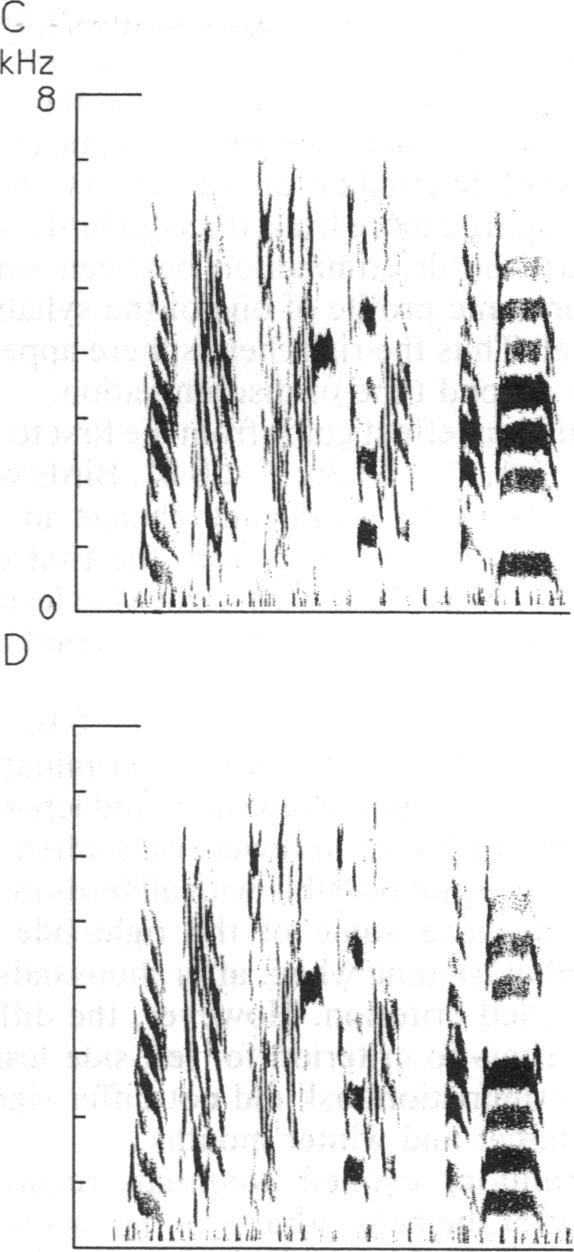
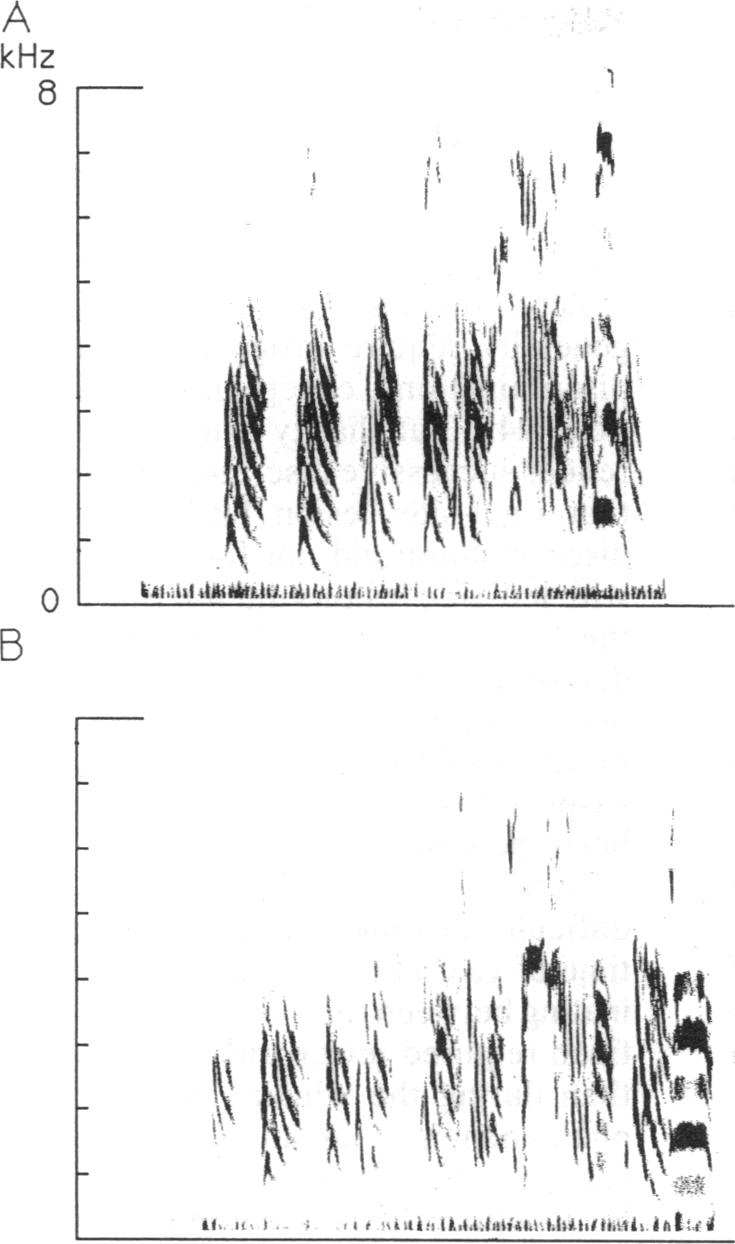
Auditory input to the right or left forebrain of adult male zebra finches (Taeniopygia guttata) was disrupted by lesioning the ipsilateral auditory relay nucleus of the thalamus. These birds were then presented with two kinds of auditory discriminations: (i) between their own song and the song of a cage mate; (ii) between two versions of an unfamiliar zebra finch song that differed only in the harmonic profile of one of the syllables. Right-side lesion birds did better than left-side lesion ones at discriminating between their own song and the song of a cage mate; left-side lesion birds did better on the harmonic profile task. We suggest that the two halves of the zebra finch brain process conspecific sounds differently, as seems to be the case for humans.
通过损伤成年雄性斑胸草雀(Taeniopygia guttata)右侧或左侧前脑的同侧听觉丘脑中继核,破坏其对右侧或左侧前脑的听觉输入。然后让这些鸟进行两种听觉辨别:(i)辨别自己的歌声和笼中同伴的歌声;(ii)辨别两种不熟悉的斑胸草雀歌声版本,这两种版本仅在其中一个音节的谐波轮廓上有所不同。在辨别自己的歌声和笼中同伴的歌声方面,右侧损伤的鸟比左侧损伤的鸟表现更好;在谐波轮廓任务中,左侧损伤的鸟表现更好。我们认为,斑胸草雀大脑的两半对同种声音的处理方式不同,人类似乎也是如此。