Kovtun Irina V, Liu Yuan, Bjoras Magnar, Klungland Arne, Wilson Samuel H, McMurray Cynthia T
Department of Pharmacology and Experimental Therapeutics, Mayo Clinic and Foundation, 200 First Street SW, Rochester, Minnesota 55905, USA.
Nature. 2007 May 24;447(7143):447-52. doi: 10.1038/nature05778. Epub 2007 Apr 22.
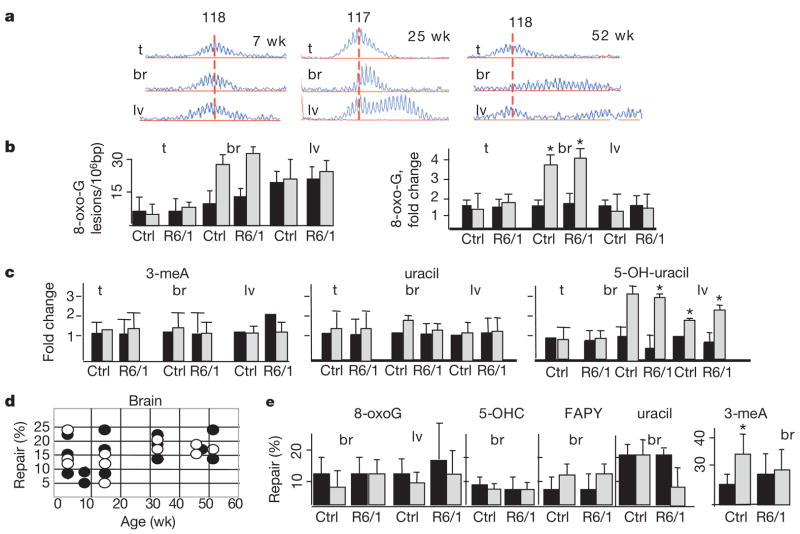
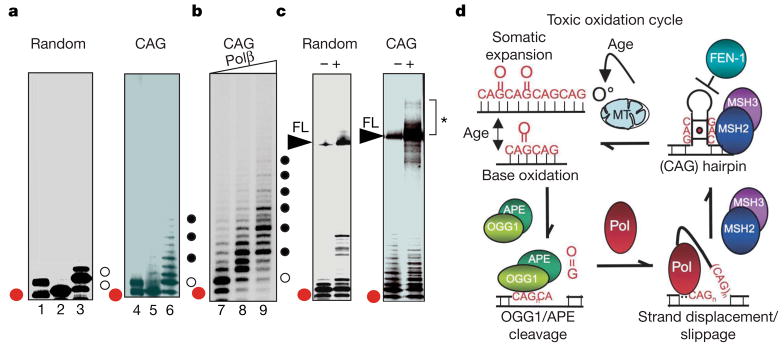
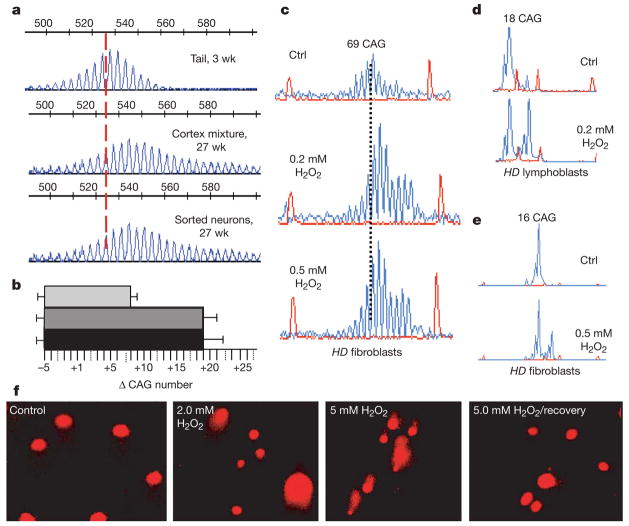
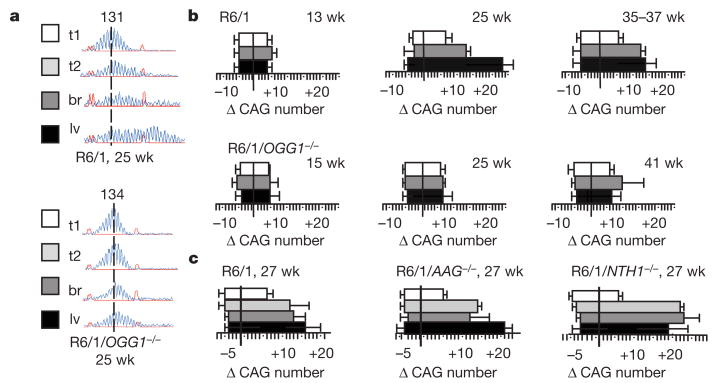
Although oxidative damage has long been associated with ageing and neurological disease, mechanistic connections of oxidation to these phenotypes have remained elusive. Here we show that the age-dependent somatic mutation associated with Huntington's disease occurs in the process of removing oxidized base lesions, and is remarkably dependent on a single base excision repair enzyme, 7,8-dihydro-8-oxoguanine-DNA glycosylase (OGG1). Both in vivo and in vitro results support a 'toxic oxidation' model in which OGG1 initiates an escalating oxidation-excision cycle that leads to progressive age-dependent expansion. Age-dependent CAG expansion provides a direct molecular link between oxidative damage and toxicity in post-mitotic neurons through a DNA damage response, and error-prone repair of single-strand breaks.
尽管氧化损伤长期以来一直与衰老和神经疾病相关,但氧化作用与这些表型之间的机制联系仍不明确。在此我们表明,与亨廷顿舞蹈症相关的年龄依赖性体细胞突变发生在去除氧化碱基损伤的过程中,并且显著依赖于一种单一的碱基切除修复酶,即7,8 - 二氢 - 8 - 氧代鸟嘌呤 - DNA糖基化酶(OGG1)。体内和体外实验结果均支持一种“毒性氧化”模型,其中OGG1启动一个不断升级的氧化 - 切除循环,导致年龄依赖性的渐进性扩增。年龄依赖性的CAG扩增通过DNA损伤反应以及单链断裂的易错修复,在有丝分裂后神经元中提供了氧化损伤与毒性之间的直接分子联系。