Sánchez-Soriano Natalia, Tear Guy, Whitington Paul, Prokop Andreas
The Wellcome Trust Centre for Cell-Matrix Research, Faculty of Life Sciences, The University of Manchester, Manchester, UK.
Neural Dev. 2007 May 2;2:9. doi: 10.1186/1749-8104-2-9.
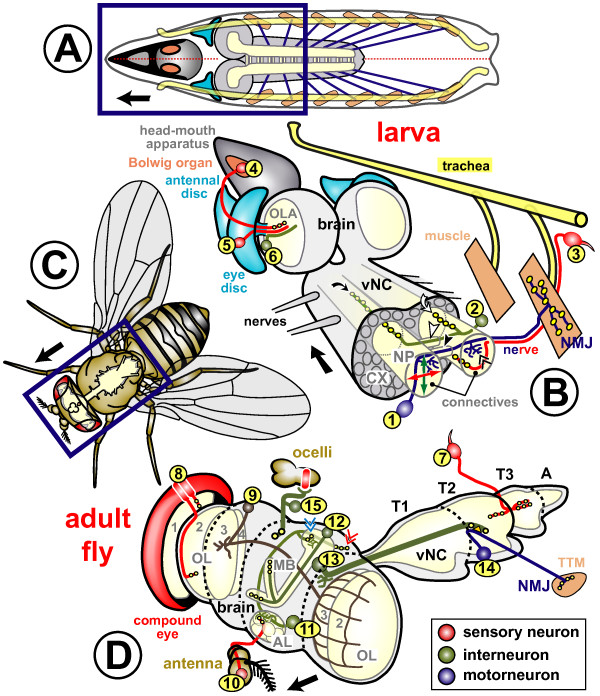
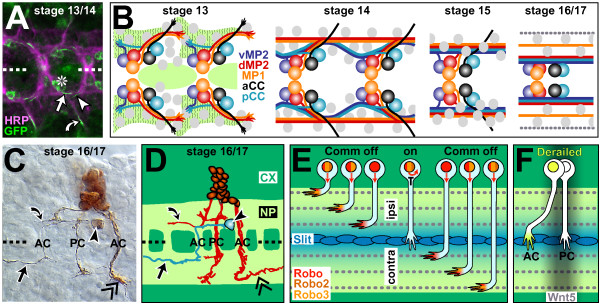
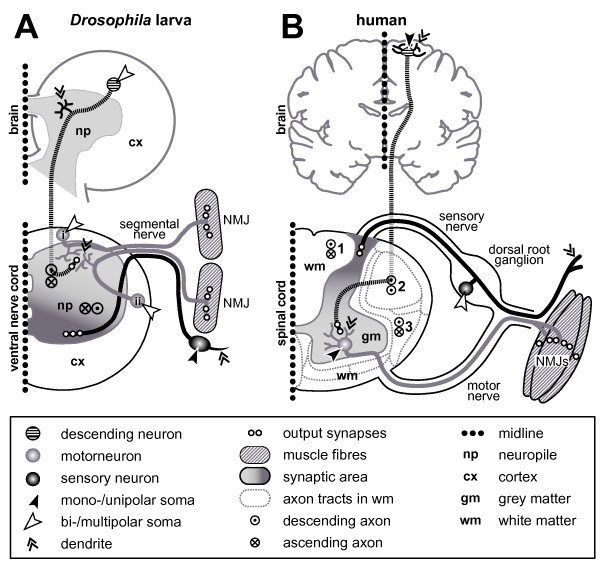
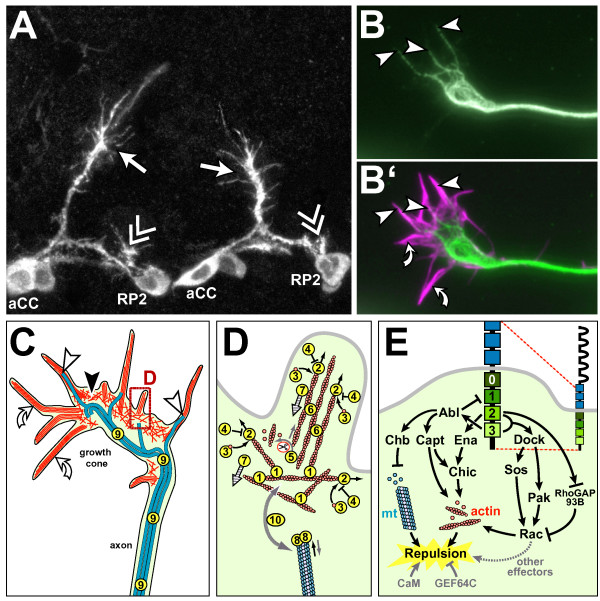
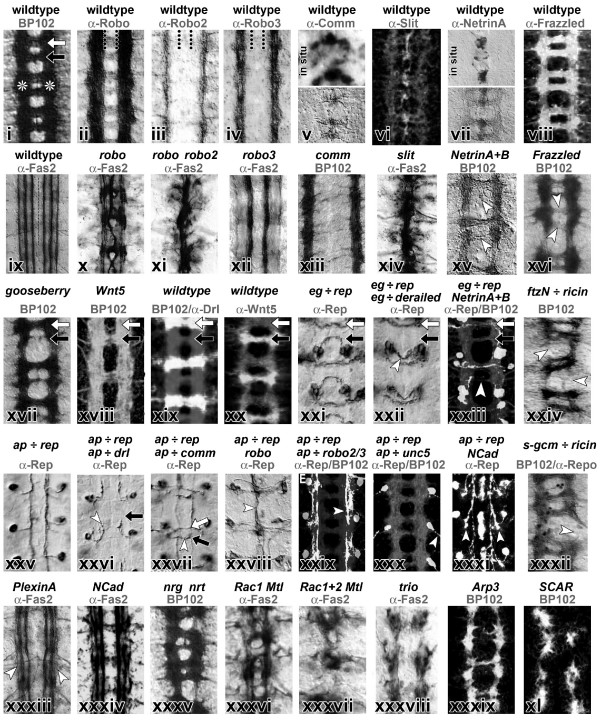
One of the most fascinating processes during nervous system development is the establishment of stereotypic neuronal networks. An essential step in this process is the outgrowth and precise navigation (pathfinding) of axons and dendrites towards their synaptic partner cells. This phenomenon was first described more than a century ago and, over the past decades, increasing insights have been gained into the cellular and molecular mechanisms regulating neuronal growth and navigation. Progress in this area has been greatly assisted by the use of simple and genetically tractable invertebrate model systems, such as the fruit fly Drosophila melanogaster. This review is dedicated to Drosophila as a genetic and cellular model to study axonal growth and demonstrates how it can and has been used for this research. We describe the various cellular systems of Drosophila used for such studies, insights into axonal growth cones and their cytoskeletal dynamics, and summarise identified molecular signalling pathways required for growth cone navigation, with particular focus on pathfinding decisions in the ventral nerve cord of Drosophila embryos. These Drosophila-specific aspects are viewed in the general context of our current knowledge about neuronal growth.
神经系统发育过程中最引人入胜的过程之一是刻板神经元网络的建立。这一过程中的一个关键步骤是轴突和树突向其突触伙伴细胞的生长和精确导航(寻路)。这种现象早在一个多世纪前就被首次描述,在过去几十年里,人们对调节神经元生长和导航的细胞和分子机制有了越来越深入的了解。使用简单且易于进行基因操作的无脊椎动物模型系统,如黑腹果蝇,极大地推动了该领域的进展。这篇综述致力于将果蝇作为研究轴突生长的遗传和细胞模型,并展示它如何以及已经被用于这项研究。我们描述了用于此类研究的果蝇的各种细胞系统、对轴突生长锥及其细胞骨架动力学的见解,并总结了已确定的生长锥导航所需的分子信号通路,特别关注果蝇胚胎腹神经索中的寻路决策。这些果蝇特有的方面是在我们当前关于神经元生长的知识的总体背景下进行探讨的。