Dudek S M, Camp S M, Chiang E T, Singleton P A, Usatyuk P V, Zhao Y, Natarajan V, Garcia J G N
Section of Pulmonary and Critical Care Medicine, Department of Medicine, University of Chicago, 5841 South Maryland Ave. Chicago, IL 60637, United States.
Cell Signal. 2007 Aug;19(8):1754-64. doi: 10.1016/j.cellsig.2007.03.011. Epub 2007 Apr 6.
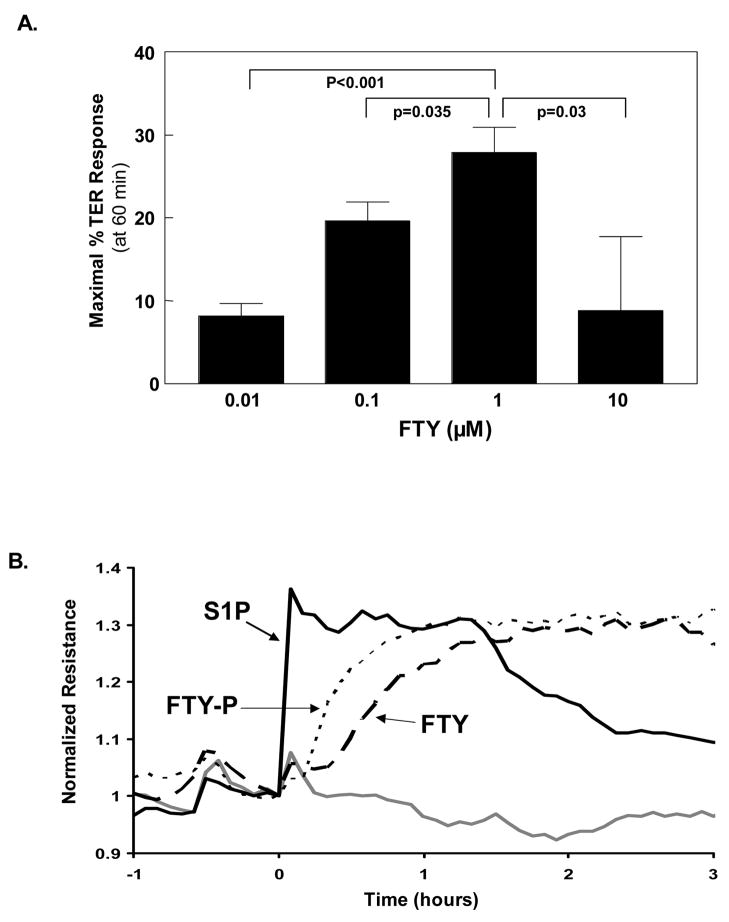
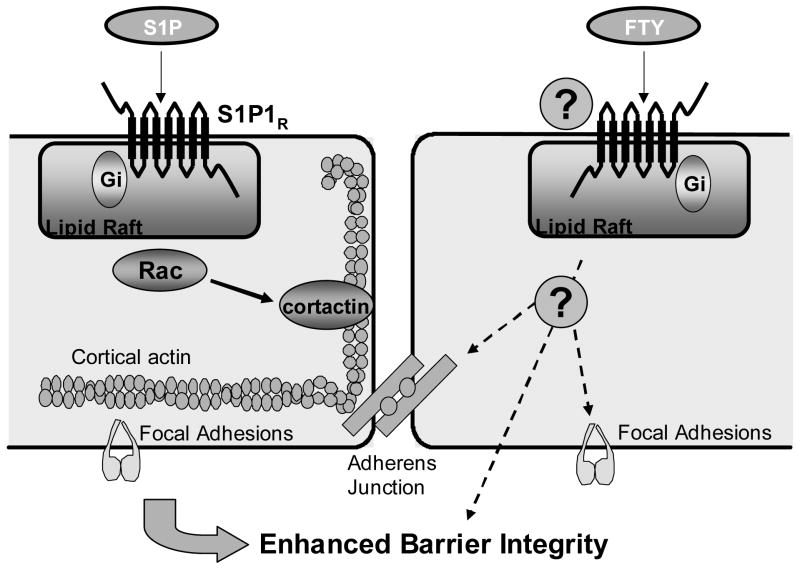
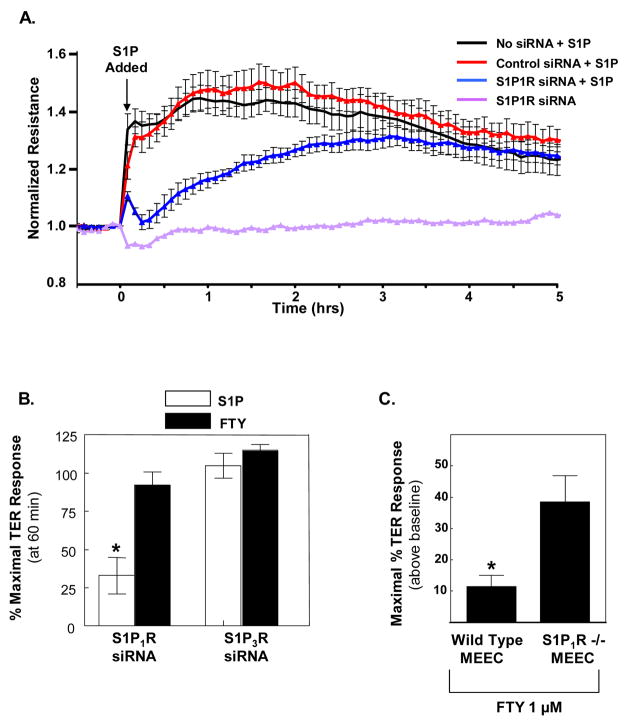
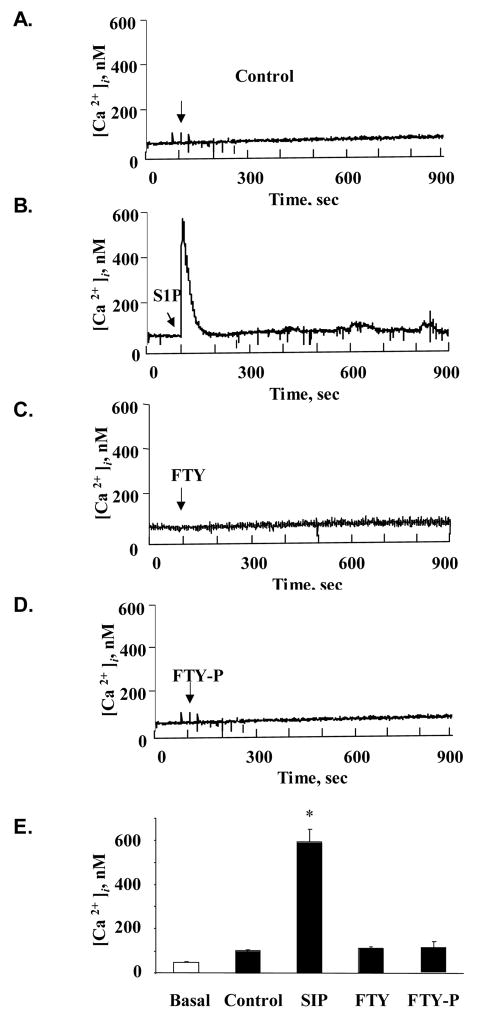
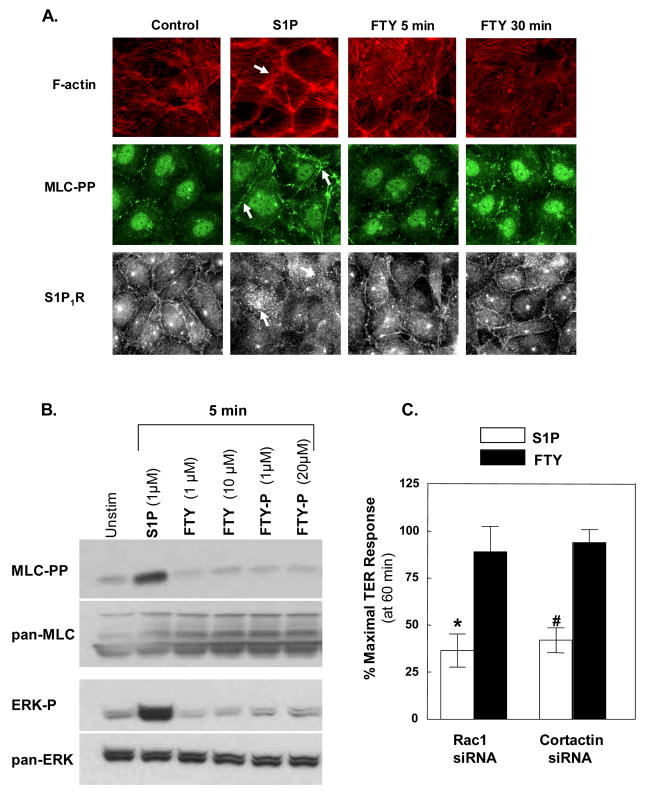
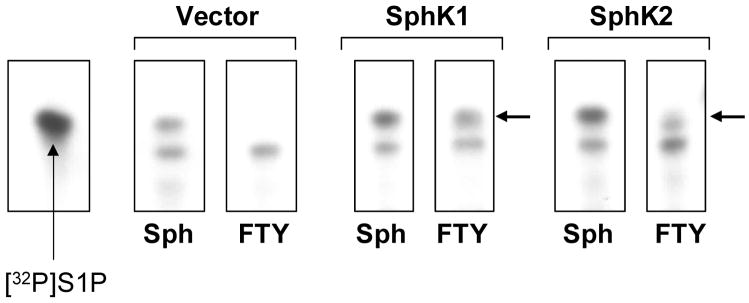
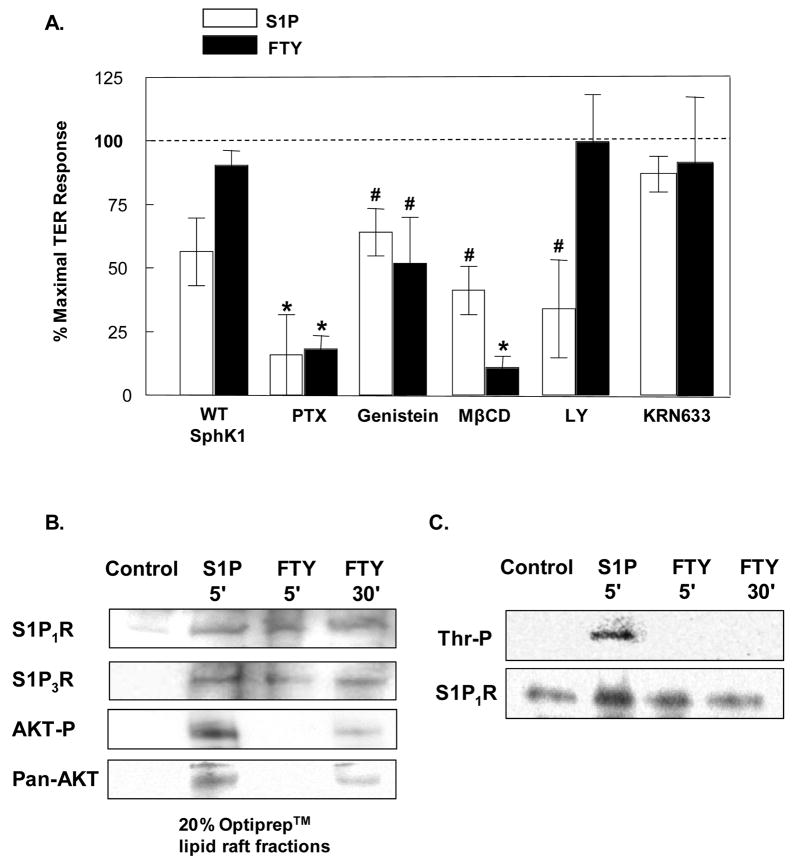
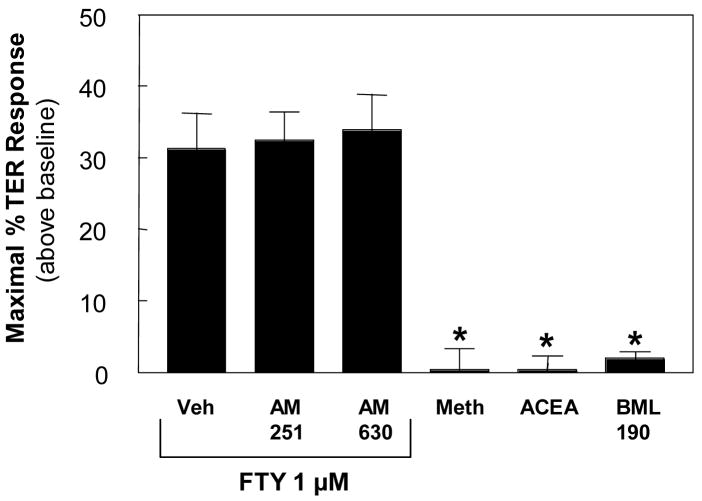
Novel therapeutic strategies are needed to reverse the loss of endothelial cell (EC) barrier integrity that occurs during inflammatory disease states such as acute lung injury. We previously demonstrated potent EC barrier augmentation in vivo and in vitro by the platelet-derived phospholipid, sphingosine 1-phosphate (S1P) via ligation of the S1P1 receptor. The S1P analogue, FTY720, similarly exerts barrier-protective vascular effects via presumed S1P1 receptor ligation. We examined the role of the S1P1 receptor in sphingolipid-mediated human lung EC barrier enhancement. Both S1P and FTY-induced sustained, dose-dependent barrier enhancement, reflected by increases in transendothelial electrical resistance (TER), which was abolished by pertussis toxin indicating Gi-coupled receptor activation. FTY-mediated increases in TER exhibited significantly delayed onset and intensity relative to the S1P response. Reduction of S1P1R expression (via siRNA) attenuated S1P-induced TER elevations whereas the TER response to FTY was unaffected. Both S1P and FTY rapidly (within 5 min) induced S1P1R accumulation in membrane lipid rafts, but only S1P stimulated S1P1R phosphorylation on threonine residues. Inhibition of PI3 kinase activity attenuated S1P-mediated TER increases but failed to alter FTY-induced TER elevation. Finally, S1P, but not FTY, induced significant myosin light chain phosphorylation and dramatic actin cytoskeletal rearrangement whereas reduced expression of the cytoskeletal effectors, Rac1 and cortactin (via siRNA), attenuated S1P-, but not FTY-induced TER elevations. These results mechanistically characterize pulmonary vascular barrier regulation by FTY720, suggesting a novel barrier-enhancing pathway for modulating vascular permeability.
需要新的治疗策略来逆转在诸如急性肺损伤等炎症性疾病状态期间发生的内皮细胞(EC)屏障完整性丧失。我们之前证明,血小板衍生的磷脂鞘氨醇-1-磷酸(S1P)通过与S1P1受体结合,在体内和体外均能有效增强EC屏障。S1P类似物FTY720同样通过推测的S1P1受体结合发挥屏障保护血管作用。我们研究了S1P1受体在鞘脂介导的人肺EC屏障增强中的作用。S1P和FTY均诱导持续的、剂量依赖性的屏障增强,这通过跨内皮电阻(TER)的增加得以体现,百日咳毒素可消除这种增加,表明是Gi偶联受体激活。相对于S1P反应,FTY介导的TER增加表现出明显延迟的起效时间和强度。S1P1R表达的降低(通过小干扰RNA)减弱了S1P诱导的TER升高,而对FTY的TER反应未受影响。S1P和FTY均在5分钟内迅速诱导S1P1R在膜脂筏中积累,但只有S1P刺激S1P1R苏氨酸残基的磷酸化。抑制PI3激酶活性减弱了S1P介导的TER增加,但未能改变FTY诱导的TER升高。最后,S1P而非FTY诱导显著的肌球蛋白轻链磷酸化和肌动蛋白细胞骨架的剧烈重排,而细胞骨架效应器Rac1和皮层肌动蛋白表达的降低(通过小干扰RNA)减弱了S1P而非FTY诱导的TER升高。这些结果从机制上表征了FTY720对肺血管屏障的调节作用,提示了一种调节血管通透性的新型屏障增强途径。