Piccoli Marco, Cirillo Federica, Ghiroldi Andrea, Rota Paola, Coviello Simona, Tarantino Adriana, La Rocca Paolo, Lavota Ivana, Creo Pasquale, Signorelli Paola, Pappone Carlo, Anastasia Luigi
Laboratory of Stem Cells for Tissue Engineering, IRCCS Policlinico San Donato, Piazza Malan 2, San Donato Milanese, 20097 Milan, Italy.
Institute for Molecular and Translational Cardiology (IMTC), San Donato Milanese, 20097 Milan, Italy.
Antioxidants (Basel). 2023 Jan 6;12(1):143. doi: 10.3390/antiox12010143.
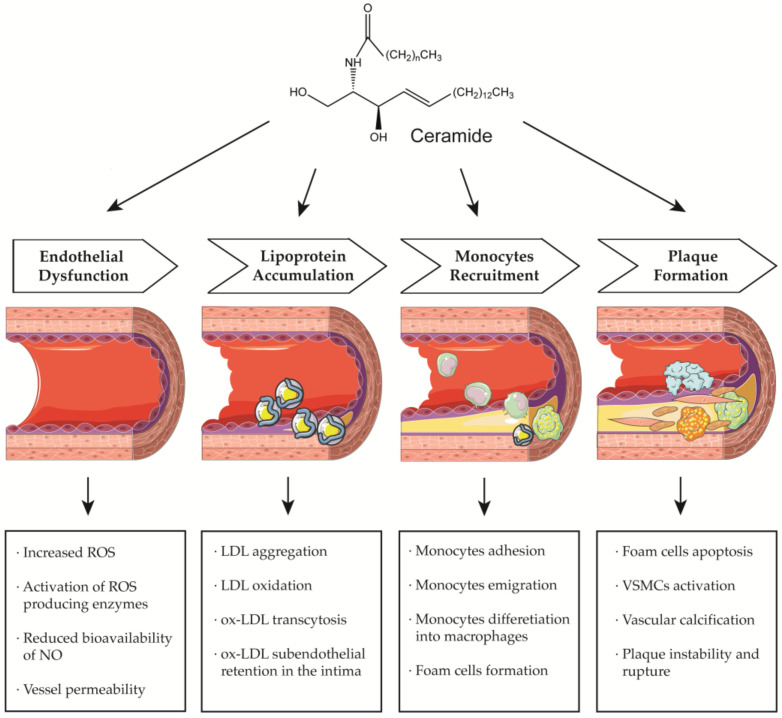
Sphingolipids are bioactive molecules that play either pro- and anti-atherogenic roles in the formation and maturation of atherosclerotic plaques. Among SLs, ceramide and sphingosine-1-phosphate showed antithetic properties in regulating various molecular mechanisms and have emerged as novel potential targets for regulating the development of atherosclerosis. In particular, maintaining the balance of the so-called ceramide/S1P rheostat is important to prevent the occurrence of endothelial dysfunction, which is the trigger for the entire atherosclerotic process and is strongly associated with increased oxidative stress. In addition, these two sphingolipids, together with many other sphingolipid mediators, are directly involved in the progression of atherogenesis and the formation of atherosclerotic plaques by promoting the oxidation of low-density lipoproteins (LDL) and influencing the vascular smooth muscle cell phenotype. The modulation of ceramide and S1P levels may therefore allow the development of new antioxidant therapies that can prevent or at least impair the onset of atherogenesis, which would ultimately improve the quality of life of patients with coronary artery disease and significantly reduce their mortality.
鞘脂是生物活性分子,在动脉粥样硬化斑块的形成和成熟过程中发挥着促动脉粥样硬化和抗动脉粥样硬化的作用。在鞘脂中,神经酰胺和1-磷酸鞘氨醇在调节各种分子机制方面表现出相反的特性,并已成为调节动脉粥样硬化发展的新的潜在靶点。特别是,维持所谓的神经酰胺/S1P变阻器的平衡对于预防内皮功能障碍的发生很重要,内皮功能障碍是整个动脉粥样硬化过程的触发因素,并且与氧化应激增加密切相关。此外,这两种鞘脂与许多其他鞘脂介质一起,通过促进低密度脂蛋白(LDL)的氧化和影响血管平滑肌细胞表型,直接参与动脉粥样硬化的进展和动脉粥样硬化斑块的形成。因此,调节神经酰胺和S1P水平可能会开发出新的抗氧化疗法,这些疗法可以预防或至少削弱动脉粥样硬化的发生,最终改善冠心病患者的生活质量并显著降低其死亡率。