Haddad Fadia, Qin Anqi X, Giger Julie M, Guo Hongyan, Baldwin Kenneth M
Physiology and Biophysics Department, University of California Irvine, Irvine, CA 92697, USA.
BMC Biotechnol. 2007 May 4;7:21. doi: 10.1186/1472-6750-7-21.
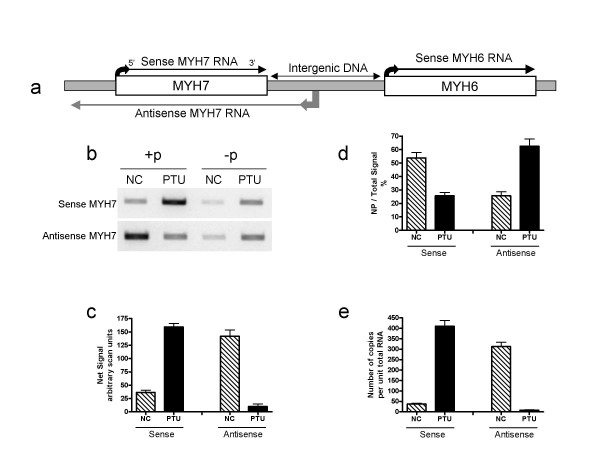
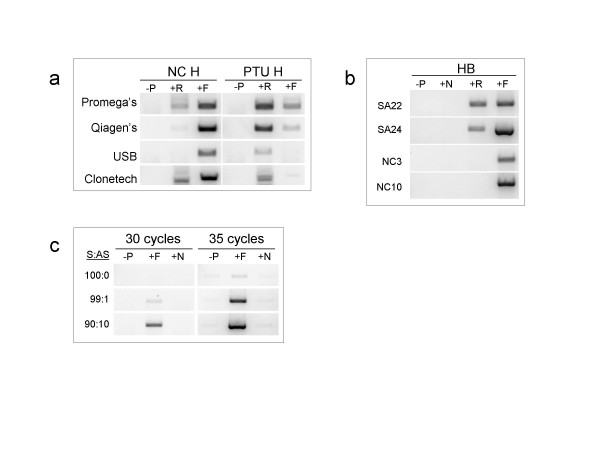
The ability to accurately measure patterns of gene expression is essential in studying gene function. The reverse transcription polymerase chain reaction (RT-PCR) has become the method of choice for the detection and measurement of RNA expression patterns in both cells and small quantities of tissue. Our previous results show that there is a significant production of primer-independent cDNA synthesis using a popular RNase H- RT enzyme. A PCR product was amplified from RT reactions that were carried out without addition of RT-primer. This finding jeopardizes the accuracy of RT-PCR when analyzing RNA that is expressed in both orientations. Current literature findings suggest that naturally occurring antisense expression is widespread in the mammalian transcriptome and consists of both coding and non-coding regulatory RNA. The primary purpose of this present study was to investigate the occurrence of primer-independent cDNA synthesis and how it may influence the accuracy of detection of sense-antisense RNA pairs.
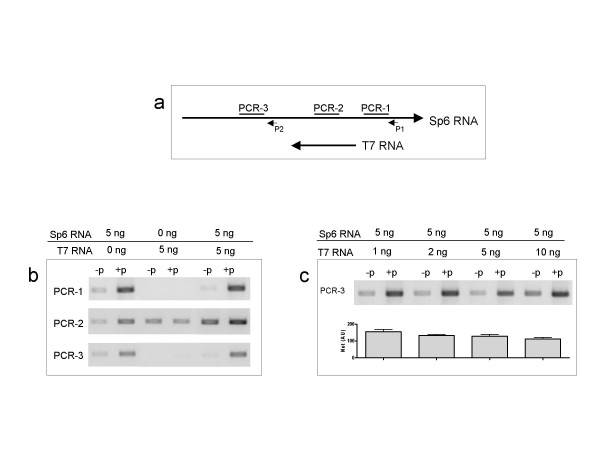
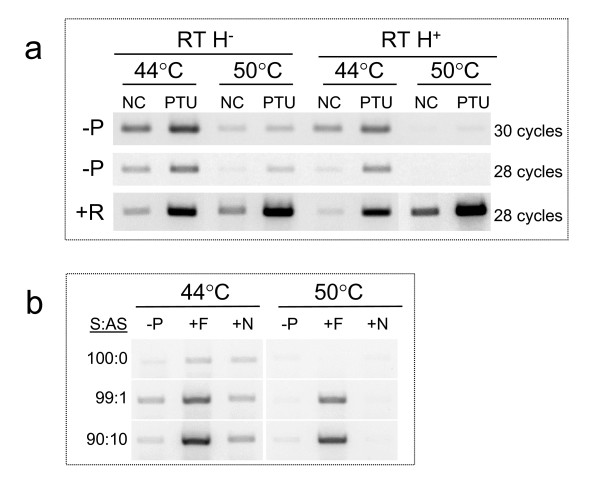
Our findings on cellular RNA and in vitro synthesized RNA suggest that these products are likely the results of RNA self-priming to generate random cDNA products, which contributes to the loss of strand specificity. The use of RNase H+ RT enzyme and carrying the RT reaction at high temperature (50 degrees C) greatly improved the strand specificity of the RT-PCR detection.
While RT PCR is a basic method used for the detection and quantification of RNA expression in cells, primer-independent cDNA synthesis can interfere with RT specificity, and may lead to misinterpretation of the results, especially when both sense and antisense RNA are expressed. For accurate interpretation of the results, it is essential to carry out the appropriate negative controls.
准确测量基因表达模式的能力对于研究基因功能至关重要。逆转录聚合酶链反应(RT-PCR)已成为检测和测量细胞及少量组织中RNA表达模式的首选方法。我们之前的结果表明,使用一种常用的RNase H-逆转录酶会大量产生不依赖引物的cDNA合成。在未添加逆转录引物的情况下进行的逆转录反应中扩增出了PCR产物。这一发现危及了在分析双向表达的RNA时RT-PCR的准确性。当前文献研究结果表明,天然存在的反义表达在哺乳动物转录组中广泛存在,包括编码和非编码调控RNA。本研究的主要目的是调查不依赖引物的cDNA合成的发生情况以及它如何影响正义-反义RNA对检测的准确性。
我们对细胞RNA和体外合成RNA的研究结果表明,这些产物可能是RNA自我引发产生随机cDNA产物的结果,这导致了链特异性的丧失。使用RNase H+逆转录酶并在高温(50摄氏度)下进行逆转录反应极大地提高了RT-PCR检测的链特异性。
虽然RT-PCR是用于检测和定量细胞中RNA表达的基本方法,但不依赖引物的cDNA合成会干扰逆转录特异性,并可能导致结果的错误解读,尤其是在正义和反义RNA都表达时。为了准确解读结果,进行适当的阴性对照至关重要。