Heroux Katie J, Woodin Katrina S, Tranchemontagne David J, Widger Peter C B, Southwick Evan, Wong Edward H, Weisman Gary R, Tomellini Sterling A, Wadas Thaddeus J, Anderson Carolyn J, Kassel Scott, Golen James A, Rheingold Arnold L
Department of Chemistry, University of New Hampshire, Durham, New Hampshire 03824, USA.
Dalton Trans. 2007 Jun 7(21):2150-62. doi: 10.1039/b702938a. Epub 2007 Apr 16.
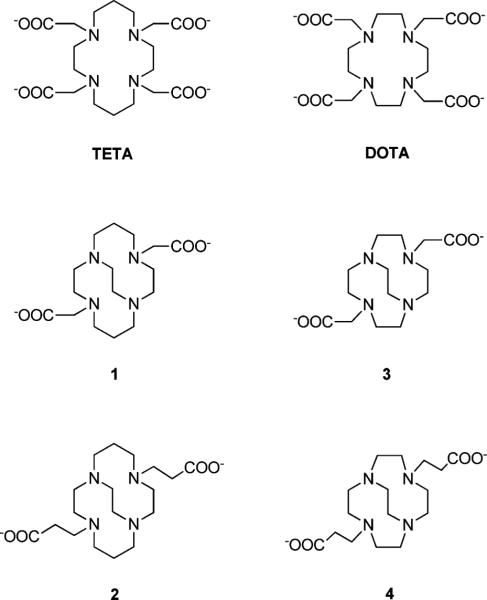
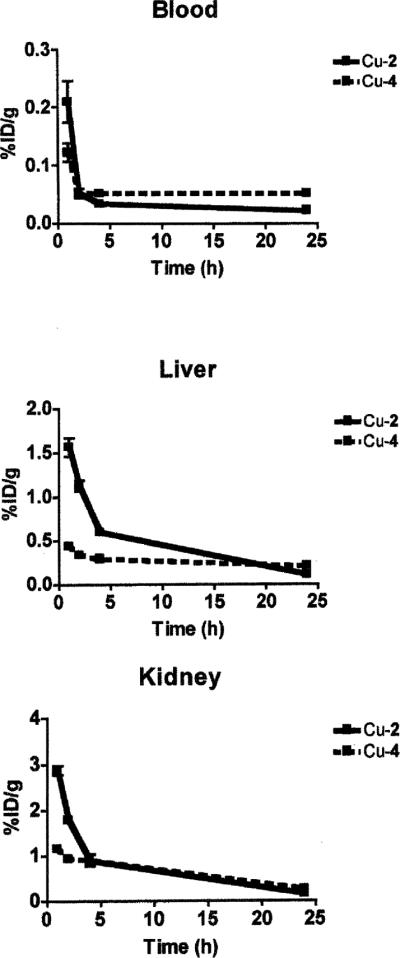
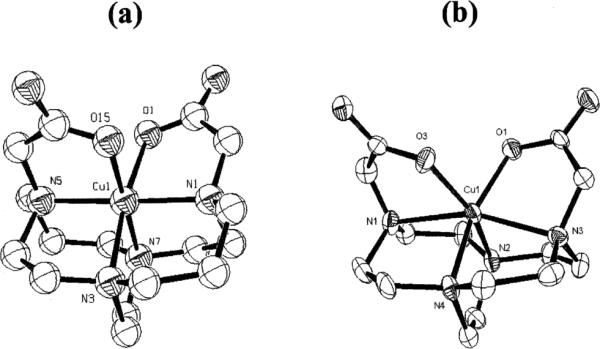
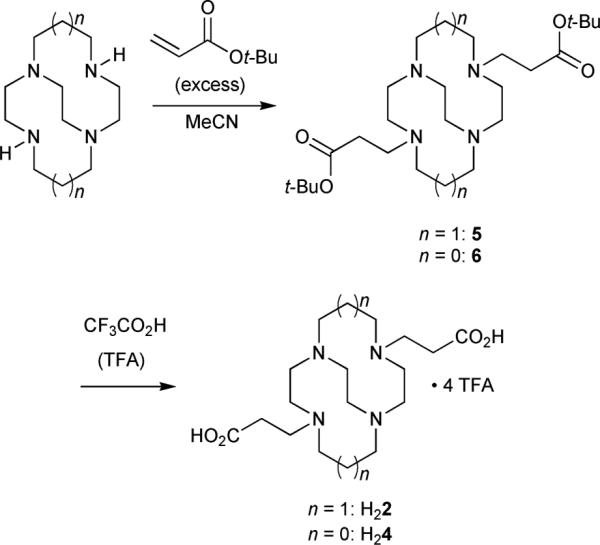
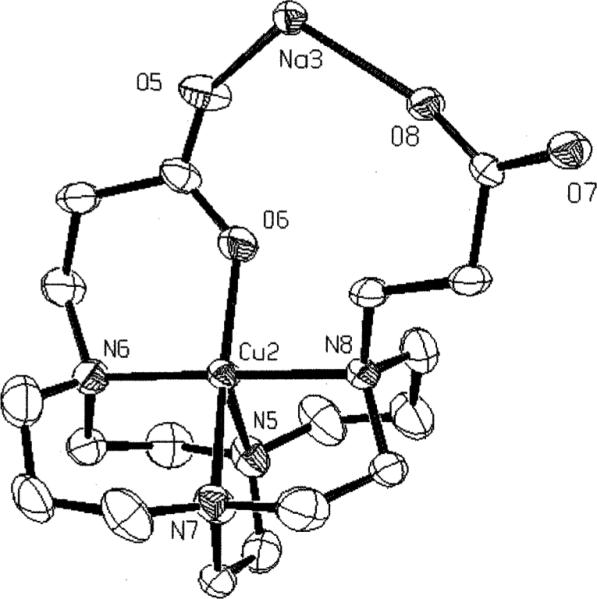
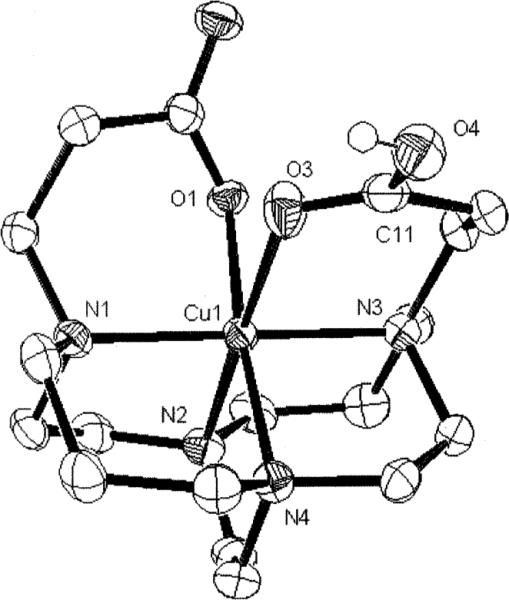
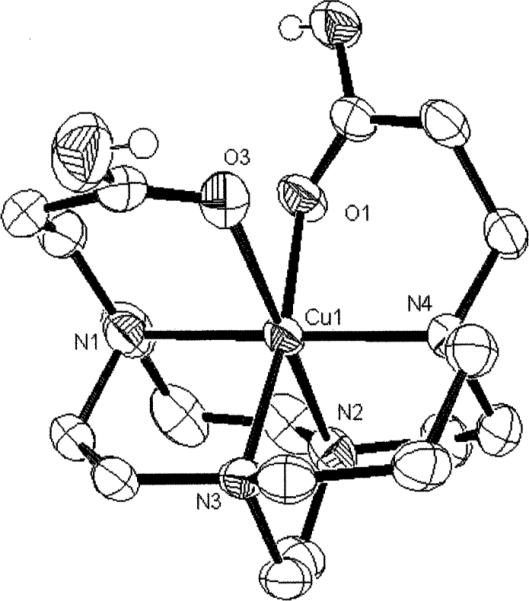
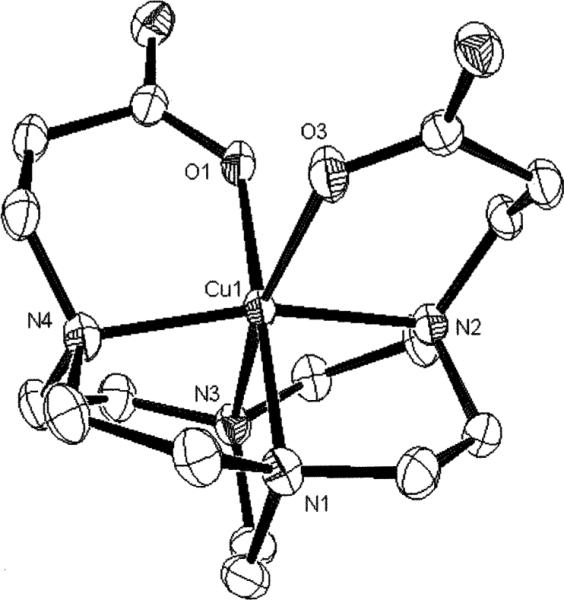
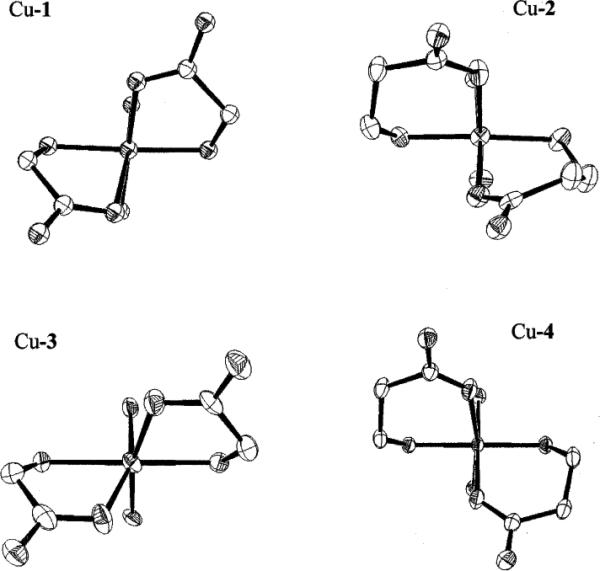
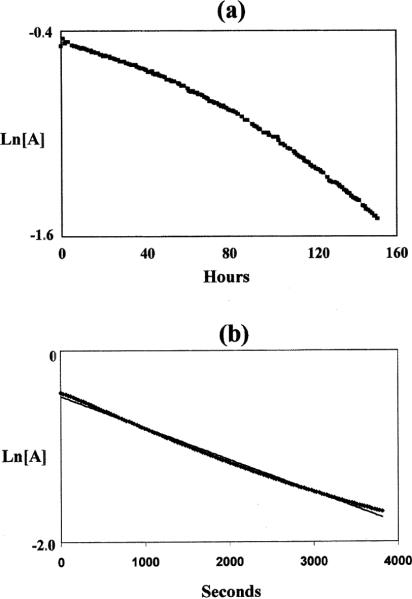
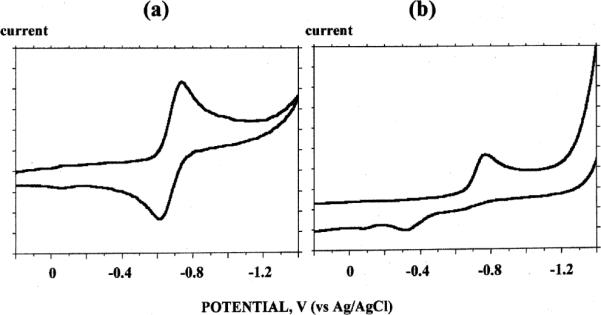
A cross-bridged cyclam ligand bearing two N-carboxymethyl pendant arms (1) has been found to form a copper(II) complex that exhibits significantly improved biological behavior in recent research towards (64)Cu-based radiopharmaceuticals. Both the kinetic inertness and resistance to reduction of Cu-1 are believed to be relevant to its enhanced performance. To explore the influence of pendant arm length on these properties, new cross-bridged cyclam and cyclen ligands with longer N-carboxyethyl pendant arms, 2 and 4, and their respective copper(II) complexes have been synthesized. Both mono- as well as di-O-protonated forms of Cu-2 have also been isolated and structurally characterized. The spectral and structural properties of Cu-2 and Cu-4, their kinetic inertness in 5 M HCl, and electrochemical behavior have been obtained and compared to those of their N-carboxymethyl-armed homologs, Cu-1 and Cu-3. Only the cyclam-based Cu-1 and Cu-2 showed unusually high kinetic inertness towards acid decomplexation. While both of these complexes also exhibited quasi-reversible Cu(II)/Cu(I) reductions, Cu-2 is easier to reduce by a substantial margin of +400 mV, bringing it within the realm of physiological reductants. Similarly, of the cyclen-based complexes, Cu-4 is also easier to reduce than Cu-3 though both reductions are irreversible. Biodistribution studies of (64)Cu-labeled 2 and 4 were performed in Sprague Dawley rats. Despite comparable acid inertness to their shorter-armed congeners, both longer-armed ligand complexes have poorer bio-clearance properties. This inferior in vivo behavior may be a consequence of their higher reduction potentials.
最近在对基于(64)Cu的放射性药物的研究中发现,带有两个N-羧甲基侧链臂的交叉桥连环戊二烯配体(1)能形成一种铜(II)配合物,其生物学行为有显著改善。据信,Cu-1的动力学惰性和抗还原能力都与其增强的性能有关。为了探究侧链臂长度对这些性质的影响,已合成了带有更长N-羧乙基侧链臂的新型交叉桥连环戊二烯和环烯配体2和4,以及它们各自的铜(II)配合物。还分离并对Cu-2的单-O-质子化和双-O-质子化形式进行了结构表征。已获得了Cu-2和Cu-4的光谱和结构性质、它们在5 M HCl中的动力学惰性以及电化学行为,并与它们带有N-羧甲基臂的同系物Cu-1和Cu-3进行了比较。只有基于环戊二烯的Cu-1和Cu-2对酸解络合表现出异常高的动力学惰性。虽然这两种配合物也都表现出准可逆的Cu(II)/Cu(I)还原,但Cu-2更容易被还原,还原电位相差 +400 mV,使其处于生理还原剂的范围内。同样,在基于环烯的配合物中,尽管两种还原都是不可逆的,但Cu-4也比Cu-3更容易被还原。在Sprague Dawley大鼠中进行了(64)Cu标记的2和4的生物分布研究。尽管它们与较短臂的同系物具有相当的酸惰性,但两种长臂配体配合物的生物清除特性都较差。这种较差的体内行为可能是它们较高还原电位的结果。