Mundy Peter, Block Jessica, Delgado Christine, Pomares Yuly, Van Hecke Amy Vaughan, Parlade Meaghan Venezia
University of Miami, Coral Gables, FL 33146, USA.
Child Dev. 2007 May-Jun;78(3):938-54. doi: 10.1111/j.1467-8624.2007.01042.x.
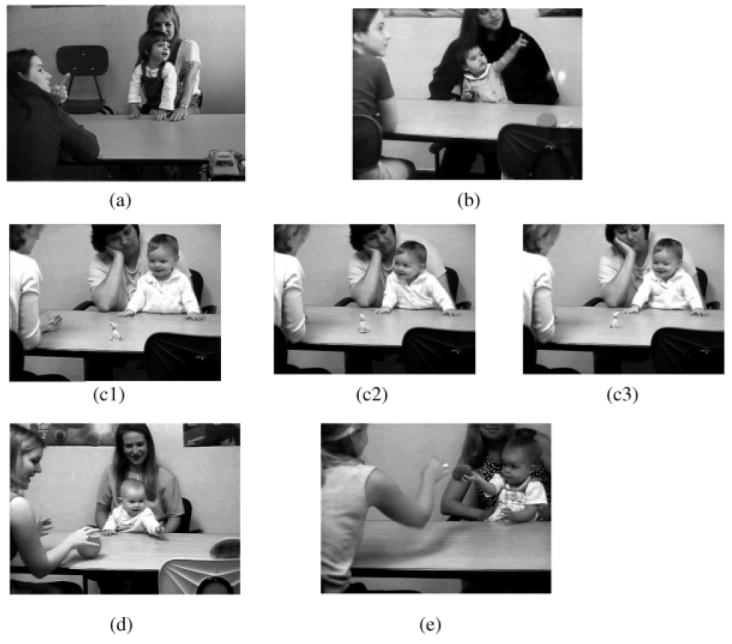
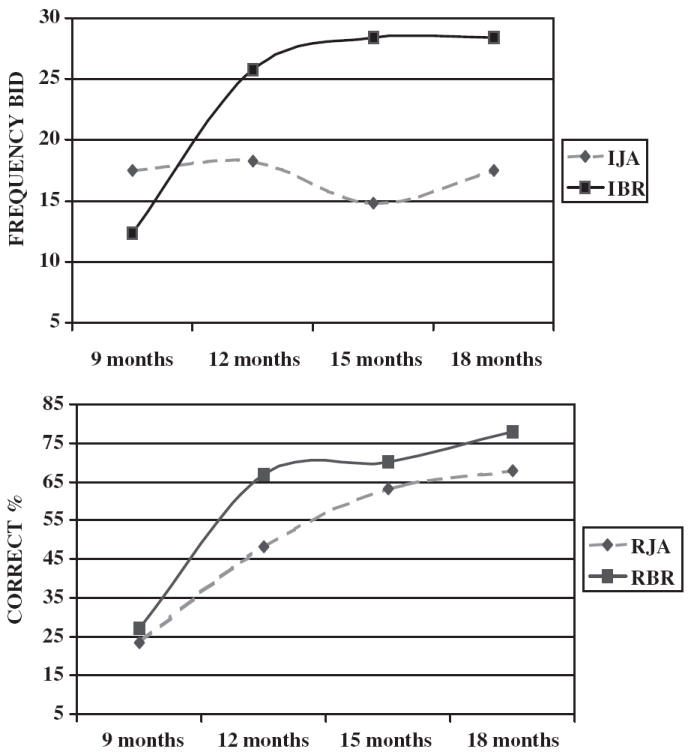
This study examined the development of joint attention in 95 infants assessed between 9 and 18 months of age. Infants displayed significant test-retest reliability on measures of following gaze and gestures (responding to joint attention, RJA) and in their use of eye contact to establish social attention coordination (initiating joint attention, IJA). Infants displayed a linear, increasing pattern of age-related growth on most joint attention measures. However, IJA was characterized by a significant cubic developmental pattern. Infants with different rates of cognitive development exhibited different frequencies of joint attention acts at each age, but did not exhibit different age-related patterns of development. Finally, 12-month RJA and 18-month IJA predicted 24-month language after controlling for general aspects of cognitive development.
本研究考察了95名9至18个月大婴儿的共同注意发展情况。婴儿在注视跟随和手势测量(对共同注意的反应,RJA)以及利用眼神接触建立社会注意协调(发起共同注意,IJA)方面表现出显著的重测信度。在大多数共同注意测量中,婴儿呈现出与年龄相关的线性增长模式。然而,IJA具有显著的三次方发展模式。认知发展速度不同的婴儿在各年龄段表现出不同频率的共同注意行为,但未表现出与年龄相关的不同发展模式。最后,在控制了认知发展的一般方面后,12个月时的RJA和18个月时的IJA能够预测24个月时的语言能力。