School of Biosciences, Cardiff University, Cardiff, United Kingdom.
PLoS One. 2007 May 23;2(5):e454. doi: 10.1371/journal.pone.0000454.
Biogeographic models partition ecologically similar species assemblages into discrete ecoregions. However, the history, relationship and interactions between these regions and their assemblages have rarely been explored.
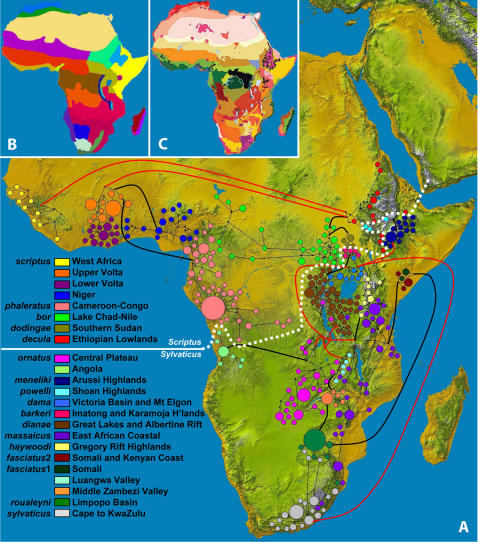
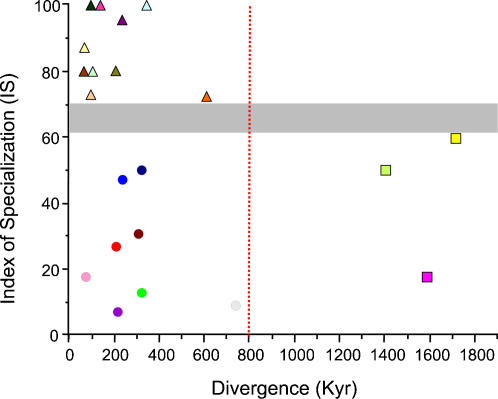
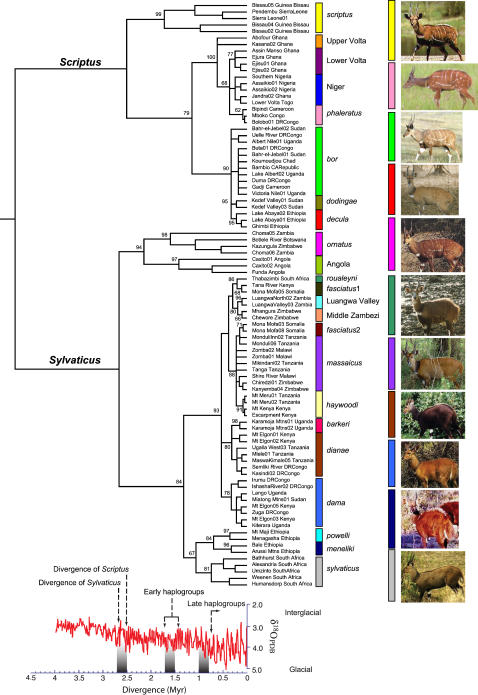
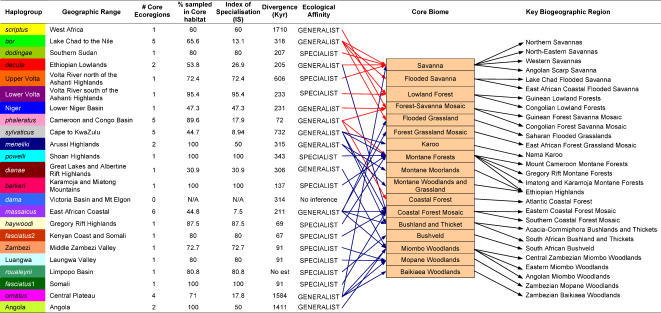
METHODOLOGY/PRINCIPAL FINDINGS: Here we develop a taxon-based approach that explicitly utilises molecular information to compare ecoregion history and status, which we exemplify using a continentally distributed mammalian species: the African bushbuck (Tragelaphus scriptus). We reveal unprecedented levels of genetic diversity and structure in this species and show that ecoregion biogeographic history better explains the distribution of molecular variation than phenotypic similarity or geography. We extend these data to explore ecoregion connectivity, identify core habitats and infer ecological affinities from them.
CONCLUSIONS/SIGNIFICANCE: This analysis defines 28 key biogeographic regions for sub-Saharan Africa, and provides a valuable framework for the incorporation of genetic and biogeographic information into a more widely applicable model for the conservation of continental biodiversity.
生物地理模型将生态相似的物种组合划分为离散的生态区。然而,这些区域及其组合的历史、关系和相互作用很少被探索。
方法/主要发现:在这里,我们开发了一种基于分类群的方法,该方法明确利用分子信息来比较生态区的历史和现状,我们以分布在大陆上的哺乳动物物种为例:非洲大羚羊(Tragelaphus scriptus)。我们揭示了该物种前所未有的遗传多样性和结构水平,并表明生态区生物地理历史比表型相似性或地理更能解释分子变异的分布。我们扩展这些数据以探索生态区的连通性,确定核心栖息地,并从中推断生态关系。
结论/意义:这项分析为撒哈拉以南非洲地区定义了 28 个关键的生物地理区域,并为将遗传和生物地理信息纳入更广泛的大陆生物多样性保护模型提供了有价值的框架。