Sastre Patricia, Oomens Antonius G P, Wertz Gail W
Department of Pathology, University of Virginia, Charlottesville, VA 22908-0904, United States.
Vaccine. 2007 Jun 28;25(27):5025-33. doi: 10.1016/j.vaccine.2007.04.066. Epub 2007 May 7.
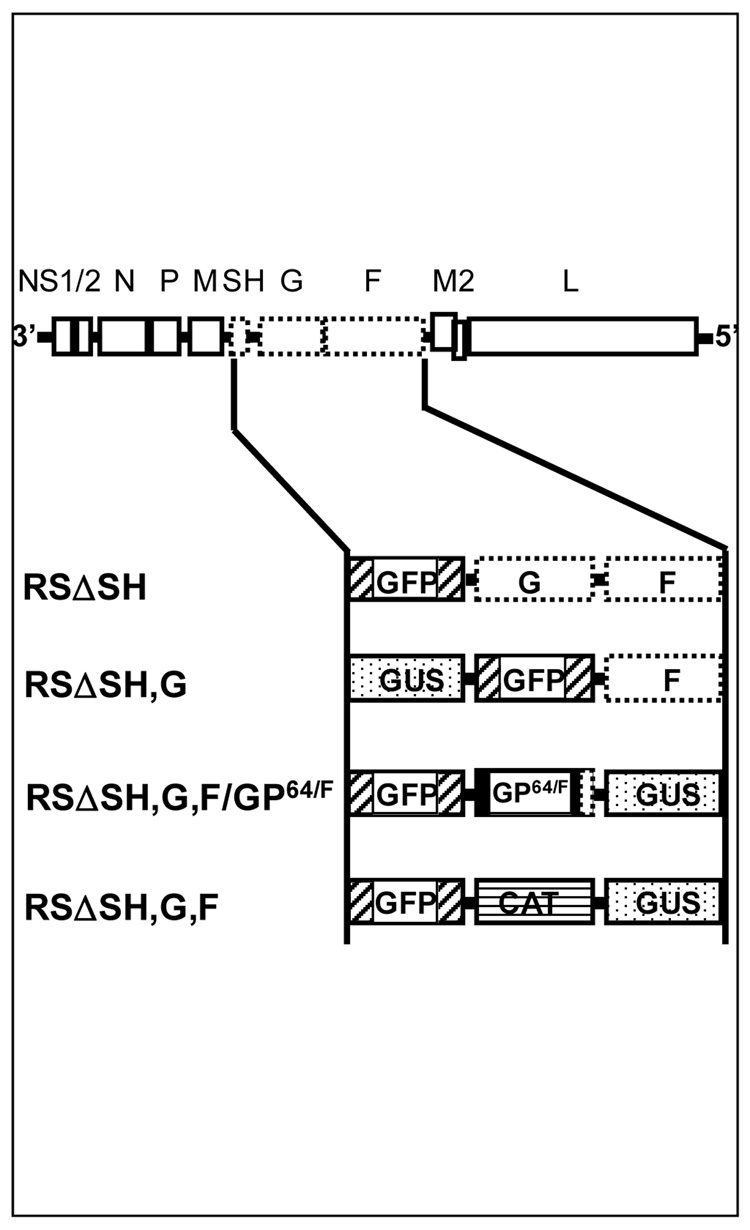
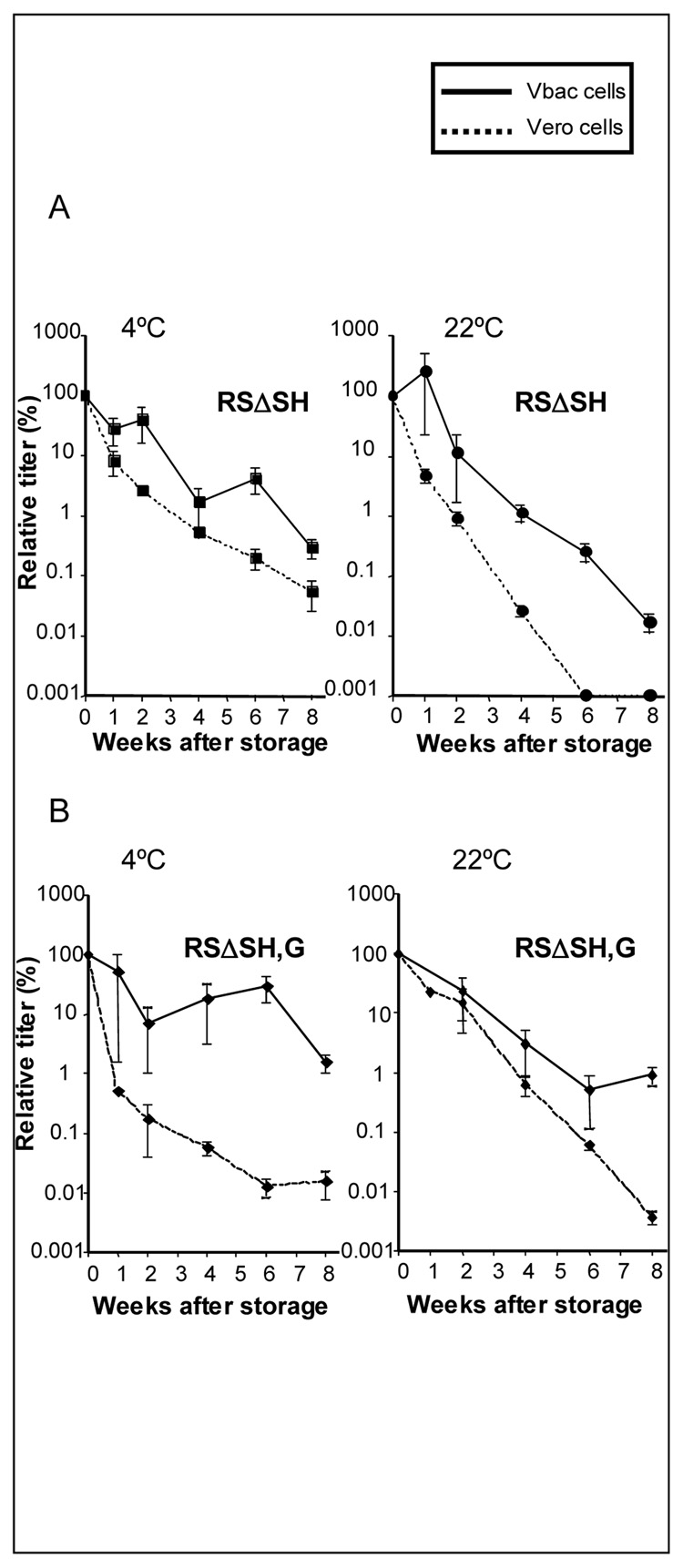
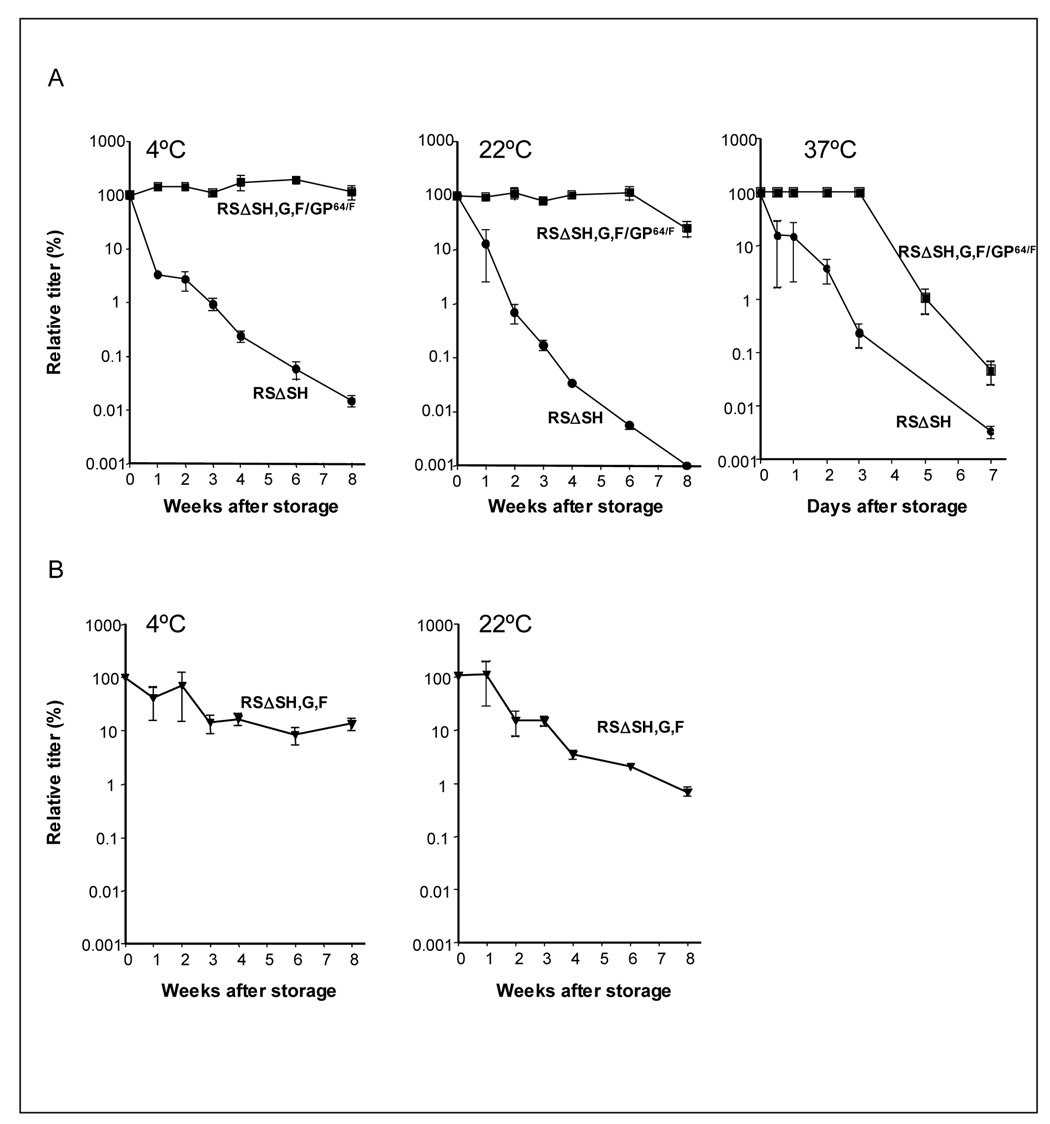
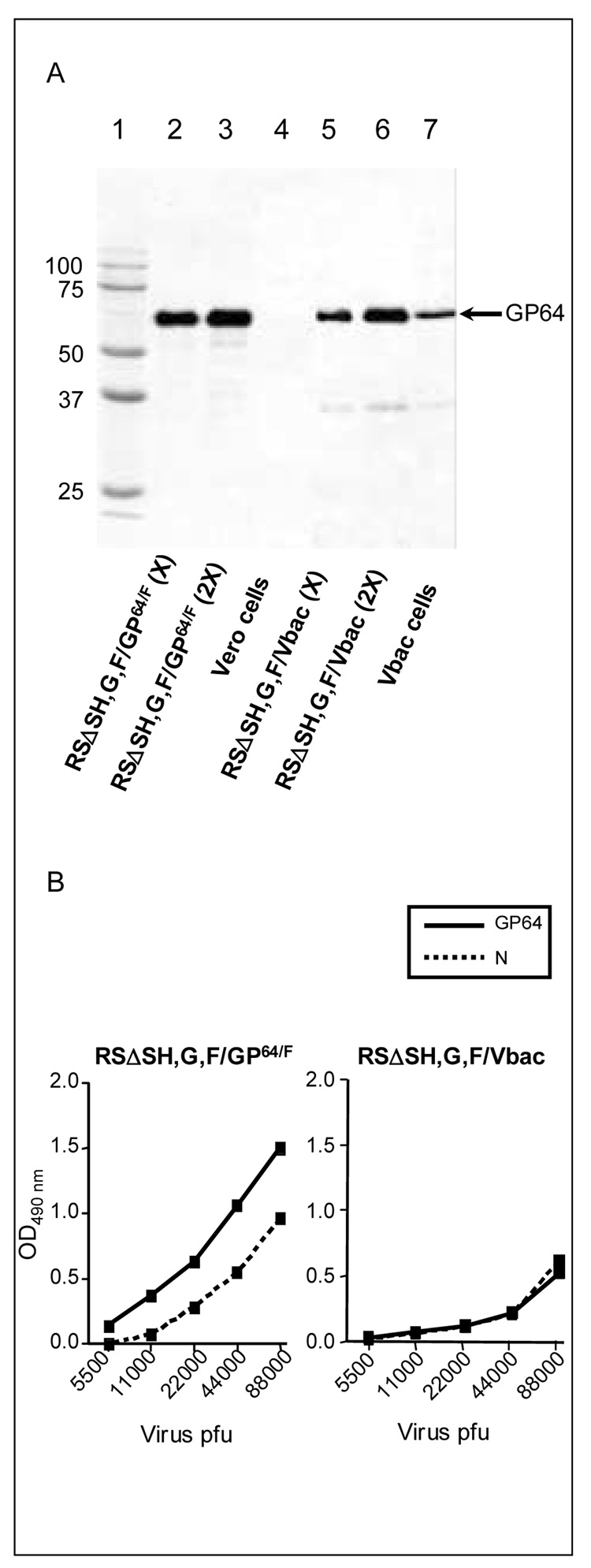
Current efforts to develop a vaccine against human respiratory syncytial virus (HRSV) are focused on live attenuated strains. However, the unstable nature of HRSV is a major challenge for the preparation, storage and distribution of live vaccine candidates. We report here that the stability of HRSV can be improved by incorporation of the GP64 glycoprotein from baculovirus Autographa californica multiple nucleopolyhedrovirus. GP64 was incorporated in place of or in addition to the homologous HRSV glycoproteins and was either expressed from the HRSV genome or provided by propagating the virus in a Vero cell line constitutively expressing GP64 (Vbac cells). The infectivity of the different virus stocks was monitored after storage at 4 degrees, 22 degrees or 37 degrees C, over a period of 8 weeks. The results showed that the infectivity of HRSV could be stabilized by up to 10,000-fold by the GP64 protein, when stored at 22 degrees C for 6 weeks. This approach for stabilizing live HRSV may be important for vaccine development and may also prove useful for stabilizing other enveloped viruses.
目前针对人类呼吸道合胞病毒(HRSV)研发疫苗的工作主要集中在减毒活毒株上。然而,HRSV的不稳定特性对候选活疫苗的制备、储存和分发构成了重大挑战。我们在此报告,通过掺入来自苜蓿银纹夜蛾多核型多角体病毒的GP64糖蛋白,可以提高HRSV的稳定性。GP64替代同源HRSV糖蛋白或与之一起掺入,其要么由HRSV基因组表达,要么通过在组成型表达GP64的Vero细胞系(Vbac细胞)中培养病毒来提供。在4℃、22℃或37℃储存8周后,监测不同病毒储备液的感染性。结果表明,当在22℃储存6周时,GP64蛋白可使HRSV的感染性稳定提高至10000倍。这种稳定活HRSV的方法可能对疫苗研发很重要,也可能对稳定其他包膜病毒有用。