Liarte Sergio, Chaves-Pozo Elena, García-Alcazar Alicia, Mulero Victoriano, Meseguer José, García-Ayala Alfonsa
Department of Cell Biology, Faculty of Biology, University of Murcia, Campus Universitario de Espinardo, Murcia, Spain.
Reprod Biol Endocrinol. 2007 Jun 4;5:20. doi: 10.1186/1477-7827-5-20.
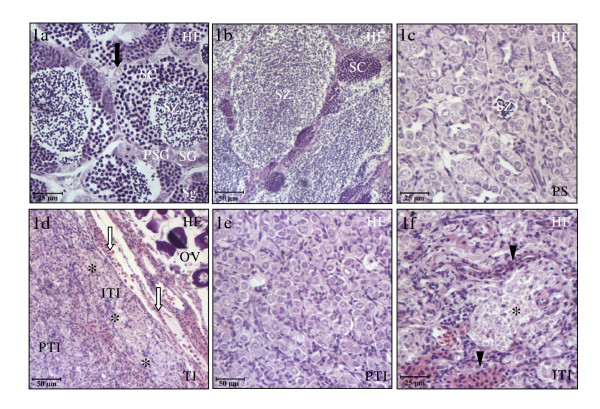
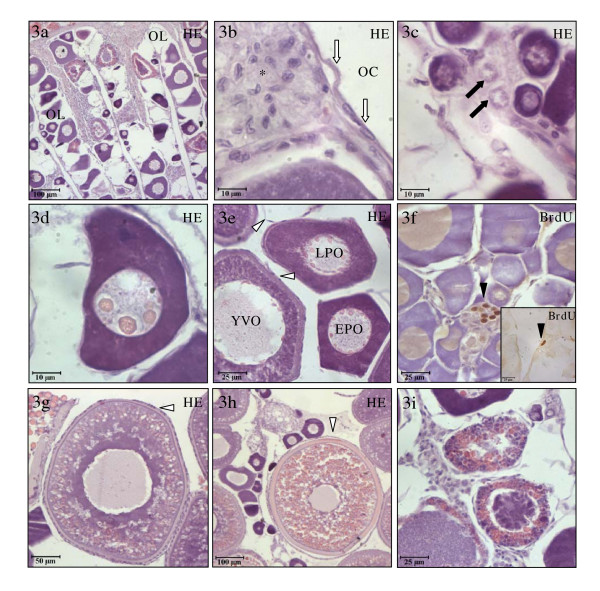
Leukocytes are found within the testis of most, if not all, mammals and are involved in immunological surveillance, physiological regulation and tissue remodelling. The testis of seasonal breeding fish undergoes a regression process. In the present study, the second reproductive cycle (RC) of the protandrous seasonal teleost fish, gilthead seabream, was investigated and the presence of leukocytes analysed. Special attention has been paid to the testicular degenerative process which is particularly active in the last stage of the second RC probably due to the immediacy of the sex change process.
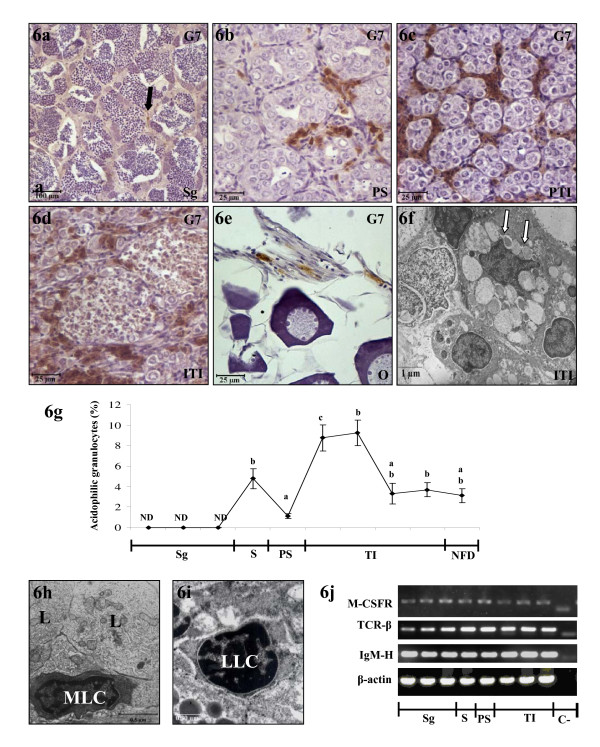
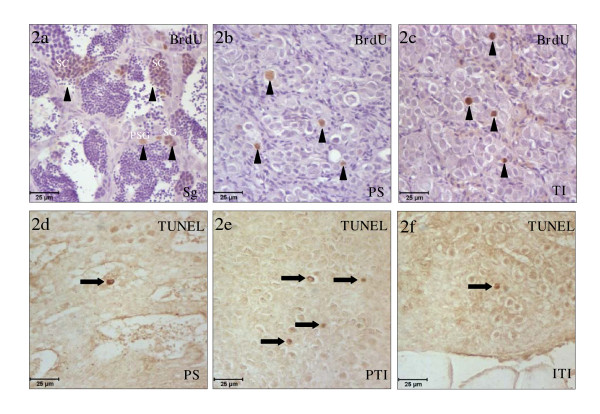
Sexually mature specimens (n = 10-18 fish/month) were sampled during the second RC. Some specimens were intraperitoneally injected with bromodeoxyuridin (BrdU) before sampling. Light and electron microscopy was used to determine the different stages of gonadal development and the presence of leukocytes and PCR was used to analyse the gene expression of a testis-differentiating gene and of specific markers for macrophages and B and T lymphocytes. Immunocytochemistry and flow cytometry were performed using a specific antibody against acidophilic granulocytes from the gilthead seabream. Cell proliferation was detected by immunocytochemistry using an anti-BrdU antibody and apoptotic cells by in situ detection of DNA fragmentation.
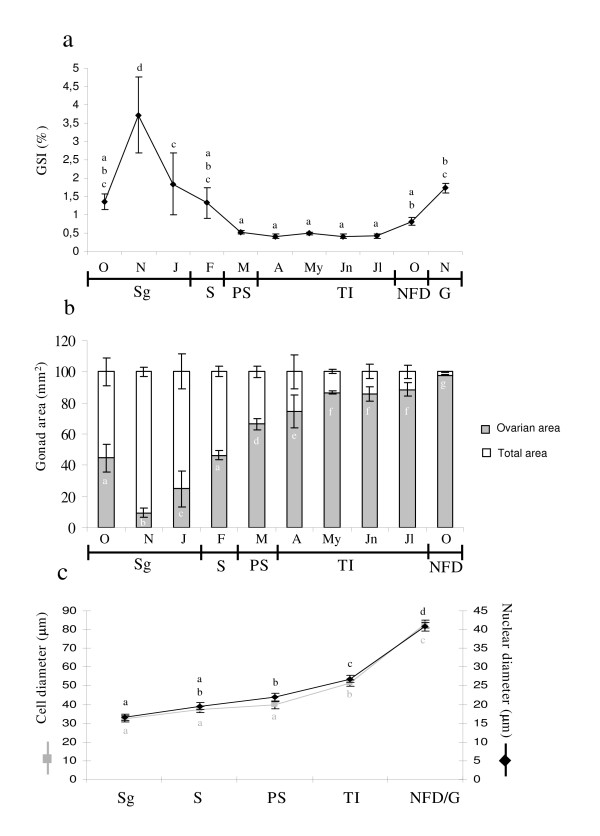
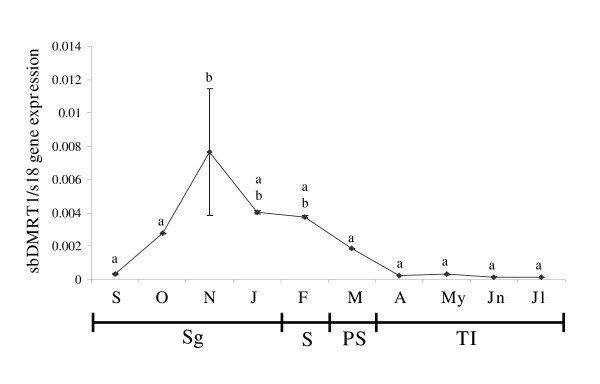
The fish in the western Mediterranean area developed as males during the first two RCs. The testis of all the specimens during the second RC underwent a degenerative process, which started at post-spawning and was enhanced during the testicular involution stage, when vitellogenic oocytes appeared in the ovary accompanied by a progressive increase in the ovarian index. However, only 40% of specimens were females in the third RC. Leukocytes (acidophilic granulocytes, macrophages and lymphocytes) were present in the gonad and acidophilic granulocyte infiltration occurred during the last two stages. At the same time DMRT1 gene expression decreased.
The results demonstrate that innate and adaptive immune cells are present in the gonads of gilthead seabream. Moreover, the whole fish population underwent a testicular degenerative process prior to sex change, characterized by high rates of apoptosis and necrosis and accompanied by an infiltration of acidophilic granulocytes and a decrease in DMRT1 levels.
在大多数(即便不是所有)哺乳动物的睾丸中都能发现白细胞,它们参与免疫监视、生理调节和组织重塑。季节性繁殖鱼类的睾丸会经历一个退化过程。在本研究中,对雄性先熟的季节性硬骨鱼——金头鲷的第二个生殖周期(RC)进行了研究,并分析了白细胞的存在情况。特别关注了睾丸退化过程,该过程在第二个生殖周期的最后阶段尤为活跃,这可能是由于性别转换过程迫在眉睫。
在第二个生殖周期期间对性成熟标本(每月10 - 18条鱼)进行采样。一些标本在采样前腹腔注射溴脱氧尿苷(BrdU)。使用光学显微镜和电子显微镜来确定性腺发育的不同阶段以及白细胞的存在情况,并使用聚合酶链反应(PCR)分析睾丸分化基因以及巨噬细胞、B淋巴细胞和T淋巴细胞特异性标志物的基因表达。使用针对金头鲷嗜酸性粒细胞的特异性抗体进行免疫细胞化学和流式细胞术检测。通过使用抗BrdU抗体的免疫细胞化学检测细胞增殖,并通过原位检测DNA片段化检测凋亡细胞。
西地中海地区的鱼在前两个生殖周期发育为雄性。第二个生殖周期期间所有标本的睾丸都经历了退化过程,该过程始于产卵后,并在睾丸退化阶段加剧,此时卵巢中出现卵黄生成卵母细胞,同时卵巢指数逐渐增加。然而,在第三个生殖周期中只有40%的标本为雌性。性腺中存在白细胞(嗜酸性粒细胞、巨噬细胞和淋巴细胞),并且在最后两个阶段出现嗜酸性粒细胞浸润。与此同时,DMRT1基因表达下降。
结果表明,金头鲷的性腺中存在先天性和适应性免疫细胞。此外,在性别转换之前,整个鱼群都经历了睾丸退化过程,其特征是高凋亡率和坏死率,同时伴有嗜酸性粒细胞浸润和DMRT1水平下降。