Mazzatti Dawn J, Pawelec Graham, Longdin Robin, Powell Jonathan R, Forsey Rosalyn J
Unilever Corporate Research, Colworth Park, Sharnbrook, UK.
Proteome Sci. 2007 Jun 5;5:7. doi: 10.1186/1477-5956-5-7.
The adaptive immune response requires waves of T-cell clonal expansion on contact with pathogen and elimination after clearance of the source of antigen. However, lifelong persistent infections with common viruses cause chronic antigenic stimulation which takes its toll on adaptive immunity in late life. Chronic antigenic stress results in deregulation of the T-cell response and accumulation of anergic cells. Longitudinal studies of the elderly show that this impacts on survival. Identifying the nature of the defects in chronically-stimulated T-cells and protein bio-markers of these dysfunctional cells would help to understand age-associated compromised T-cell function (immunosenescence) and facilitate the development of targeted intervention strategies.The purpose of this work was to use surface-enhanced laser desorption/ionization time-of-flight mass spectrometry (SELDI-TOF-MS) to analyse proteins associated with T-cell senescence in order to identify potential bio-markers. Clonal populations of T-cells isolated from elderly octogenarian and centenarian donors were grown in vitro until senescence, and early passage and late passage (pre-senescent) cells were analysed using SELDI-TOF-MS ProteinChip arrays.
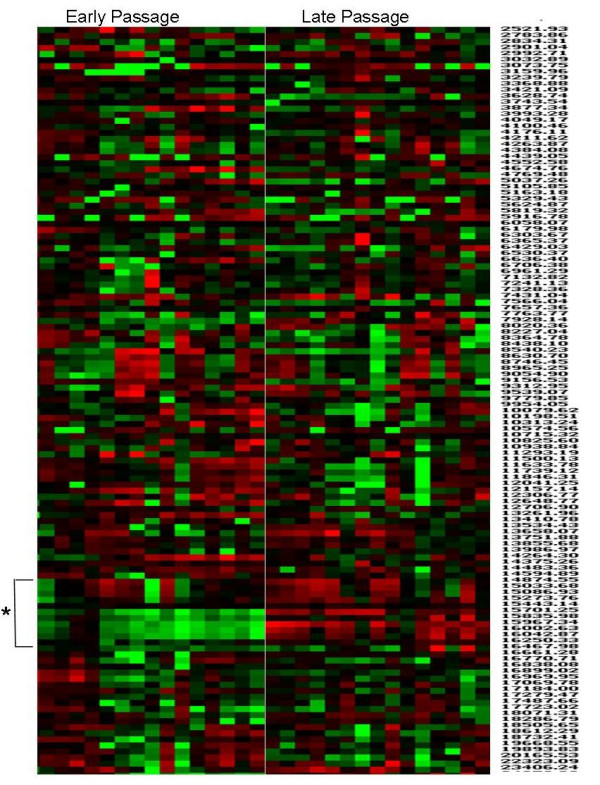
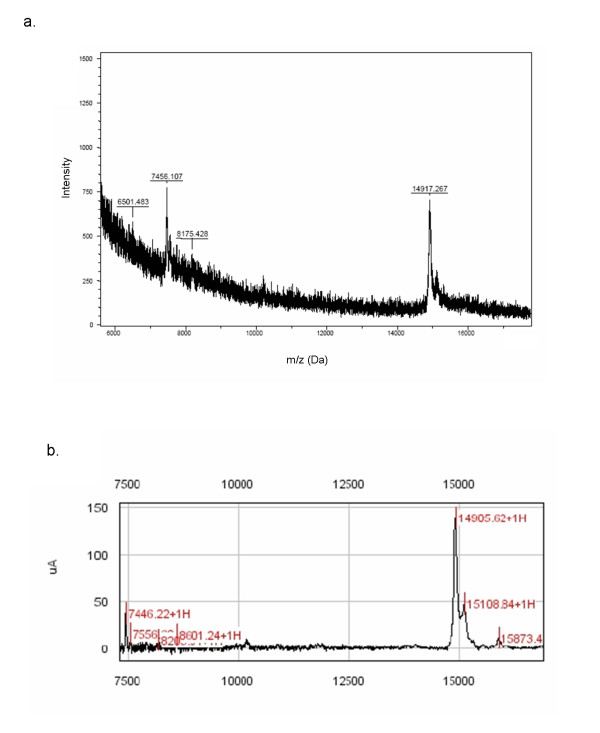
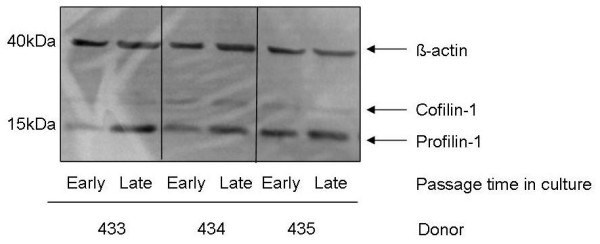
Discriminant analysis identified several protein or peptide peaks in the region of 14.5-16.5 kDa that were associated with T-cell clone senescence. Human profilin-1, a ubiquitous protein associated with actin remodelling and cellular motility was unambiguously identified. Altered expression of profilin-1 in senescent T-cell clones was confirmed by Western blot analysis.
Due to the proposed roles of profilin-1 in cellular survival, cytoskeleton remodelling, motility, and proliferation, it is hypothesised that differential expression of profilin-1 in ageing may contribute directly to immunosenescence.
适应性免疫反应需要T细胞在接触病原体时进行多轮克隆扩增,并在抗原源清除后将其清除。然而,常见病毒的终身持续性感染会导致慢性抗原刺激,这对晚年的适应性免疫产生不利影响。慢性抗原应激导致T细胞反应失调和无反应性细胞积累。对老年人的纵向研究表明,这会影响生存。确定慢性刺激的T细胞缺陷的性质以及这些功能失调细胞的蛋白质生物标志物,将有助于理解与年龄相关的T细胞功能受损(免疫衰老),并促进有针对性的干预策略的开发。这项工作的目的是使用表面增强激光解吸/电离飞行时间质谱(SELDI-TOF-MS)分析与T细胞衰老相关的蛋白质,以确定潜在的生物标志物。从八旬老人和百岁老人供体中分离出的T细胞克隆群体在体外培养至衰老,使用SELDI-TOF-MS ProteinChip阵列分析早期传代和晚期传代(衰老前)细胞。
判别分析在14.5-16.5 kDa区域确定了几个与T细胞克隆衰老相关的蛋白质或肽峰。明确鉴定出人类原肌球蛋白1,这是一种与肌动蛋白重塑和细胞运动相关的普遍存在的蛋白质。通过蛋白质印迹分析证实了衰老T细胞克隆中原肌球蛋白1的表达改变。
由于原肌球蛋白1在细胞存活、细胞骨架重塑、运动和增殖方面的作用,推测衰老过程中原肌球蛋白1的差异表达可能直接导致免疫衰老。