Ruggieri Anna, Franco Marina, Gatto Ilaria, Kumar Ajit, Rapicetta Maria
Viral Hepatitis Unit, Department of Infectious, Parasitic and Immune-Mediated Diseases, Istituto Superiore di Sanità, Rome, Italy.
BMC Gastroenterol. 2007 Jun 12;7:21. doi: 10.1186/1471-230X-7-21.
Hepatitis C virus (HCV) infection is associated with high percentage of chronicity which implies the ability of the virus to evade or modulate host cell immune system. Modulation of chemokines, such as RANTES may be part of the virus induced pathogenicity. We examined the effect of core and structural proteins of HCV on RANTES expression in two liver derived cell lines, HepG2 and Chang Liver (CHL).
HepG2 and Chang Liver (CHL) cell lines were established and selected for constitutive expression of HCV core and structural genes. Flow cytometry and quantitative RT-PCR analysis were performed to examine the effect of HCV core protein on RANTES expression. Luciferase analysis after RANTES-Luc-promoter transfection of established cell lines was assayed by luminometer measurements (RLU) of RANTES promoter activity. IRF-1 and IRF-7 expression was then examined by immunoblotting analysis.
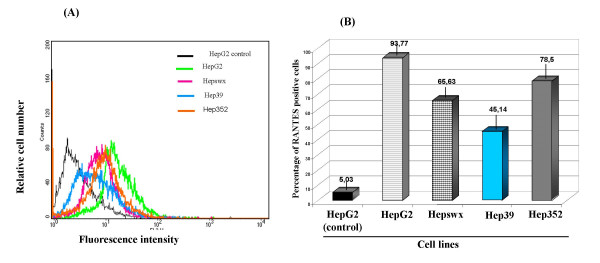
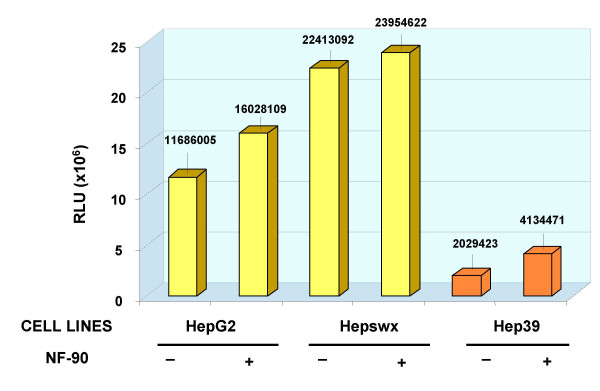
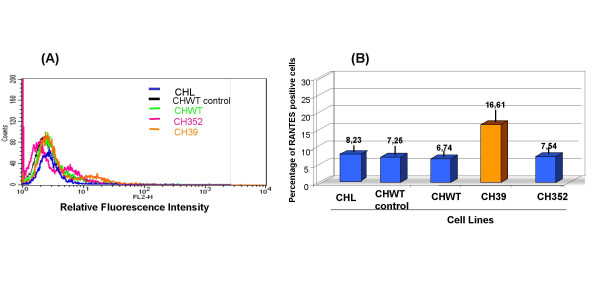
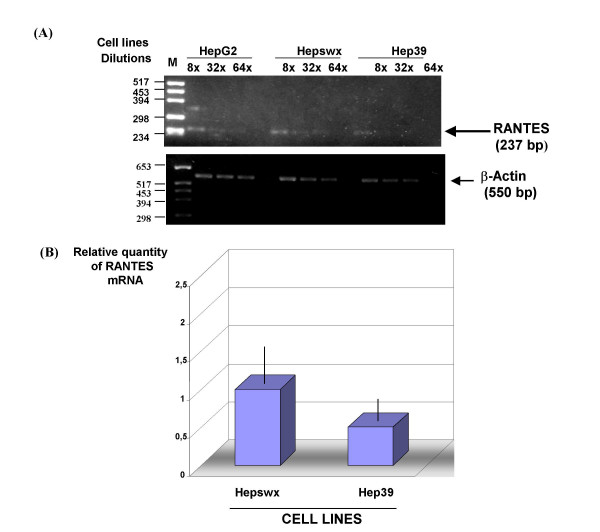
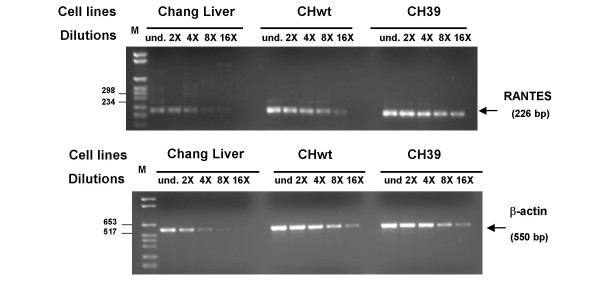
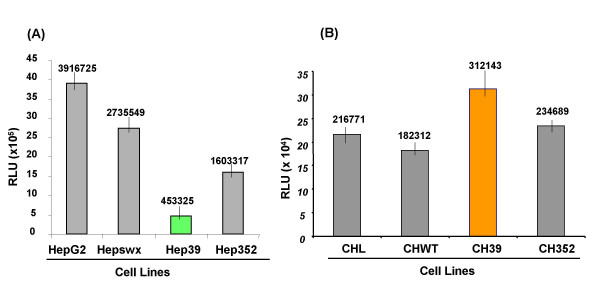
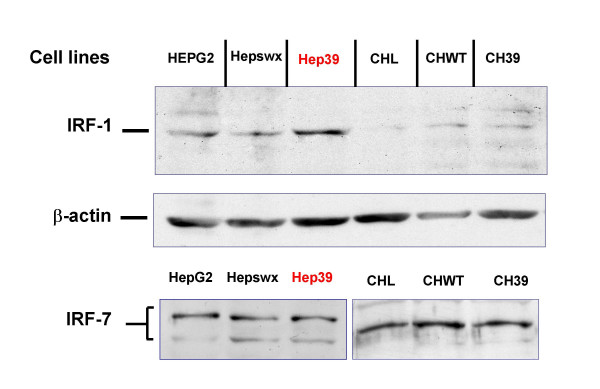
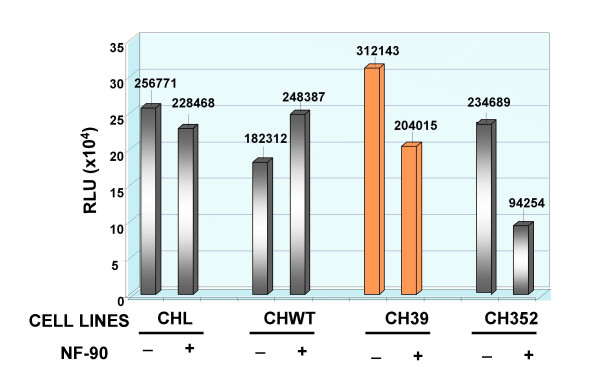
Results of flow cytometry and RT-PCR analysis indicated that RANTES is differentially regulated by HCV core protein in the two cell lines examined as its expression was inhibited in HepG2 cells, by a reduction of RANTES promoter activity. Conversely, RANTES protein and mRNA were induced by the core protein in CHL cells, through the induction of the promoter. Since HCV genome modulates IRF-1 and IRF-7 in replicon system and IRF-1, IRF-3 and IRF-7 have been reported to regulate RANTES promoter in various cell systems, analysis of the mechanism underlying RANTES modulation by the core protein revealed that IRF-1 expression was induced in HepG2 cells by the core protein, whereas in CHL cells it was expressed at a very low level that was not influenced by transfection with the core protein construct. This suggested that IRF-1 level may mediate the expression of RANTES in cell lines of liver origin. The effect of the core protein on RANTES promoter was countered by co-transfection with NF90, a double-stranded-RNA binding protein that activates some interferon response genes and acts as a component of cell defense against viral infection.
HCV core protein have opposite effects on the expression of RANTES in different cell types in vitro, possibly reflecting a similar scenario in different microenvironments in vivo.
丙型肝炎病毒(HCV)感染与高比例的慢性化相关,这意味着该病毒具有逃避或调节宿主细胞免疫系统的能力。趋化因子(如RANTES)的调节可能是病毒诱导致病性的一部分。我们研究了HCV的核心蛋白和结构蛋白对两种肝脏来源的细胞系HepG2和Chang Liver(CHL)中RANTES表达的影响。
建立并筛选出组成性表达HCV核心基因和结构基因的HepG2和Chang Liver(CHL)细胞系。进行流式细胞术和定量RT-PCR分析,以检测HCV核心蛋白对RANTES表达的影响。通过对建立的细胞系进行RANTES-Luc启动子转染后的荧光素酶分析,用光度计测量(RLU)RANTES启动子活性。然后通过免疫印迹分析检测IRF-1和IRF-7的表达。
流式细胞术和RT-PCR分析结果表明,在检测的两种细胞系中,RANTES受HCV核心蛋白的差异调节,因为其在HepG2细胞中的表达受到抑制,RANTES启动子活性降低。相反,在CHL细胞中,核心蛋白通过诱导启动子来诱导RANTES蛋白和mRNA的表达。由于HCV基因组在复制子系统中调节IRF-1和IRF-7,并且据报道IRF-1、IRF-3和IRF-7在各种细胞系统中调节RANTES启动子,对核心蛋白调节RANTES的机制分析表明,核心蛋白在HepG2细胞中诱导IRF-1表达,而在CHL细胞中其表达水平非常低,不受核心蛋白构建体转染的影响。这表明IRF-1水平可能介导肝脏来源细胞系中RANTES的表达。核心蛋白对RANTES启动子的作用可通过与NF90共转染来抵消,NF90是一种双链RNA结合蛋白,可激活一些干扰素反应基因,并作为细胞抗病毒感染防御的一个组成部分。
HCV核心蛋白在体外对不同细胞类型中RANTES的表达有相反的作用,这可能反映了体内不同微环境中的类似情况。