Iimuro Yuji, Brenner David A
First Department of Surgery, Hyogo College of Medicine, 1-1 Mukogawa-cho, Nishinomiya, Hyogo 663-8501, Japan.
Pharm Res. 2008 Feb;25(2):249-58. doi: 10.1007/s11095-007-9311-7. Epub 2007 Jun 19.
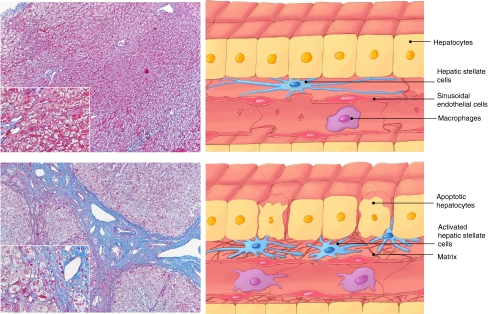
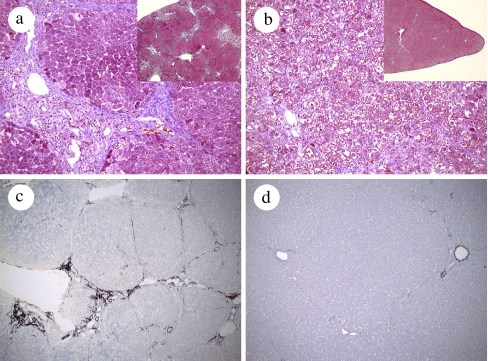
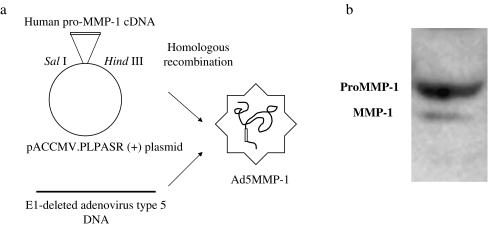
The resolution of advanced liver fibrosis has been recently recognized to be possible, if the causative stimuli are successfully removed. However, whether complete resolution from cirrhosis, the end stage of liver fibrosis, can be achieved is still questionable. Delivery of interstitial collagenases, such as matrix metalloproteinase (MMP)-1, in the liver could be an attractive strategy to treat advanced hepatic fibrosis from the view point that the imbalance between too few interstitial collagenases and too many of their inhibitors is the main obstacle to the resolution from fibrosis. Remodeling of hepatic extracellular matrix by delivered interstitial collagenases also facilitates the disappearance of activated hepatic stellate cells, the main matrix-producing cells in the liver, and promotes the proliferation of hepatocytes. This review will focus on the impact of the gene delivery of MMPs for the treatment of advanced liver fibrosis while discussing other current therapeutic strategies for liver fibrosis, and on the need for the development of a safe and effective delivery system of MMPs.
近年来人们认识到,如果成功去除致病刺激因素,晚期肝纤维化是有可能消退的。然而,肝纤维化终末期即肝硬化能否完全消退仍存在疑问。从肝内递送间质胶原酶,如基质金属蛋白酶(MMP)-1,可能是治疗晚期肝纤维化的一种有吸引力的策略,因为间质胶原酶过少与其抑制剂过多之间的失衡是纤维化消退的主要障碍。递送的间质胶原酶对肝细胞外基质的重塑也有助于肝内主要的基质产生细胞——活化肝星状细胞的消失,并促进肝细胞的增殖。本综述将重点讨论MMP基因递送对晚期肝纤维化治疗的影响,同时探讨目前其他治疗肝纤维化的策略,以及开发安全有效的MMP递送系统的必要性。