Oatley Jon M, Avarbock Mary R, Brinster Ralph L
Department of Animal Biology, School of Veterinary Medicine, University of Pennsylvania, Philadelphia, Pennsylvania 19104, USA.
J Biol Chem. 2007 Aug 31;282(35):25842-51. doi: 10.1074/jbc.M703474200. Epub 2007 Jun 27.
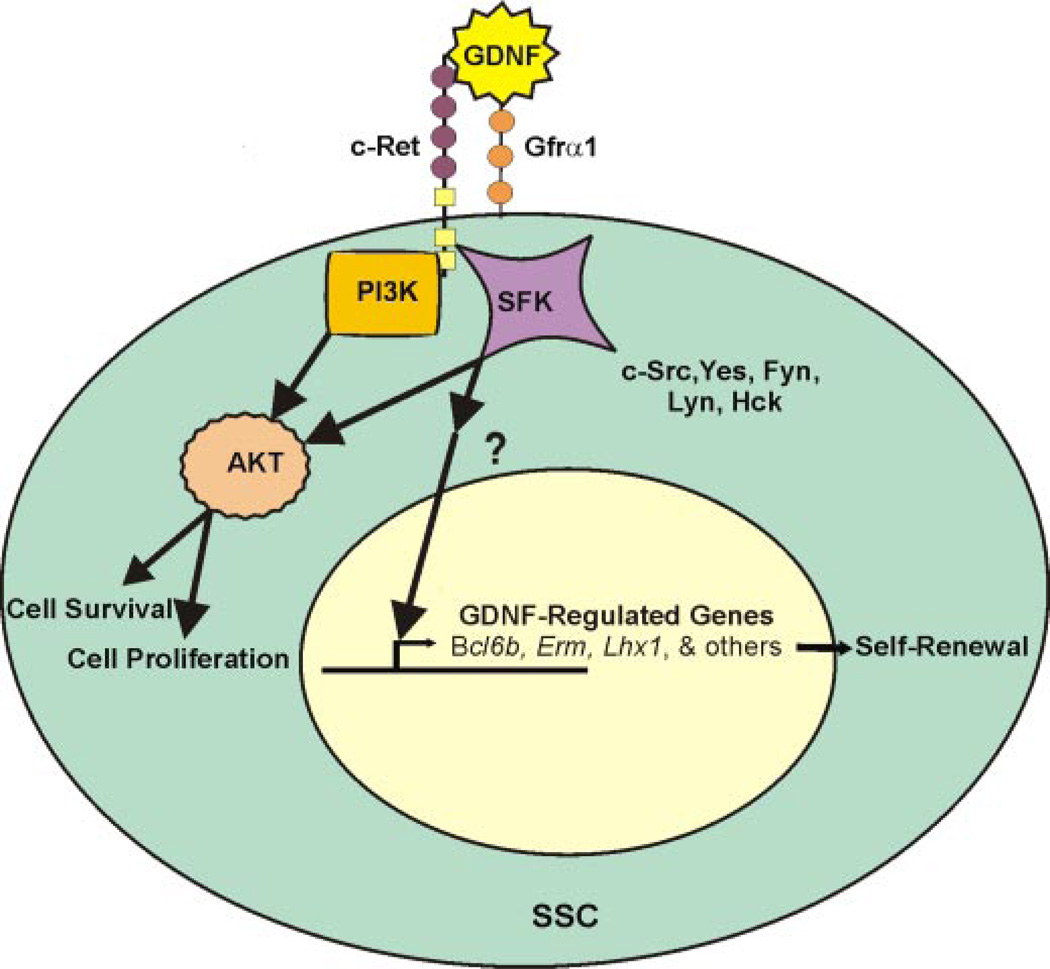
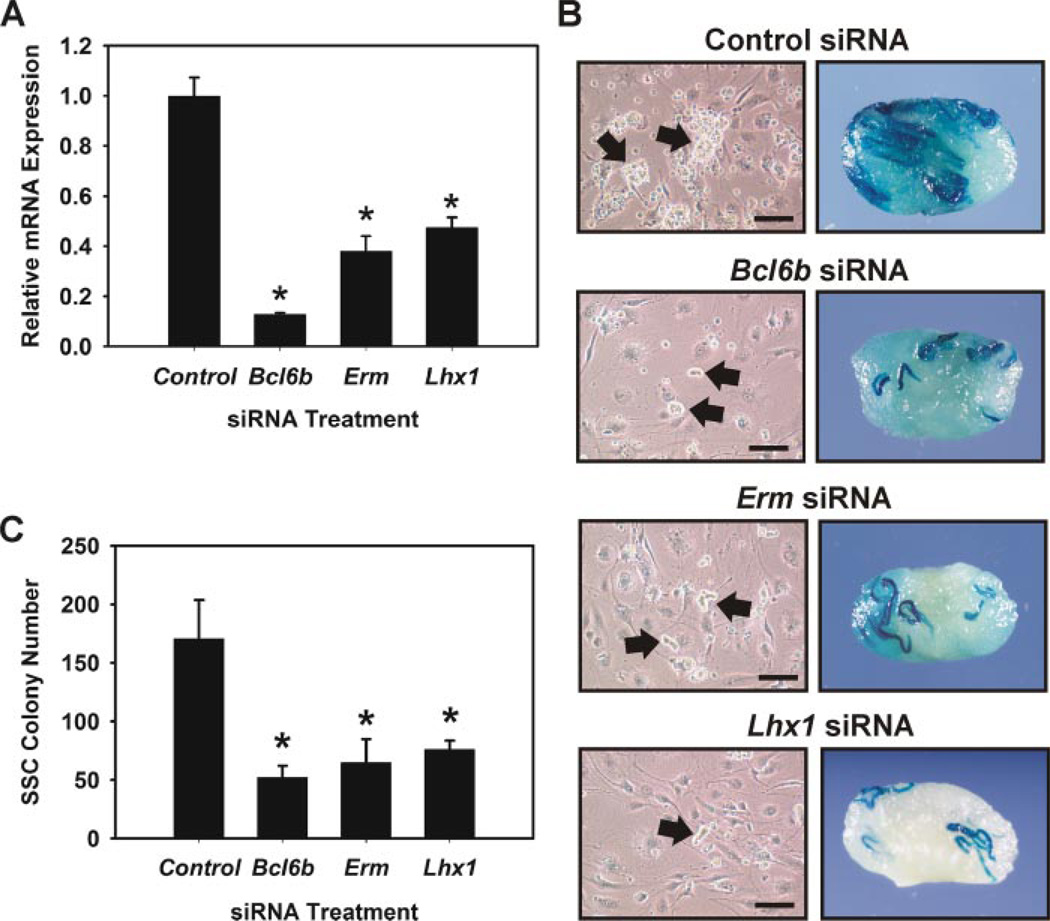
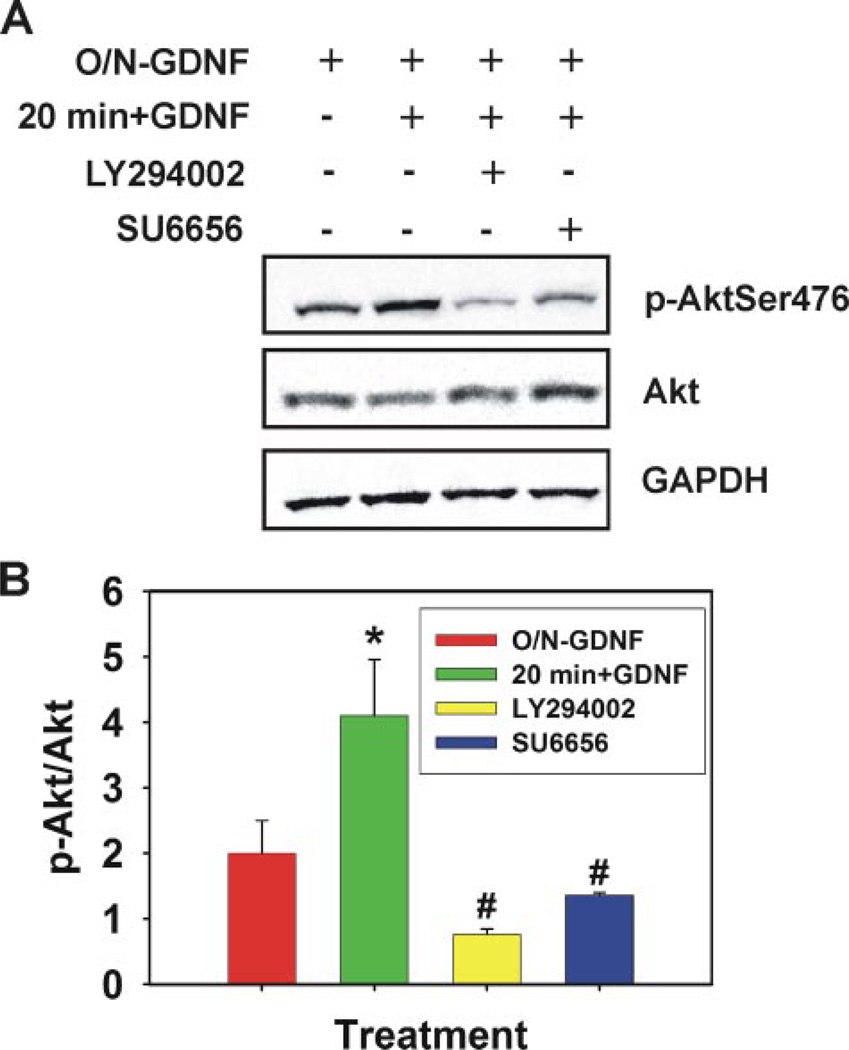
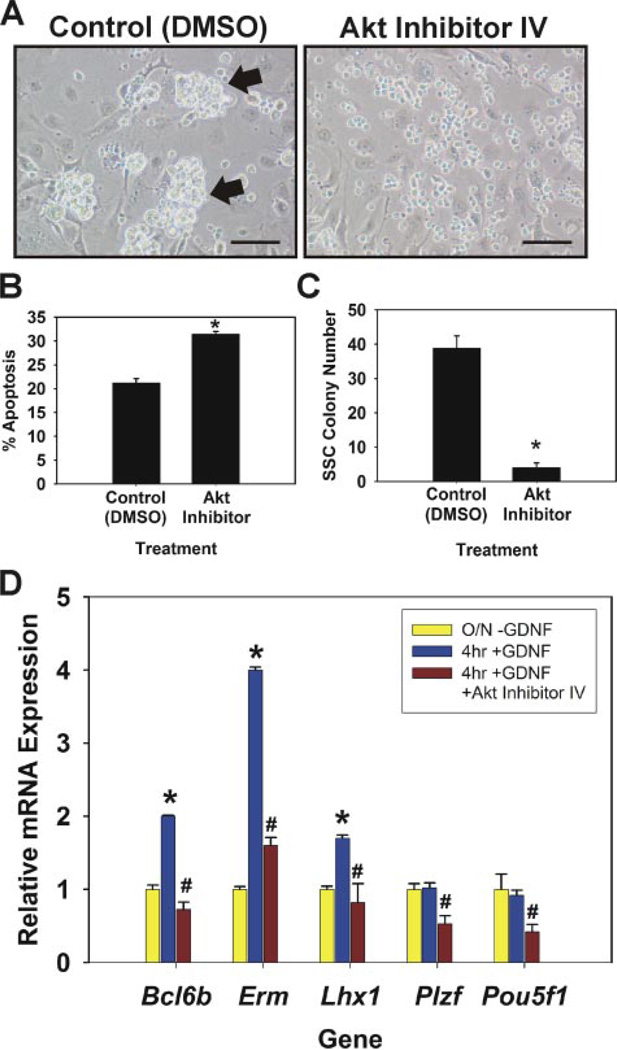
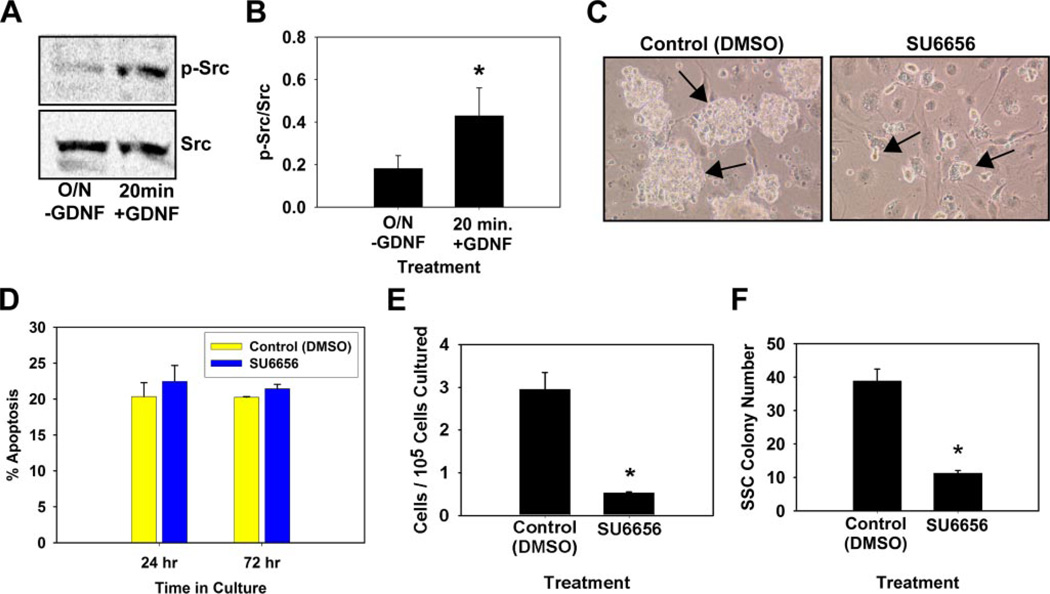
Self-renewal and differentiation by spermatogonial stem cells (SSCs) is the foundation for continual spermatogenesis. SSC self-renewal is dependent on glial cell line-derived neurotrophic factor (GDNF); however, intracellular mechanisms stimulated by GDNF in SSCs are unknown. To investigate these mechanisms we utilized a culture system that maintains a mouse undifferentiated germ cell population enriched for self-renewing SSCs. In these cultures mRNA for the transcription factors Bcl6b, Erm, and Lhx1 are up-regulated by GDNF and decreased in its absence. The expression of all three molecules was further identified in undifferentiated spermatogonia in vivo. Using small interfering RNA to reduce expression and transplantation to quantify stem cell numbers, Bcl6b, Erm, and Lhx1 were shown to be important for SSC maintenance in vitro. Next, GDNF was shown to activate both Akt and Src family kinase (SFK) signaling in SSCs, and culture of SSCs with inhibitors to Akt or SFKs followed by transplantation analysis showed significant impairment of SSC maintenance in vitro. Apoptosis analysis revealed a significant increase in the percentage of apoptotic cells when Akt, but not SFK, signaling was impaired, indicating that multiple signaling pathways are responsible for SSC self-renewal and survival. Biochemical and gene expression experiments revealed that GDNF up-regulated expression of Bcl6b, Erm, and Lhx1 transcripts is dependent on SFK signaling. Overall, these data demonstrate that GDNF up-regulation of Bcl6b, Erm, and Lhx1 expression through SFK signaling is a key component of the intracellular mechanism for SSC self-renewal.
精原干细胞(SSCs)的自我更新和分化是持续精子发生的基础。SSC自我更新依赖于胶质细胞系衍生的神经营养因子(GDNF);然而,GDNF在SSCs中刺激的细胞内机制尚不清楚。为了研究这些机制,我们利用了一种培养系统,该系统维持了富含自我更新SSCs的小鼠未分化生殖细胞群体。在这些培养物中,转录因子Bcl6b、Erm和Lhx1的mRNA被GDNF上调,而在没有GDNF的情况下则下降。这三种分子的表达在体内未分化的精原细胞中进一步得到证实。使用小干扰RNA降低表达并通过移植来量化干细胞数量,结果表明Bcl6b、Erm和Lhx1对体外SSC的维持很重要。接下来,研究表明GDNF可激活SSCs中的Akt和Src家族激酶(SFK)信号通路,用Akt或SFKs抑制剂培养SSCs后进行移植分析,结果显示体外SSC的维持受到显著损害。凋亡分析显示,当Akt信号通路受损而非SFK信号通路受损时,凋亡细胞的百分比显著增加,这表明多种信号通路负责SSC的自我更新和存活。生化和基因表达实验表明,GDNF上调Bcl6b、Erm和Lhx1转录本的表达依赖于SFK信号通路。总体而言,这些数据表明,GDNF通过SFK信号通路上调Bcl6b、Erm和Lhx1的表达是SSC自我更新细胞内机制的关键组成部分。