Discipline of Biological Sciences, The University of Newcastle, Callaghan, NSW 2308, Australia.
Infertility and Reproduction Program, Hunter Medical Research Institute, New Lambton Heights, NSW 2305, Australia.
Biol Reprod. 2024 Oct 14;111(4):757-779. doi: 10.1093/biolre/ioae109.
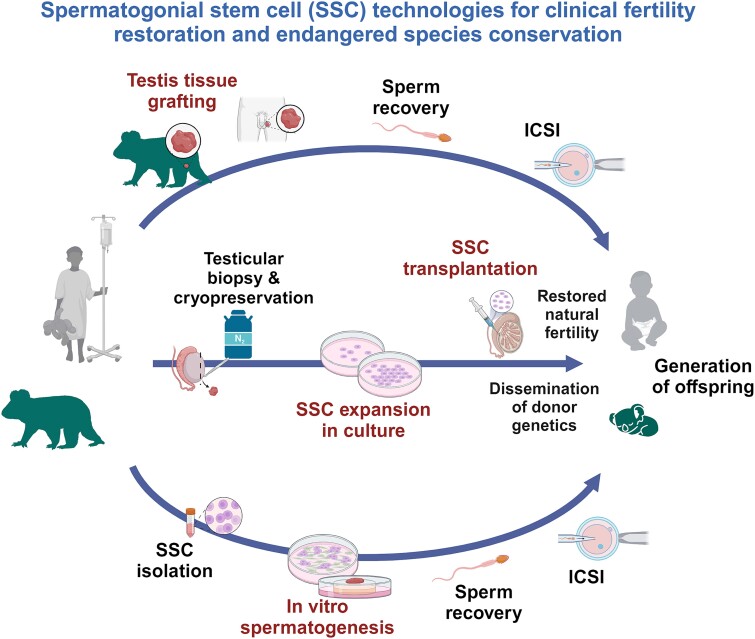
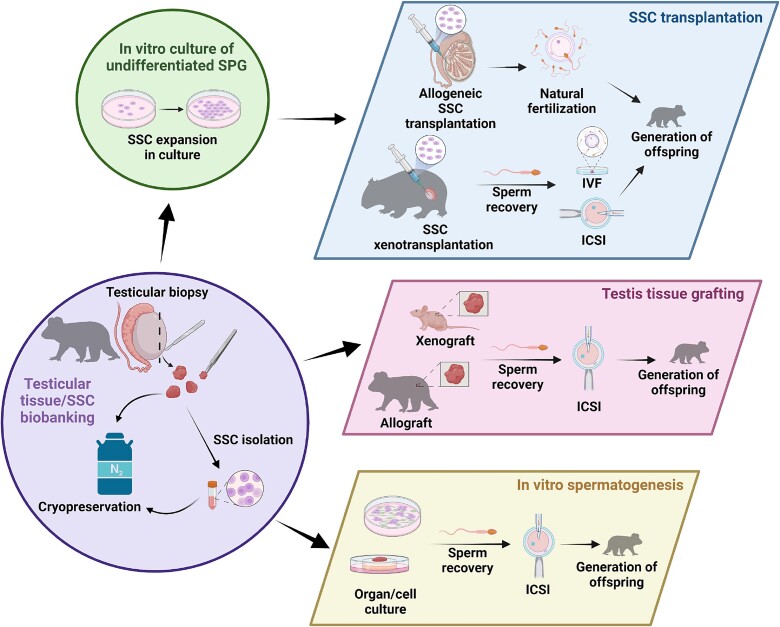
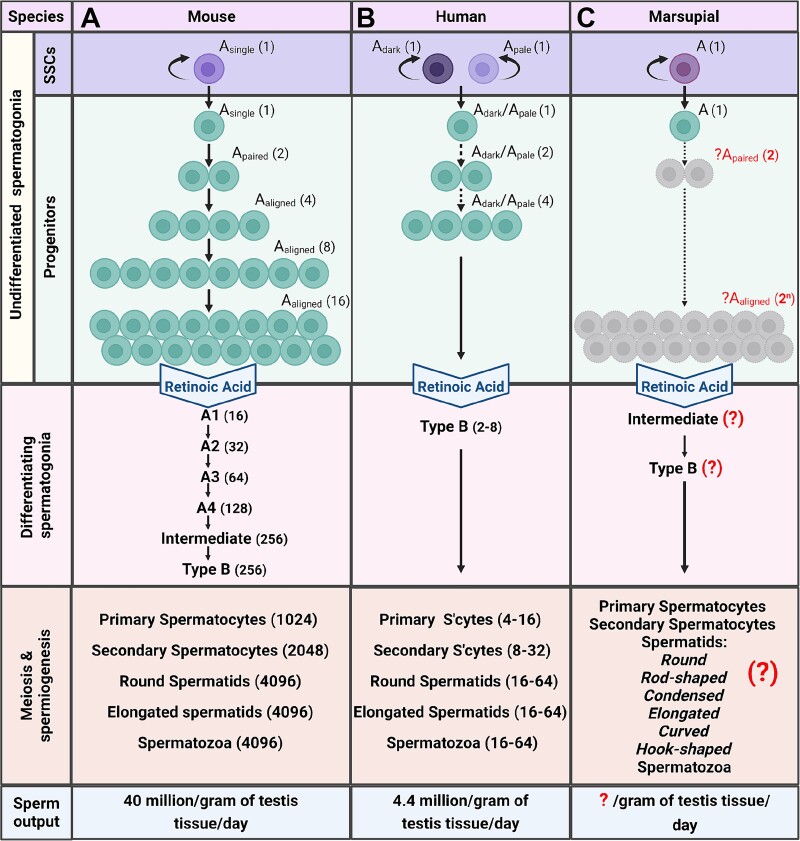
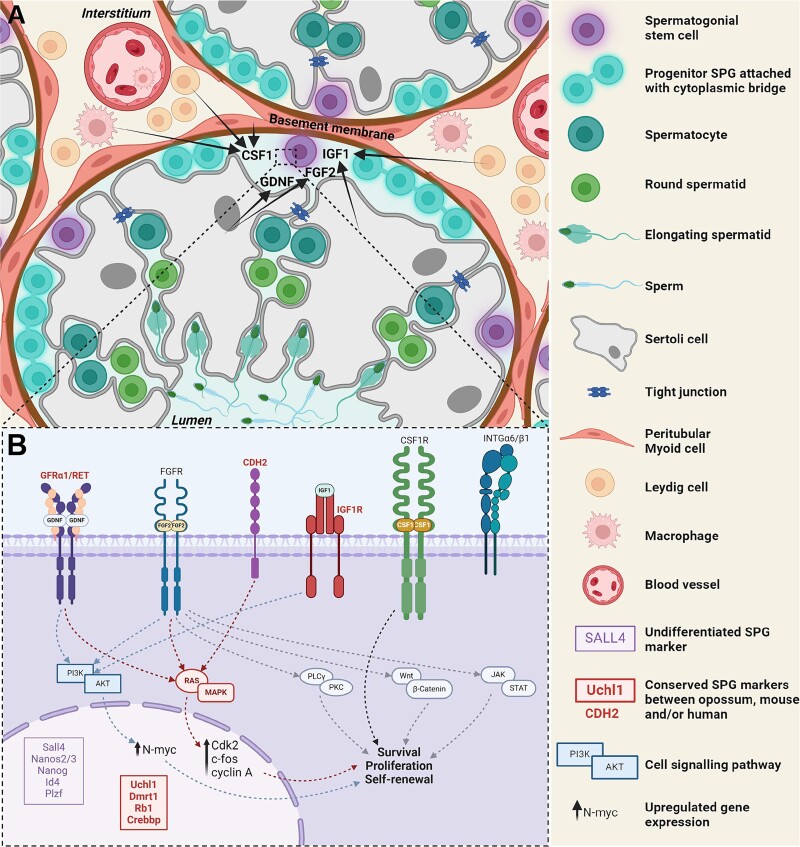
Spermatogonial stem cell (SSC) technologies that are currently under clinical development to reverse human infertility hold the potential to be adapted and applied for the conservation of endangered and vulnerable wildlife species. The biobanking of testis tissue containing SSCs from wildlife species, aligned with that occurring in pediatric human patients, could facilitate strategies to improve the genetic diversity and fitness of endangered populations. Approaches to utilize these SSCs could include spermatogonial transplantation or testis tissue grafting into a donor animal of the same or a closely related species, or in vitro spermatogenesis paired with assisted reproduction approaches. The primary roadblock to progress in this field is a lack of fundamental knowledge of SSC biology in non-model species. Herein, we review the current understanding of molecular mechanisms controlling SSC function in laboratory rodents and humans, and given our particular interest in the conservation of Australian marsupials, use a subset of these species as a case-study to demonstrate gaps-in-knowledge that are common to wildlife. Additionally, we review progress in the development and application of SSC technologies in fertility clinics and consider the translation potential of these techniques for species conservation pipelines.
精子干细胞 (SSC) 技术目前正在临床开发中,以逆转人类不育症,具有适应和应用于保护濒危和脆弱野生动物物种的潜力。与儿科人类患者中发生的情况一致,对含有 SSC 的睾丸组织进行生物银行存储,可以促进提高濒危种群遗传多样性和适应性的策略。利用这些 SSCs 的方法可以包括精原干细胞移植或睾丸组织移植到同一或亲缘关系密切的供体动物中,或与辅助生殖方法相结合的体外精子发生。该领域进展的主要障碍是缺乏非模式物种 SSC 生物学的基本知识。在此,我们综述了控制实验室啮齿动物和人类 SSC 功能的分子机制的现有认识,并鉴于我们对澳大利亚有袋动物保护的特别关注,使用这些物种的一个子集作为案例研究,以展示常见于野生动物的知识空白。此外,我们还综述了 SSC 技术在生育诊所的开发和应用方面的进展,并考虑了这些技术在物种保护中的转化潜力。