Rivière Guillaume, Michaud Annie, Corradi Hazel R, Sturrock Edward D, Ravi Acharya K, Cogez Virginie, Bohin Jean-Pierre, Vieau Didier, Corvol Pierre
Unité Neurosciences et Physiologie Adaptative, Université des Sciences et Technologies de Lille, 59655 Villeneuve d'Ascq Cédex, France.
Gene. 2007 Sep 1;399(1):81-90. doi: 10.1016/j.gene.2007.05.010. Epub 2007 Jun 2.
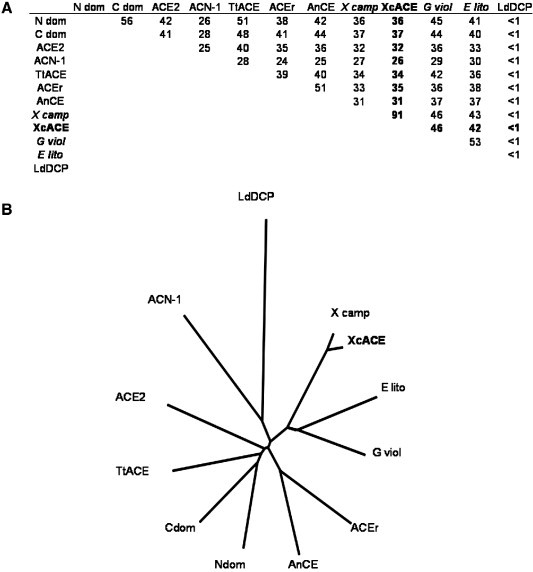
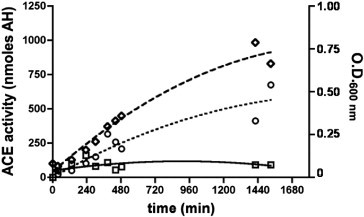
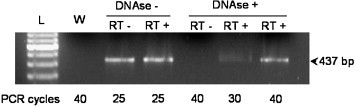
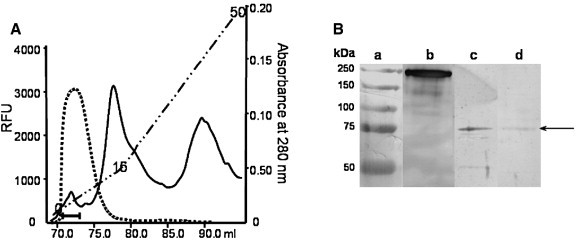
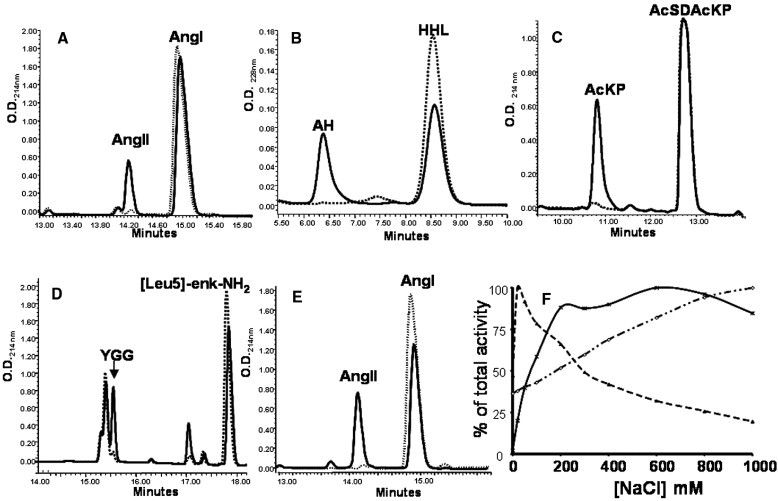
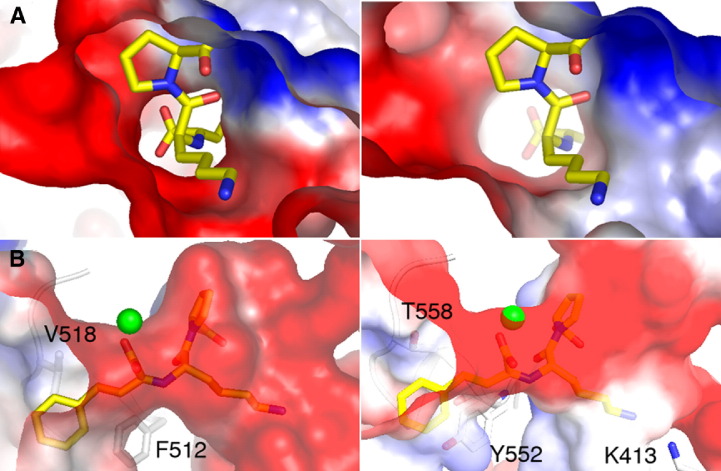
Angiotensin-converting enzyme (ACE) is a metallopeptidase that converts angiotensin I into angiotensin II. ACE is crucial in the control of cardiovascular and renal homeostasis and fertility in mammals. In vertebrates, both transmembrane and soluble ACE, containing one or two active sites, have been characterized. So far, only soluble, single domain ACEs from invertebrates have been cloned, and these have been implicated in reproduction in insects. Furthermore, an ACE-related carboxypeptidase was recently characterized in Leishmania, a unicellular eukaryote, suggesting the existence of ACE in more distant organisms. Interestingly, in silico databank analysis revealed that bacterial DNA sequences could encode putative ACE-like proteins, strikingly similar to vertebrates' enzymes. To gain more insight into the bacterial enzymes, we cloned the putative ACE from the phytopathogenic bacterium, Xanthomonas axonopodis pv. citri, named XcACE. The 2 kb open reading frame encodes a 672-amino-acid soluble protein containing a single active site. In vitro expression and biochemical characterization revealed that XcACE is a functional 72 kDa dipeptidyl-carboxypeptidase. As in mammals, this metalloprotease hydrolyses angiotensin I into angiotensin II. XcACE is sensitive to ACE inhibitors and chloride ions concentration. Variations in the active site residues, highlighted by structural modelling, can account for the different substrate selectivity and inhibition profile compared to human ACE. XcACE characterization demonstrates that ACE is an ancestral enzyme, provoking questions about its appearance and structure/activity specialisation during the course of evolution.
血管紧张素转换酶(ACE)是一种金属肽酶,可将血管紧张素I转化为血管紧张素II。ACE在哺乳动物的心血管和肾脏稳态以及生育控制中起着至关重要的作用。在脊椎动物中,已鉴定出含有一个或两个活性位点的跨膜和可溶性ACE。到目前为止,仅克隆了来自无脊椎动物的可溶性单结构域ACE,并且这些ACE与昆虫的繁殖有关。此外,最近在单细胞真核生物利什曼原虫中鉴定出一种与ACE相关的羧肽酶,这表明在更远缘的生物体中也存在ACE。有趣的是,计算机数据库分析显示细菌DNA序列可以编码假定的ACE样蛋白,与脊椎动物的酶惊人地相似。为了更深入地了解细菌酶,我们从植物致病细菌柑桔溃疡病菌中克隆了假定的ACE,命名为XcACE。这个2 kb的开放阅读框编码一个672个氨基酸的可溶性蛋白,含有一个活性位点。体外表达和生化特性表明XcACE是一种功能性的72 kDa二肽基羧肽酶。与哺乳动物一样,这种金属蛋白酶将血管紧张素I水解为血管紧张素II。XcACE对ACE抑制剂和氯离子浓度敏感。结构建模突出显示的活性位点残基的变化可以解释与人类ACE相比不同的底物选择性和抑制谱。XcACE的特性表明ACE是一种古老的酶,这引发了关于其在进化过程中出现以及结构/活性特化的问题。