Seigel Gail M, Hackam Abigail S, Ganguly Arupa, Mandell Lorrie M, Gonzalez-Fernandez Federico
Ross Eye Institute, University of Buffalo, Buffalo, NY 14214, USA.
Mol Vis. 2007 Jun 8;13:823-32.
Retinoblastoma (RB) is the most common intraocular tumor of early childhood. The early onset of RB, coupled with our previous findings of cancer stem cell characteristics in RB, led us to hypothesize that subpopulations of RB tumors harbor markers and behaviors characteristic of embryonic and neuronal origin.
Our RB sources included: human pathological tissues, and the human RB cell lines Y79 and WERI-RB27. Microarray screening, single and dual-label immunocytochemistry and RT-PCR were performed to detect embryonic and neuronal stem cell markers, such as Oct3/4, Nanog, CD133, and Musashi-1. To test for functional evidence of stem cell behavior, we examined RB cells for their ability to form neurospheres and retain BrdU label as indicators of self-renewal and slow cell cycling, respectively.
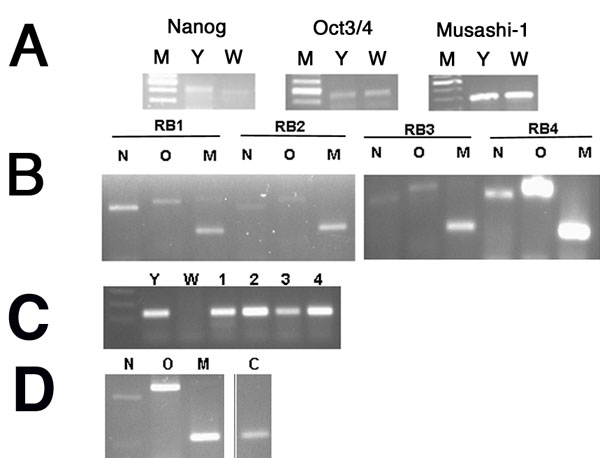
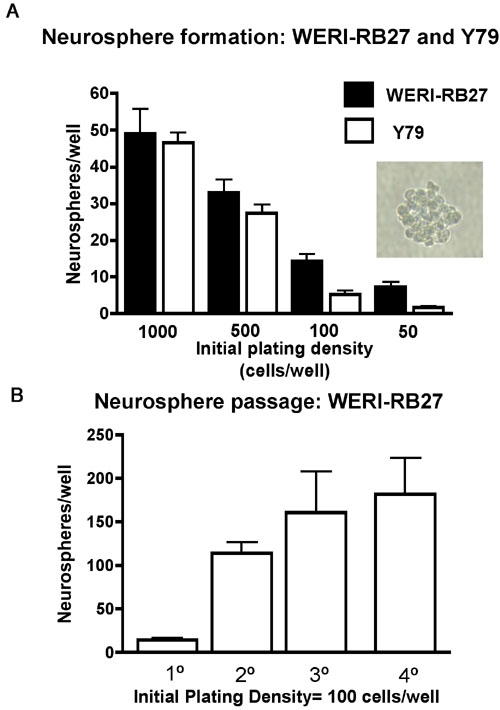
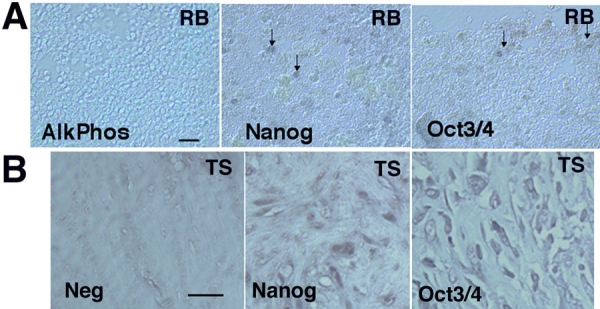
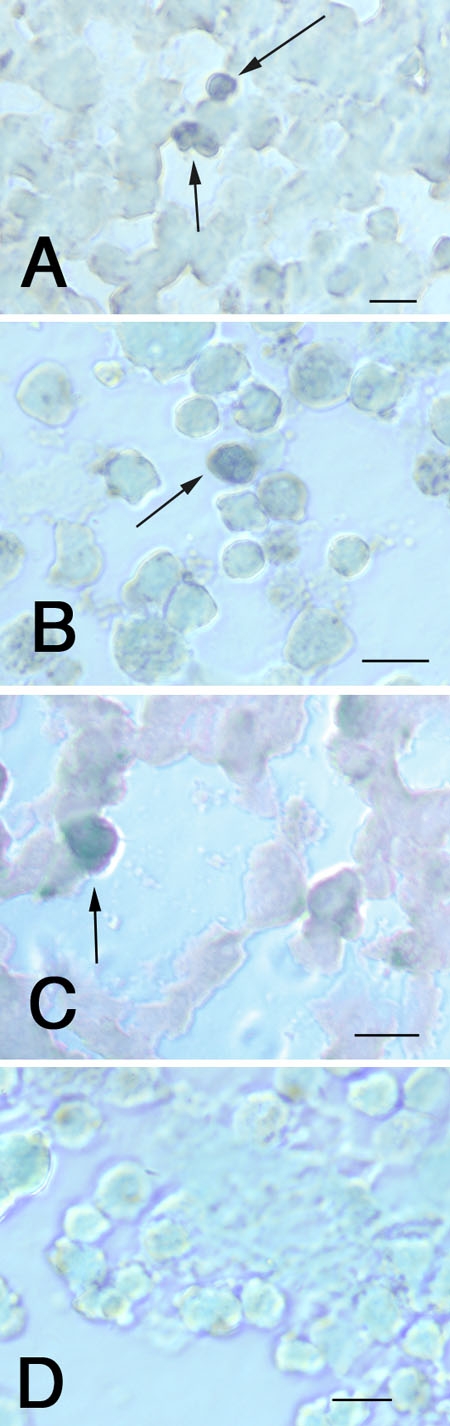
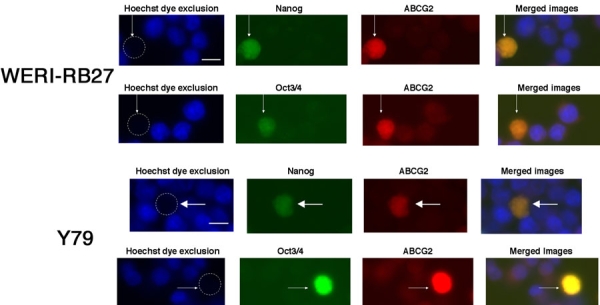
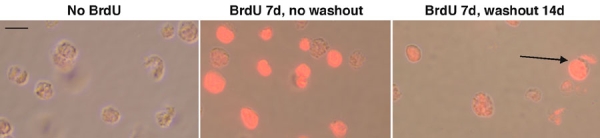
Microarray comparisons of human RB tumors with normal retinal tissue detected upregulation of a number of genes involved in embryonic development that were also present in Y79 cells, including Oct3/4, Nanog, Musashi-1 and Musashi-2, prominin-1 (CD133), Jagged-2, Reelin, Thy-1, nestin, Meis-1,NCAM, Patched, and Notch4. Expression of Musashi-1, Oct3/4 and Nanog was confirmed by immunostaining and RT-PCR analyses of RB tumors and RB cell lines. CD133 expression was confirmed by PCR analysis. Y79 and WERI-RB27 contained populations of Hoechst-dim/ABCG2-positive cells that co-localized with embryonic stem cell markers Oct3/4-ABCG2 and Nanog-ABCG2. Subpopulations of Y79 and WERI-RB27 cells were label-retaining (as seen by BrdU incorporation) and were able to generate neurospheres, both hallmarks of a stem cell phenotype.
Small subpopulation(s) of RB cells express human embryonic and neuronal stem cell markers. There are also subpopulations that demonstrate functional behavior (label retention and self-renewal) consistent with cancer stem cells. These findings support the hypothesis that RB is a heterogeneous tumor comprised of subpopulation(s) with stem cell-like properties.
视网膜母细胞瘤(RB)是幼儿期最常见的眼内肿瘤。RB的早期发病,再加上我们之前在RB中发现的癌症干细胞特征,使我们推测RB肿瘤亚群具有源自胚胎和神经元的标志物及行为特征。
我们的RB来源包括:人类病理组织以及人类RB细胞系Y79和WERI-RB27。进行了微阵列筛选、单标和双标免疫细胞化学以及逆转录聚合酶链反应(RT-PCR),以检测胚胎和神经干细胞标志物,如Oct3/4、Nanog、CD133和Musashi-1。为了测试干细胞行为的功能证据,我们分别检测了RB细胞形成神经球的能力以及保留5-溴脱氧尿嘧啶核苷(BrdU)标记作为自我更新和缓慢细胞周期的指标。
人类RB肿瘤与正常视网膜组织的微阵列比较检测到一些参与胚胎发育的基因上调,这些基因也存在于Y79细胞中,包括Oct3/4、Nanog、Musashi-1和Musashi-2、prominin-1(CD133)、Jagged-2、Reelin、Thy-1、巢蛋白、Meis-1、神经细胞黏附分子(NCAM)、patched和Notch4。通过对RB肿瘤和RB细胞系的免疫染色和RT-PCR分析证实了Musashi-1、Oct3/4和Nanog的表达。通过PCR分析证实了CD133的表达。Y79和WERI-RB27含有Hoechst淡染/ATP结合盒转运体G2(ABCG2)阳性细胞群体,它们与胚胎干细胞标志物Oct3/4-ABCG2和Nanog-ABCG2共定位。Y79和WERI-RB27细胞亚群具有标记保留能力(通过BrdU掺入可见),并且能够生成神经球,这两者都是干细胞表型的标志。
RB细胞的小亚群表达人类胚胎和神经干细胞标志物。也有一些亚群表现出与癌症干细胞一致的功能行为(标记保留和自我更新)。这些发现支持了RB是一种由具有干细胞样特性的亚群组成的异质性肿瘤这一假说。