• 文献检索
  • 文档翻译
  • 深度研究
  • 学术资讯
  • Suppr Zotero 插件Zotero 插件
  • 邀请有礼
  • 套餐&价格
  • 历史记录
应用&插件
Suppr Zotero 插件Zotero 插件浏览器插件Mac 客户端Windows 客户端微信小程序
定价
高级版会员购买积分包购买API积分包
服务
文献检索文档翻译深度研究API 文档MCP 服务
关于我们
关于 Suppr公司介绍联系我们用户协议隐私条款
关注我们

Suppr 超能文献

核心技术专利:CN118964589B侵权必究
粤ICP备2023148730 号-1Suppr @ 2026

文献检索

告别复杂PubMed语法,用中文像聊天一样搜索,搜遍4000万医学文献。AI智能推荐,让科研检索更轻松。

立即免费搜索

文件翻译

保留排版,准确专业,支持PDF/Word/PPT等文件格式,支持 12+语言互译。

免费翻译文档

深度研究

AI帮你快速写综述,25分钟生成高质量综述,智能提取关键信息,辅助科研写作。

立即免费体验

利用遥感和地理信息系统分析尼日尔河流域的生态系统衰退:以马里和尼日尔为例。

Using remote sensing and GIS in the analysis of ecosystem decline along the River Niger Basin: the case of Mali and Niger.

作者信息

Twumasi Yaw A, Merem Edmund C

机构信息

Center for Hydrology, Soil Climatology and Remote Sensing, Department of Plant and Soil Science, Alabama A&M University, Normal, AL 35762, USA.

出版信息

Int J Environ Res Public Health. 2007 Jun;4(2):173-84. doi: 10.3390/ijerph2007040013.

DOI:10.3390/ijerph2007040013
PMID:17617682
原文链接:https://pmc.ncbi.nlm.nih.gov/articles/PMC3728584/
Abstract

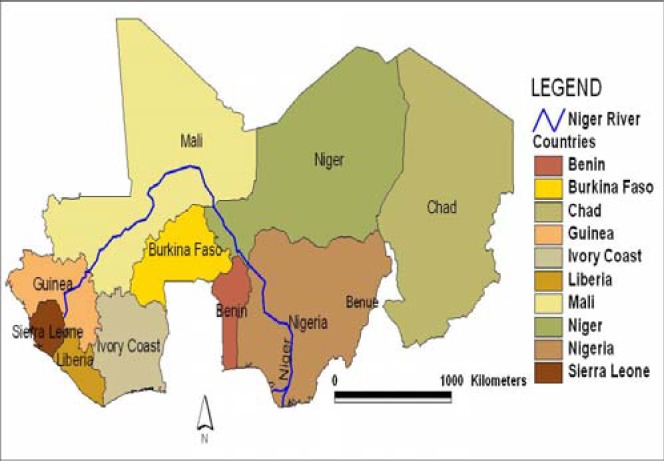
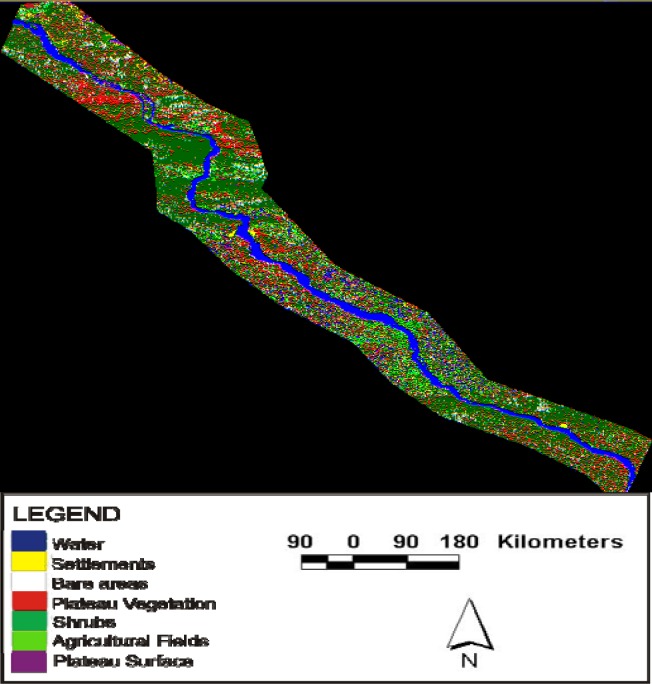
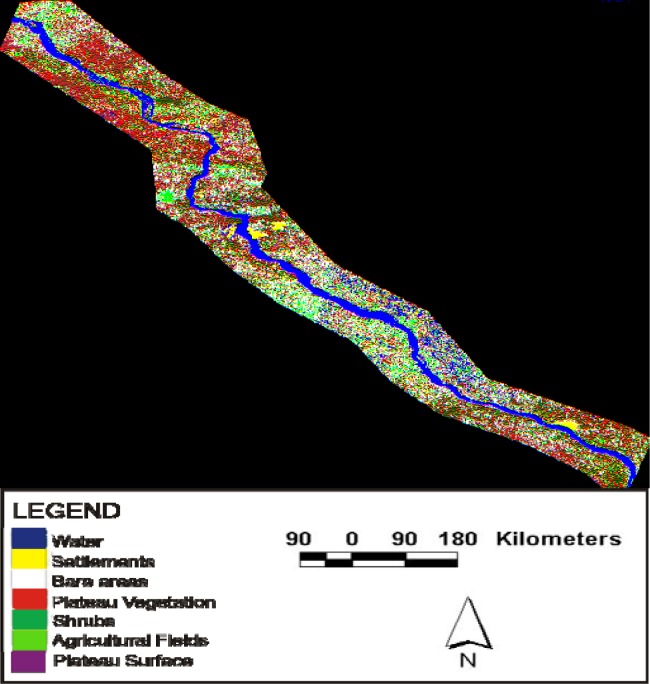
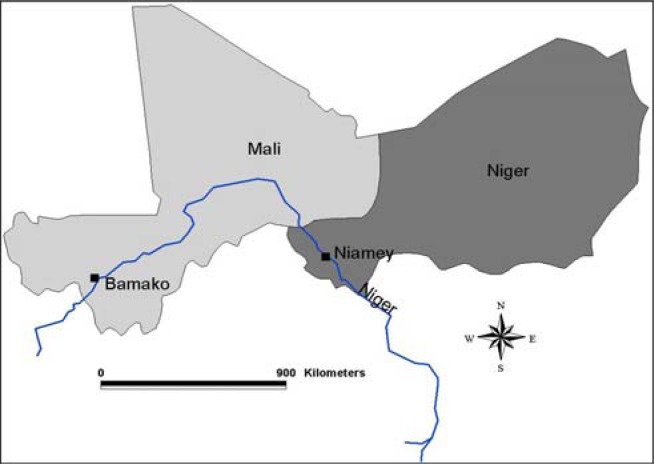
In the Sub-Saharan African region of the River Niger Basin, where none of the major rivers is fully contained within the borders of a single nation, riverine ecosystem health monitoring is essential for survival. Even the globally proclaimed goals of sustainability and environmental security in the region are unattainable without using geospatial technologies of remote sensing and Geographic Information Systems (GIS) as conduits for environmental health within shared waters. Yet the systematic study of the nature of cooperation between states over shared water resources in troubled areas of the Middle East continues to dominate the literature with minimal coverage of the Sub- Saharan Africa experience and the role of GIS and remote sensing in monitoring the problem. Considering the intense ecosystem stress inflicted on River Niger by human activities and natural forces emanating from upstream and downstream nations. Researching the growing potential for acute riverine ecosystem decline among the nations of Niger and Mali along the River Niger Basin with the latest advances in spatial information technology as a decision support tool not only helps in ecosystem recovery and the avoidance of conflicts, but it has the potentials to bring countries much closer through information exchange. While the nature of the problem remains compounded due to the depletion of available water resources and environmental resources within shared waters, the lack of information exchange extracts ecological costs from all players. This is essential as the Niger Basin nations move towards a multinational watershed management as a conduit for sustainability. To confront these problems, some research questions with relevance to the paper have been posed. The questions include, Have there been any declines in the riverine ecosystem of the study area? What are the effects and what factors trigger the changes? What mitigation measures are in place for dealing with the problems? The first objective of the paper is to develop a new framework for analyzing the health of riverine ecosystems while the second objective seeks a contribution to the literature. The third objective is to design a geo-spatial tool for riverine ecosystem management and impact analysis. The fourth objective is to measure the nature of change in riverine environments with the latest advances in geo-spatial information technologies and methods. In terms of methodology, the paper relies on primary data sources analyzed with descriptive statistics, GIS techniques and remote sensing. The sections in the paper consist of a review of the major environmental effects and factors associated with the problem as well as mitigation measures in Mali and Niger. The paper concludes with some recommendations. The results point to growing modification along the riverine environments of the Mali and Niger portions of the River Niger Basin due to a host of factors.
https://cdn.ncbi.nlm.nih.gov/pmc/blobs/41ec/3728584/3d5d87999c08/ijerph-04-00173f5.jpg
https://cdn.ncbi.nlm.nih.gov/pmc/blobs/41ec/3728584/73d2bc5878fd/ijerph-04-00173f1.jpg
https://cdn.ncbi.nlm.nih.gov/pmc/blobs/41ec/3728584/a7cca5ed4b47/ijerph-04-00173f2.jpg
https://cdn.ncbi.nlm.nih.gov/pmc/blobs/41ec/3728584/dae2fc742266/ijerph-04-00173f3.jpg
https://cdn.ncbi.nlm.nih.gov/pmc/blobs/41ec/3728584/0c38c64db53a/ijerph-04-00173f4.jpg
https://cdn.ncbi.nlm.nih.gov/pmc/blobs/41ec/3728584/3d5d87999c08/ijerph-04-00173f5.jpg
https://cdn.ncbi.nlm.nih.gov/pmc/blobs/41ec/3728584/73d2bc5878fd/ijerph-04-00173f1.jpg
https://cdn.ncbi.nlm.nih.gov/pmc/blobs/41ec/3728584/a7cca5ed4b47/ijerph-04-00173f2.jpg
https://cdn.ncbi.nlm.nih.gov/pmc/blobs/41ec/3728584/dae2fc742266/ijerph-04-00173f3.jpg
https://cdn.ncbi.nlm.nih.gov/pmc/blobs/41ec/3728584/0c38c64db53a/ijerph-04-00173f4.jpg
https://cdn.ncbi.nlm.nih.gov/pmc/blobs/41ec/3728584/3d5d87999c08/ijerph-04-00173f5.jpg
摘要

在撒哈拉以南非洲地区的尼日尔河流域,该地区主要河流没有一条完全处于单一国家境内,因此对河流生态系统健康状况进行监测对生存至关重要。若不利用遥感和地理信息系统(GIS)等地理空间技术作为共享水域环境健康状况的信息渠道,即便该地区在全球所宣称的可持续发展和环境安全目标也无法实现。然而,关于中东动荡地区各国在共享水资源方面合作性质的系统性研究仍在文献中占据主导地位,而对撒哈拉以南非洲地区的经验以及GIS和遥感在监测该问题中的作用却极少涉及。考虑到上游和下游国家的人类活动及自然力量给尼日尔河带来的巨大生态系统压力。随着空间信息技术的最新进展作为决策支持工具,研究尼日尔河流域的尼日利亚和马里两国河流生态系统急剧衰退的可能性不断增加,这不仅有助于生态系统恢复和避免冲突,还可能通过信息交流使各国关系更加紧密。尽管由于共享水域内可用水资源和环境资源的枯竭,问题的性质依然复杂,但信息交流的匮乏使所有相关方都付出了生态代价。这对于尼日尔河流域各国朝着跨国流域管理以实现可持续发展的方向发展至关重要。为应对这些问题,本文提出了一些相关的研究问题。这些问题包括:研究区域内的河流生态系统是否出现衰退?有哪些影响以及哪些因素引发了这些变化?针对这些问题采取了哪些缓解措施?本文的首要目标是构建一个分析河流生态系统健康状况的新框架,第二个目标是为相关文献做出贡献。第三个目标是设计一个用于河流生态系统管理和影响分析的地理空间工具。第四个目标是利用地理空间信息技术和方法的最新进展来衡量河流环境变化的性质。在方法论方面,本文依赖于通过描述性统计、GIS技术和遥感分析的原始数据来源。本文各部分包括对与该问题相关的主要环境影响、因素以及马里和尼日尔的缓解措施的综述。本文最后给出了一些建议。结果表明,由于多种因素,尼日尔河流域马里和尼日尔部分的河流环境变化日益明显。

相似文献

1
Using remote sensing and GIS in the analysis of ecosystem decline along the River Niger Basin: the case of Mali and Niger.利用遥感和地理信息系统分析尼日尔河流域的生态系统衰退:以马里和尼日尔为例。
Int J Environ Res Public Health. 2007 Jun;4(2):173-84. doi: 10.3390/ijerph2007040013.
2
GIS and remote sensing applications in the assessment of change within a coastal environment in the Niger Delta region of Nigeria.地理信息系统(GIS)与遥感技术在尼日利亚尼日尔三角洲地区沿海环境变化评估中的应用
Int J Environ Res Public Health. 2006 Mar;3(1):98-106. doi: 10.3390/ijerph2006030011.
3
Using spatial information technologies as monitoring devices in international watershed conservation along the Senegal River Basin of West Africa.利用空间信息技术作为西非塞内加尔河流域国际流域保护的监测手段。
Int J Environ Res Public Health. 2008 Dec;5(5):464-76. doi: 10.3390/ijerph5050464.
4
[Integrated assessment of ecosystem quality of arid inland river basin based on RS and GIS: A case study on Shiyang River Basin, Northwest China].基于RS和GIS的干旱内陆河流域生态系统质量综合评估——以中国西北石羊河流域为例
Ying Yong Sheng Tai Xue Bao. 2017 Jan;28(1):199-209. doi: 10.13287/j.1001-9332.201701.019.
5
Geospatial information systems analysis of regional environmental change along the Savannah River Basin of Georgia.佐治亚州萨凡纳河流域区域环境变化的地理空间信息系统分析
Int J Environ Res Public Health. 2008 Mar;5(1):54-67. doi: 10.3390/ijerph5010054.
6
Using ecotechnology to address water quality and wetland habitat loss problems in the Mississippi basin: a hierarchical approach.利用生态技术解决密西西比河流域的水质和湿地栖息地丧失问题:一种分层方法。
Biotechnol Adv. 2003 Dec;22(1-2):135-59. doi: 10.1016/j.biotechadv.2003.08.012.
7
[Ecological function regionalization of Haihe River basin].[海河流域生态功能区划]
Ying Yong Sheng Tai Xue Bao. 2011 Sep;22(9):2377-82.
8
Physical characterization of a watershed through GIS: a study in the Schmidt stream, Brazil.通过地理信息系统对流域进行物理特征描述:巴西施密特河的一项研究。
Braz J Biol. 2015 Dec;75(4 Suppl 2):S16-29. doi: 10.1590/1519-6984.01313suppl. Epub 2015 Nov 27.
9
Exploring the Driving Factors of Remote Sensing Ecological Index Changes from the Perspective of Geospatial Differentiation: A Case Study of the Weihe River Basin, China.从地理空间分异角度探究遥感生态指数变化的驱动因素:以中国渭河流域为例。
Int J Environ Res Public Health. 2022 Sep 1;19(17):10930. doi: 10.3390/ijerph191710930.
10
Using a map-based assessment tool for the development of cost-effective WFD river basin action programmes in a changing climate.利用基于地图的评估工具,在气候变化背景下制定具有成本效益的《水框架指令》流域行动计划。
J Environ Manage. 2016 Aug 1;178:70-82. doi: 10.1016/j.jenvman.2016.04.043. Epub 2016 Apr 30.

引用本文的文献

1
Transboundary Water Cooperation in the Post-Cold War Era: Spatial Patterns and the Role of Proximity.后冷战时代的跨界水合作:空间格局与临近性的作用。
Int J Environ Res Public Health. 2022 Jan 28;19(3):1503. doi: 10.3390/ijerph19031503.
2
Spatiotemporal Distribution and Influencing Factors of Ecosystem Vulnerability on Qinghai-Tibet Plateau.青藏高原生态系统脆弱性的时空分布及其影响因素。
Int J Environ Res Public Health. 2021 Jun 16;18(12):6508. doi: 10.3390/ijerph18126508.
3
Geographical information systems and health: current state and future directions.

本文引用的文献

1
The spread of Biomphalaria pfeifferi in the Niger River valley, Niger.费氏扁卷螺在尼日尔的尼日尔河谷的传播情况。
Ann Trop Med Parasitol. 2003 Mar;97(2):209-12. doi: 10.1179/000349803235001507.
地理信息系统与健康:现状与未来方向
Healthc Inform Res. 2012 Jun;18(2):88-96. doi: 10.4258/hir.2012.18.2.88. Epub 2012 Jun 30.
4
Using GIS in ecological management: green assessment of the impacts of petroleum activities in the state of Texas.利用 GIS 进行生态管理:德克萨斯州石油活动影响的绿色评估。
Int J Environ Res Public Health. 2010 May;7(5):2101-30. doi: 10.3390/ijerph7052101. Epub 2010 May 4.
5
Geospatial information systems analysis of regional environmental change along the Savannah River Basin of Georgia.佐治亚州萨凡纳河流域区域环境变化的地理空间信息系统分析
Int J Environ Res Public Health. 2008 Mar;5(1):54-67. doi: 10.3390/ijerph5010054.