Zabala Gracia, Vodkin Lila
Department of Crop Sciences, University of Illinois, Urbana, Illinois 61801, USA.
BMC Plant Biol. 2007 Jul 14;7:38. doi: 10.1186/1471-2229-7-38.
The recent discoveries of transposable elements carrying host gene fragments such as the Pack-MULEs (Mutator-like transposable elements) of maize (Zea mays), rice (Oryza sativa) and Arabidopsis thaliana, the Helitrons of maize and the Tgm-Express of soybeans, revealed a widespread genetic mechanism with the potential to rearrange genomes and create novel chimeric genes affecting genomic and proteomic diversity. Not much is known with regard to the mechanisms of gene fragment capture by those transposon elements or the expression of the captured host gene fragments. There is some evidence that chimeric transcripts can be assembled and exist in EST collections.
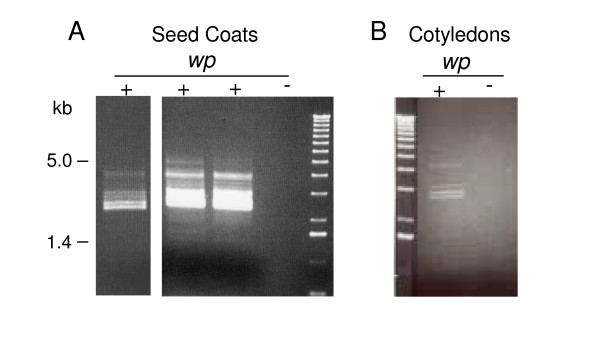
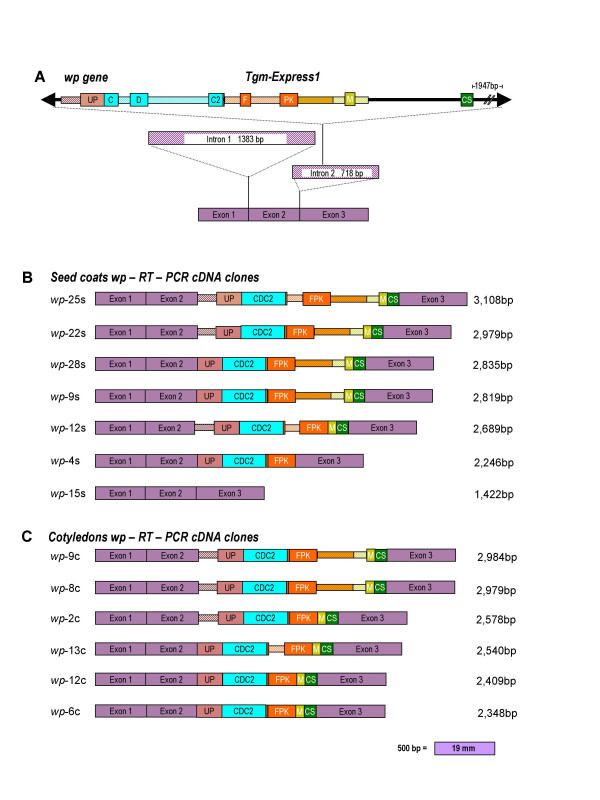
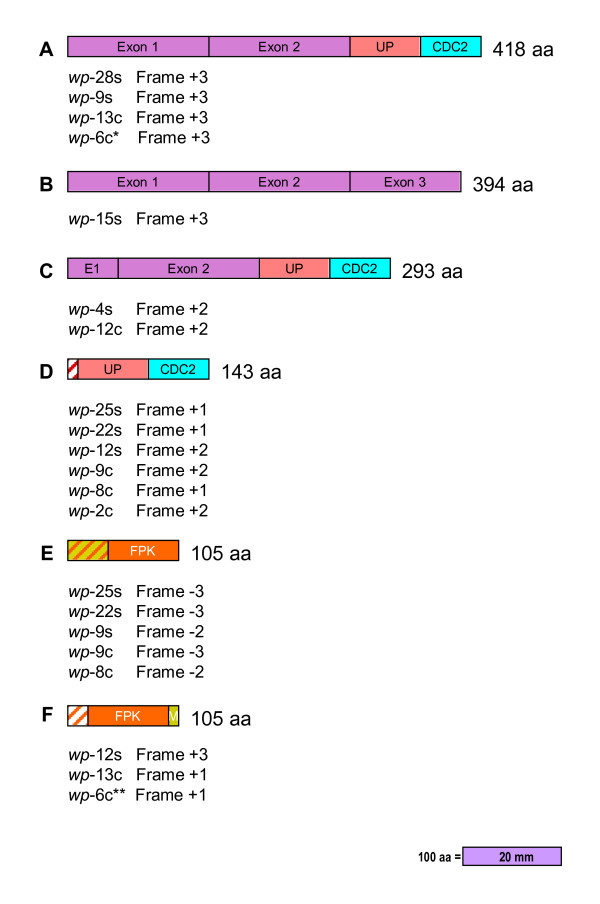
We report results obtained from analysis of RT-PCR derived cDNAs of the Glycine max mutant flower color gene, wp, that contains a 5.7-kb transposon (Tgm-Express1) in Intron 2 of the flavanone 3-hydroxylase gene (F3H) and is composed of five unrelated host gene fragments. The collection of cDNAs derived from the wp allele represents a multiplicity of processed RNAs varying in length and sequence that includes some identical to the correctly processed mature F3H transcript with three properly spliced exons. Surprisingly, the five gene fragments carried by the Tgm-Express1 were processed through complex alternative splicing as additional exons of the wp transcript.
The gene fragments carried by the Tgm inverted repeat ends appear to be retained as functional exons/introns within the element. The spliceosomes then select indiscriminately the canonical intron splice sites from a pre-mRNA to assemble diverse chimeric transcripts from the exons contained in the wp allele. The multiplicity and randomness of these events provide some insights into the origin and mechanism of alternatively spliced genes.
最近发现了携带宿主基因片段的转座元件,如玉米(Zea mays)、水稻(Oryza sativa)和拟南芥(Arabidopsis thaliana)中的Pack-MULEs(类Mutator转座元件)、玉米中的Helitrons以及大豆中的Tgm-Express,揭示了一种广泛存在的遗传机制,该机制有可能重排基因组并产生影响基因组和蛋白质组多样性的新型嵌合基因。关于这些转座子元件捕获基因片段的机制或所捕获的宿主基因片段的表达情况,人们了解得并不多。有证据表明嵌合转录本可以组装并存在于EST文库中。
我们报告了对大豆(Glycine max)突变体花色基因wp的RT-PCR衍生cDNA进行分析所获得的结果。该基因在黄烷酮3-羟化酶基因(F3H)的第2内含子中含有一个5.7 kb的转座子(Tgm-Express1),并由五个不相关的宿主基因片段组成。来自wp等位基因的cDNA文库代表了多种长度和序列各异的加工后RNA,其中包括一些与正确加工的成熟F3H转录本相同的序列,该转录本有三个正确剪接的外显子。令人惊讶的是,Tgm-Express1携带的五个基因片段通过复杂的可变剪接作为wp转录本的额外外显子进行加工。
Tgm反向重复末端携带的基因片段似乎作为元件内的功能性外显子/内含子被保留下来。剪接体随后从pre-mRNA中不加选择地选择典型的内含子剪接位点,以组装来自wp等位基因中所含外显子的各种嵌合转录本。这些事件的多样性和随机性为可变剪接基因的起源和机制提供了一些见解。