Le Roux Nicolas, Amar Muriel, Moreau Alexandre, Fossier Philippe
CNRS, Institut de Neurobiologie Alfred Fessard-FRC2118, Laboratoire de Neurobiologie Cellulaire et Moléculaire, UPR 9040, F-91198 Gif sur Yvette, France.
Eur J Neurosci. 2007 Jul;26(2):289-301. doi: 10.1111/j.1460-9568.2007.05671.x.
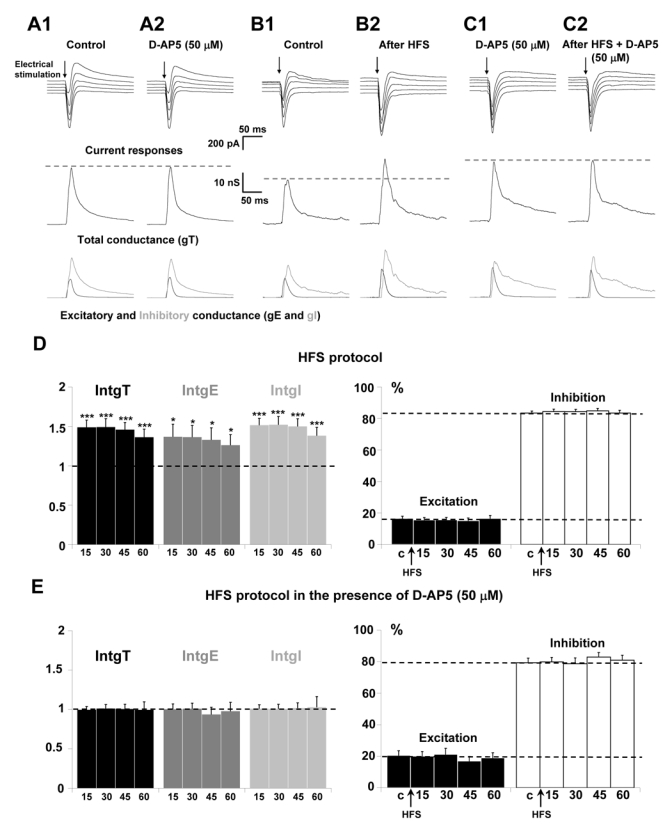
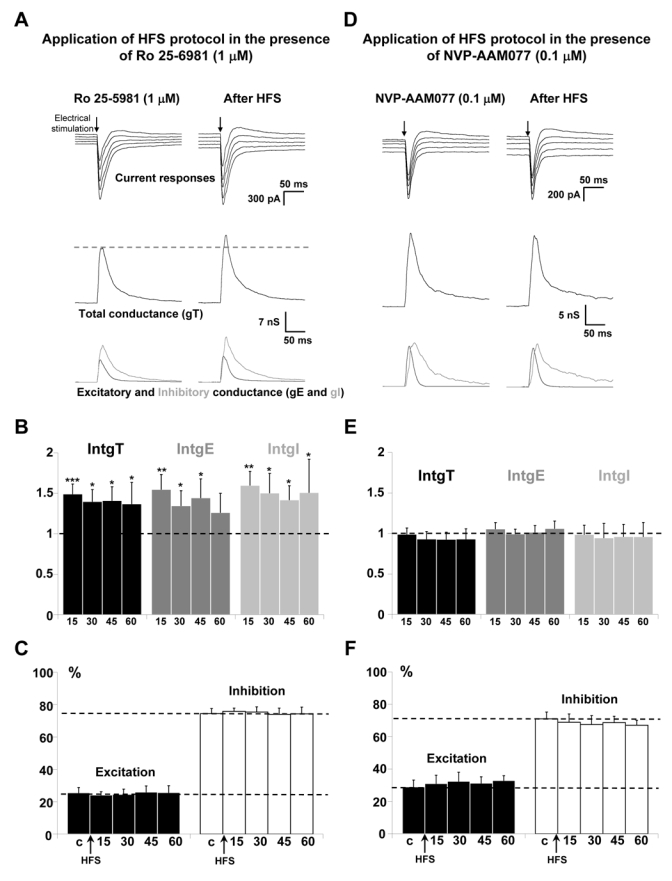
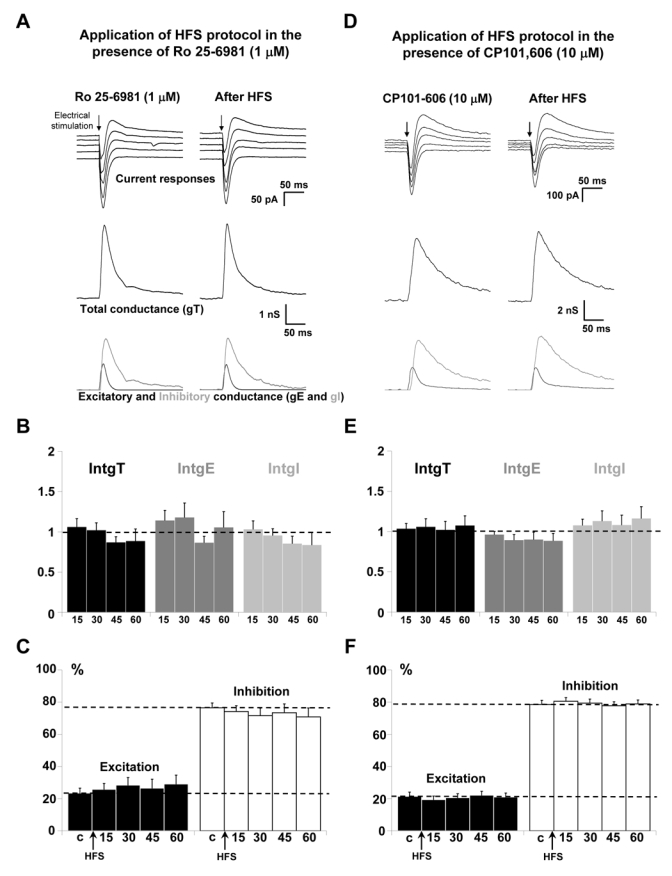
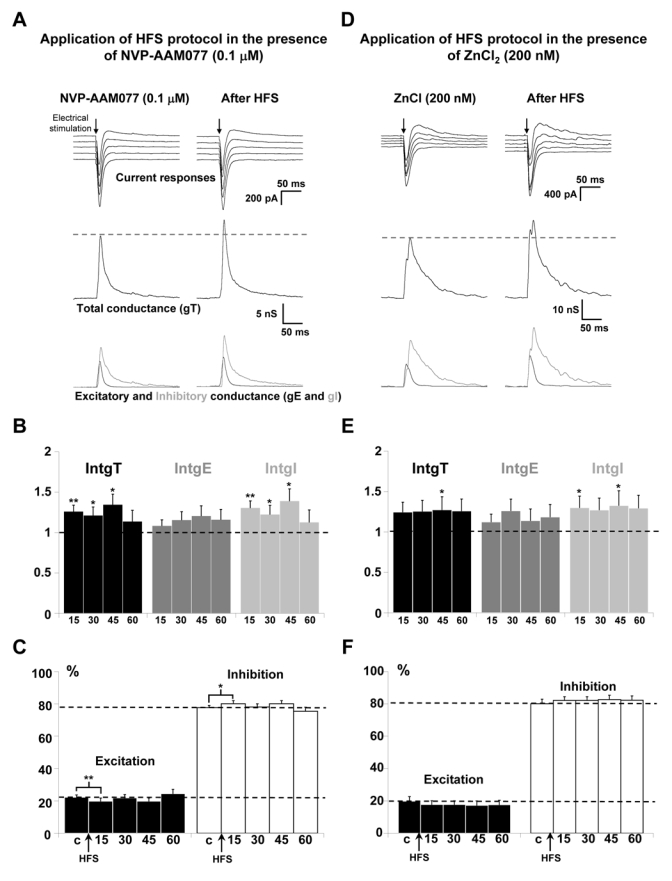
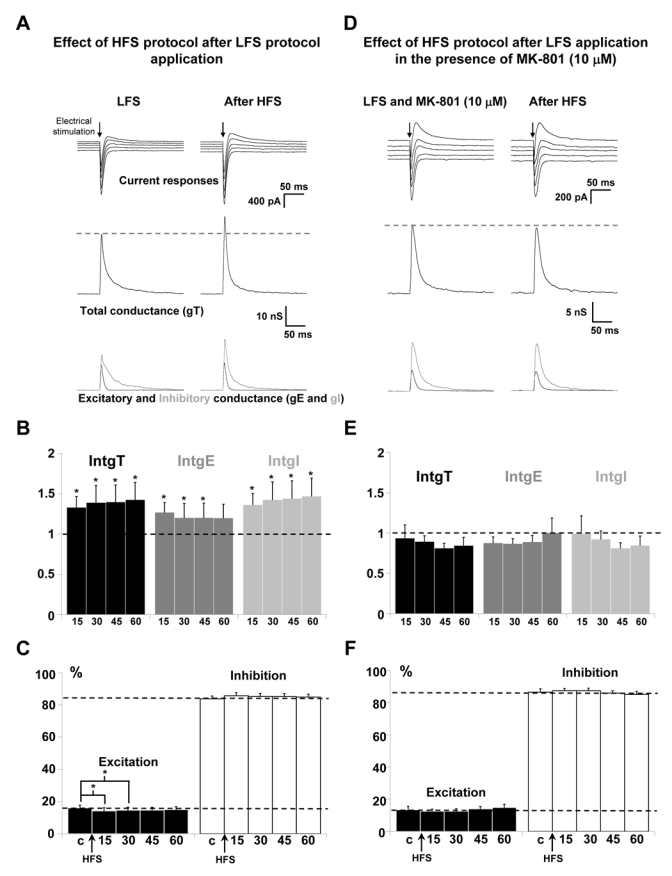
In the cortex, N-methyl-D-aspartate receptors (NMDARs) play a critical role in the control of synaptic plasticity processes. We have previously shown in rat visual cortex that the application of a high-frequency stimulation (HFS) protocol used to induce long-term potentiation in layer 2/3 leads to a parallel potentiation of excitatory and inhibitory inputs received by cortical layer 5 pyramidal neurones without changing the excitation/inhibition balance of the pyramidal neurone, indicating a homeostatic control of this parameter. We show here that the blockade of NMDARs of the neuronal network prevents the potentiation of excitatory and inhibitory inputs, and this result leaves open to question the role of the NMDAR isoform involved in the induction of long-term potentiation, which is actually being strongly debated. In postnatal day (P)18-23 rat cortical slices, the blockade of synaptic NR2B-containing NMDARs prevents the induction of the potentiation induced by the HFS protocol, whereas the blockade of NR2A-containing NMDARs reduced the potentiation itself. In P29-P32 cortical slices, the specific activation of NR2A-containing receptors fully ensures the potentiation of excitatory and inhibitory inputs. These results constitute the first report of a functional shift in subunit composition of NMDARs during the critical period (P12-P36), which explains the relative contribution of both NR2B- and NR2A-containing NMDARs in synaptic plasticity processes. These effects of the HFS protocol are mediated by the activation of synaptic NMDARs but our results also indicate that the homeostatic control of the excitation/inhibition balance is independent of NMDAR activation and is due to specialized recurrent interactions between excitatory and inhibitory networks.
在皮质中,N-甲基-D-天冬氨酸受体(NMDARs)在突触可塑性过程的调控中发挥着关键作用。我们之前在大鼠视觉皮质中发现,用于诱导第2/3层长期增强的高频刺激(HFS)方案的应用,会导致第5层皮质锥体神经元所接收的兴奋性和抑制性输入出现平行增强,而不会改变锥体神经元的兴奋/抑制平衡,这表明该参数存在稳态控制。我们在此表明,神经网络中NMDARs的阻断会阻止兴奋性和抑制性输入的增强,这一结果使得参与长期增强诱导的NMDAR亚型的作用受到质疑,而这一问题目前仍存在激烈争论。在出生后第(P)18 - 23天的大鼠皮质切片中,阻断含NR2B的突触NMDARs可阻止HFS方案诱导的增强,而阻断含NR2A的NMDARs则会降低增强本身。在P29 - P32皮质切片中,含NR2A受体的特异性激活可充分确保兴奋性和抑制性输入的增强。这些结果构成了关键期(P12 - P36)期间NMDARs亚基组成功能转变的首次报道,解释了含NR2B和含NR2A的NMDARs在突触可塑性过程中的相对贡献。HFS方案的这些效应是由突触NMDARs的激活介导的,但我们的结果还表明,兴奋/抑制平衡的稳态控制独立于NMDAR激活,是由于兴奋性和抑制性网络之间特殊的反复相互作用所致。