Hutcheson Iain R, Knowlden Janice M, Hiscox Steve E, Barrow Denise, Gee Julia M W, Robertson John F, Ellis Ian O, Nicholson Robert I
Tenovus Centre for Cancer Research, Welsh School of Pharmacy, Cardiff University, Redwood Building, King Edward VII Avenue, Cardiff CF10 3XF, UK.
Breast Cancer Res. 2007;9(4):R50. doi: 10.1186/bcr1754.
Resistance to anti-epidermal growth factor receptor (anti-EGFR) therapies is an emerging clinical problem. The efficacy of anti-EGFR therapies can be influenced by the presence of heregulins (HRGs), which can bind erbB3/4 receptors and can activate alternative signalling pathways. In the present study we have examined whether HRG signalling can circumvent EGFR blockade in an EGFR-positive tamoxifen-resistant MCF-7 (Tam-R) breast cancer cell line.
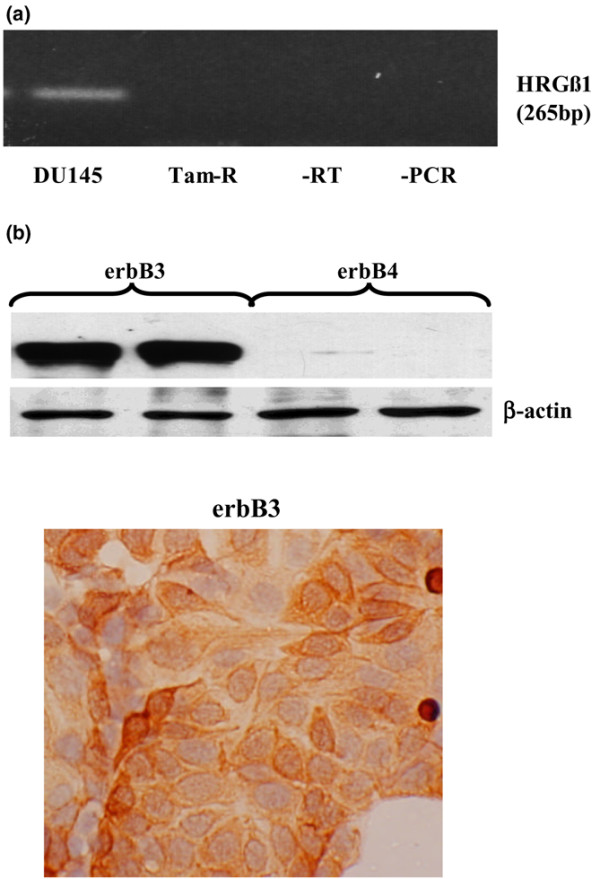
Tam-R cells, incubated with the selective EGFR tyrosine kinase inhibitor gefitinib ('Iressa', ZD1839), were exposed to HRGbeta1 and the effects on erbB receptor dimerization profiles and on activation of associated downstream signalling components were assessed by immunoprecipitation, western blotting and immunocytochemistry. The effects of HRGbeta1 on gefitinib-treated Tam-R cell growth and invasion were also examined, and HRGbeta1 expression levels were assessed in breast cancer tissue by immunohistochemistry to address the potential clinical relevance of such a resistance mechanism.
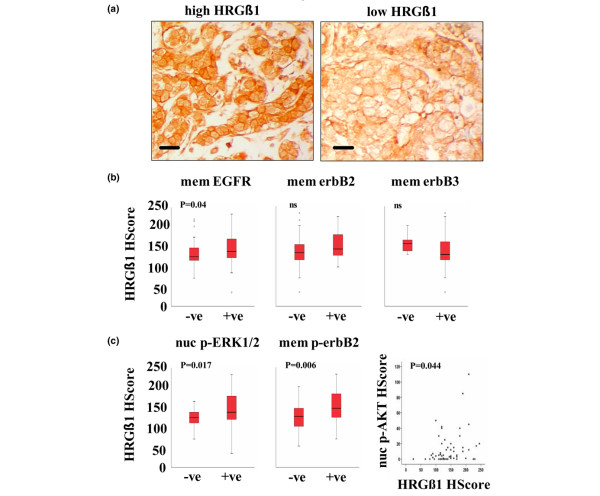
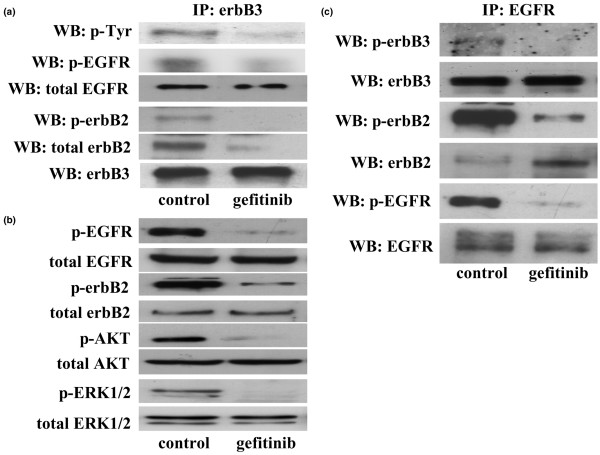
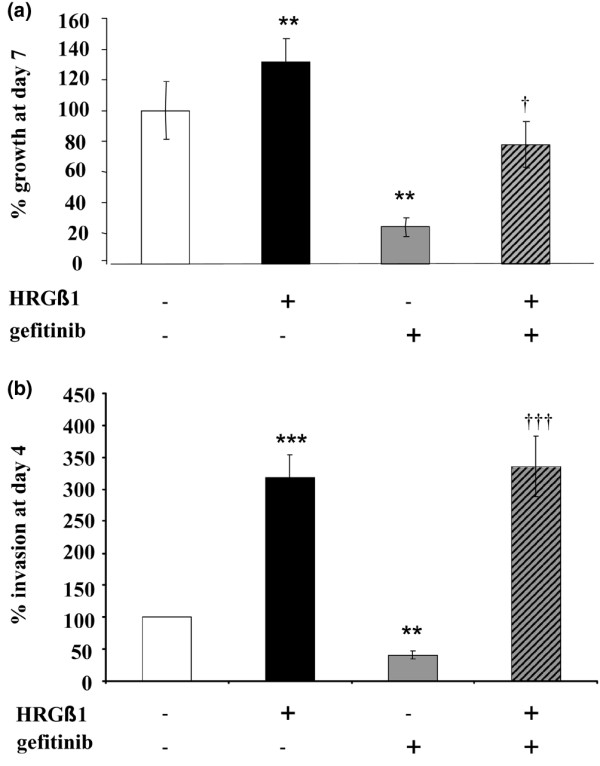
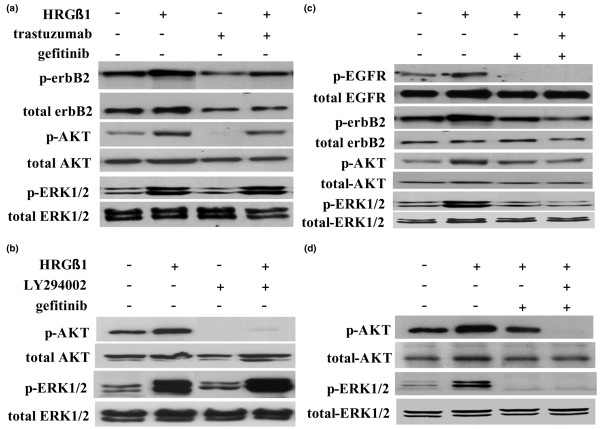
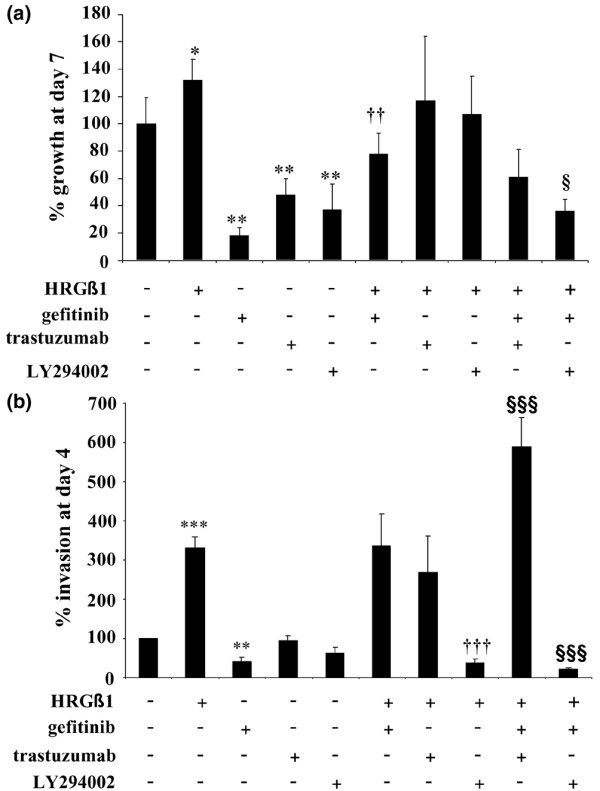
In Tam-R cells, HRGbeta1 promoted erbB3/erbB2 and erbB3/EGFR heterodimerization, promoted ERK1/2 and AKT pathway activation and increased cell proliferation and invasion. Gefitinib prevented HRGbeta1-driven erbB3/EGFR heterodimerization, ERK1/2 activation and Tam-R cell proliferation, but HRGbeta1-driven erbB3/erbB2 heterodimerization, AKT activation and Tam-R cell invasion were maintained. A combination of gefitinib and the phosphatidylinositol 3-kinase inhibitor LY294002 effectively blocked HRGbeta1-mediated intracellular signalling activity, growth and invasion in Tam-R cells. Similarly, targeting erbB2 with trastuzumab in combination with gefitinib in Tam-R cells reduced HRGbeta1-induced erbB2 and ERK1/2 activity; however, HRGbeta1-driven AKT activity and cell growth were maintained while cell invasion was significantly enhanced with this combination. In clinical tissue all samples demonstrated cytoplasmic tumour epithelial HRGbeta1 protein staining, with expression correlating with EGFR positivity and activation of both AKT and ERK1/2.
HRGbeta1 can overcome the inhibitory effects of gefitinib on cell growth and invasion in Tam-R cells through promotion of erbB3/erbB2 heterodimerization and activation of the phosphatidylinositol 3-kinase/AKT signalling pathway. This may have implications for the effectiveness of anti-EGFR therapies in breast cancer as HRGbeta1 is enriched in many EGFR-positive breast tumours.
对抗表皮生长因子受体(anti-EGFR)疗法产生耐药性是一个新出现的临床问题。抗EGFR疗法的疗效可能会受到这里调节素(HRGs)的影响,HRGs可与erbB3/4受体结合并激活替代信号通路。在本研究中,我们检测了HRG信号是否能在EGFR阳性的他莫昔芬耐药MCF-7(Tam-R)乳腺癌细胞系中规避EGFR阻断。
将Tam-R细胞与选择性EGFR酪氨酸激酶抑制剂吉非替尼(“易瑞沙”,ZD1839)一起孵育,然后使其暴露于HRGβ1,并通过免疫沉淀、蛋白质印迹法和免疫细胞化学评估对erbB受体二聚化谱以及相关下游信号成分激活的影响。还检测了HRGβ1对吉非替尼处理的Tam-R细胞生长和侵袭的影响,并通过免疫组织化学评估乳腺癌组织中HRGβ1的表达水平,以探讨这种耐药机制的潜在临床相关性。
在Tam-R细胞中,HRGβ1促进erbB3/erbB2和erbB3/EGFR异二聚化,促进ERK1/2和AKT途径激活,并增加细胞增殖和侵袭。吉非替尼可阻止HRGβ1驱动的erbB3/EGFR异二聚化、ERK1/2激活和Tam-R细胞增殖,但HRGβ1驱动的erbB3/erbB2异二聚化、AKT激活和Tam-R细胞侵袭得以维持。吉非替尼与磷脂酰肌醇3-激酶抑制剂LY294002联合使用可有效阻断HRGβ1介导的Tam-R细胞内信号活性、生长和侵袭。同样,在Tam-R细胞中用曲妥珠单抗靶向erbB2并与吉非替尼联合使用可降低HRGβ1诱导的erbB2和ERK1/2活性;然而,HRGβ1驱动的AKT活性和细胞生长得以维持,而这种联合使用显著增强了细胞侵袭。在临床组织中,所有样本均显示细胞质肿瘤上皮HRGβ1蛋白染色,其表达与EGFR阳性以及AKT和ERK1/2的激活相关。
HRGβ1可通过促进erbB3/erbB2异二聚化和激活磷脂酰肌醇3-激酶/AKT信号通路来克服吉非替尼对Tam-R细胞生长和侵袭的抑制作用。由于HRGβ1在许多EGFR阳性乳腺癌肿瘤中富集,这可能对乳腺癌抗EGFR疗法的有效性产生影响。