Wang Qi-En, Praetorius-Ibba Mette, Zhu Qianzheng, El-Mahdy Mohamed A, Wani Gulzar, Zhao Qun, Qin Song, Patnaik Srinivas, Wani Altaf A
Department of Radiology, The Ohio State University, 460 W. 12th Ave, Columbus, OH 43210, USA.
Nucleic Acids Res. 2007;35(16):5338-50. doi: 10.1093/nar/gkm550. Epub 2007 Aug 9.
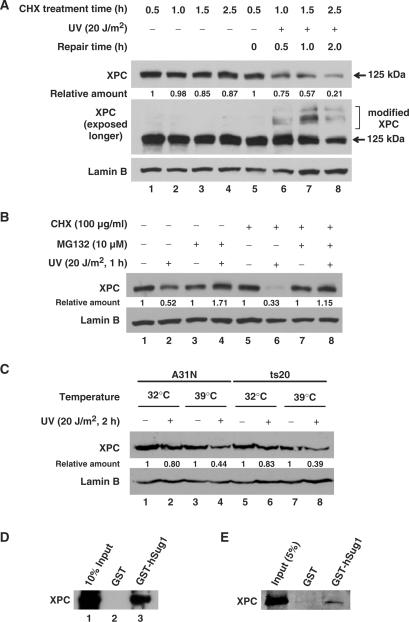
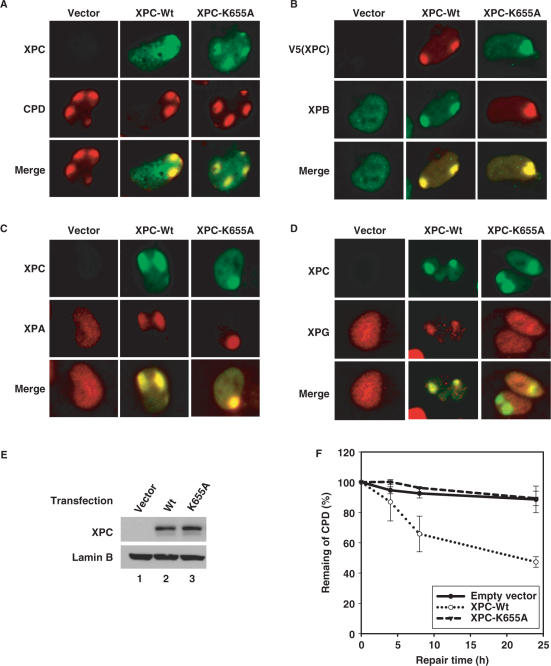
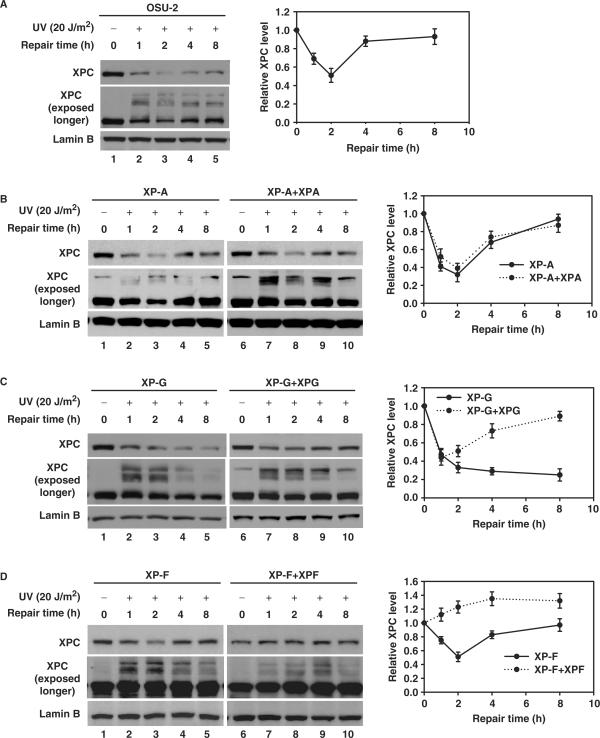
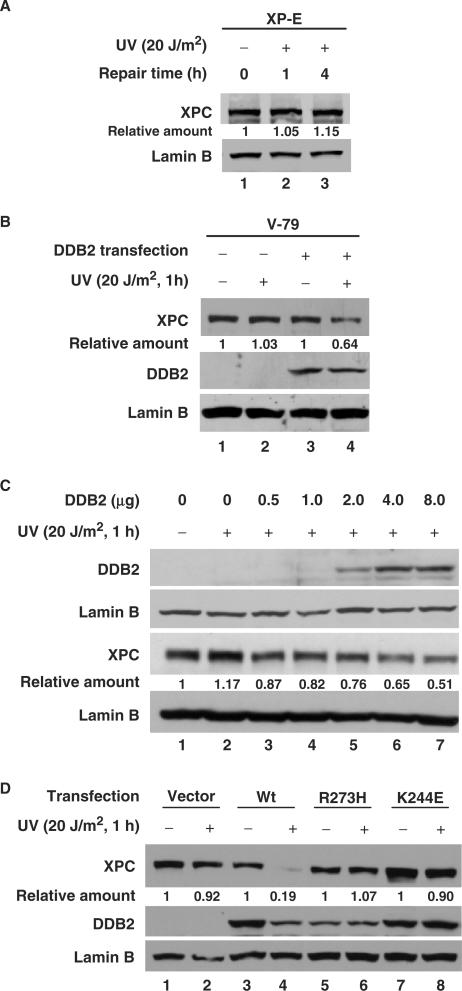
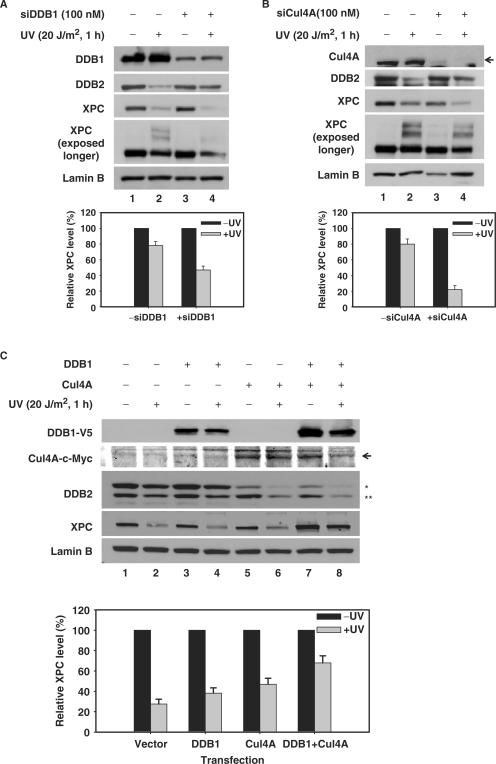
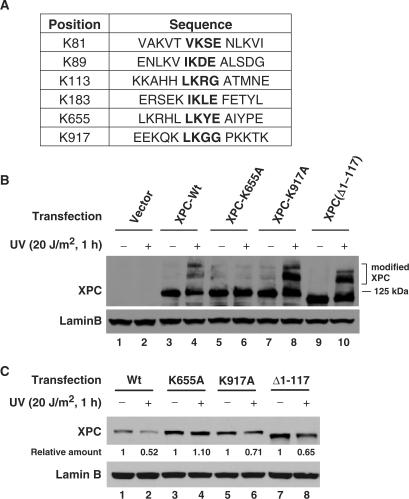
The Xeroderma Pigmentosum group C (XPC) protein is indispensable to global genomic repair (GGR), a subpathway of nucleotide excision repair (NER), and plays an important role in the initial damage recognition. XPC can be modified by both ubiquitin and SUMO in response to UV irradiation of cells. Here, we show that XPC undergoes degradation upon UV irradiation, and this is independent of protein ubiquitylation. The subunits of DDB-Cul4A E3 ligase differentially regulate UV-induced XPC degradation, e.g DDB2 is required and promotes, whereas DDB1 and Cul4A protect the protein degradation. Mutation of XPC K655 to alanine abolishes both UV-induced XPC modification and degradation. XPC degradation is necessary for recruiting XPG and efficient NER. The overall results provide crucial insights regarding the fate and role of XPC protein in the initiation of excision repair.
着色性干皮病C组(XPC)蛋白对于全局基因组修复(GGR)(核苷酸切除修复(NER)的一个子途径)而言不可或缺,并且在初始损伤识别中发挥重要作用。响应细胞的紫外线照射,XPC可被泛素和小泛素样修饰物(SUMO)修饰。在此,我们表明XPC在紫外线照射后会发生降解,并且这与蛋白质泛素化无关。DDB-Cul4A E3连接酶的亚基差异性地调节紫外线诱导的XPC降解,例如,DDB2是必需的且能促进降解,而DDB1和Cul4A则保护该蛋白质不被降解。将XPC的K655突变为丙氨酸会消除紫外线诱导的XPC修饰和降解。XPC降解对于招募XPG和高效的核苷酸切除修复是必要的。总体结果为XPC蛋白在切除修复起始过程中的命运和作用提供了关键见解。