Hon Lawrence S, Zhang Zemin
Department of Bioinformatics, Genentech Inc, 1 DNA Way, South San Francisco, CA 94080, USA.
Genome Biol. 2007;8(8):R166. doi: 10.1186/gb-2007-8-8-r166.
MicroRNAs (miRNAs) are small noncoding RNAs that bind mRNA target transcripts and repress gene expression. They have been implicated in multiple diseases, such as cancer, but the mechanisms of this involvement are not well understood. Given the complexity and degree of interactions between miRNAs and target genes, understanding how miRNAs achieve their specificity is important to understanding miRNA function and identifying their role in disease.
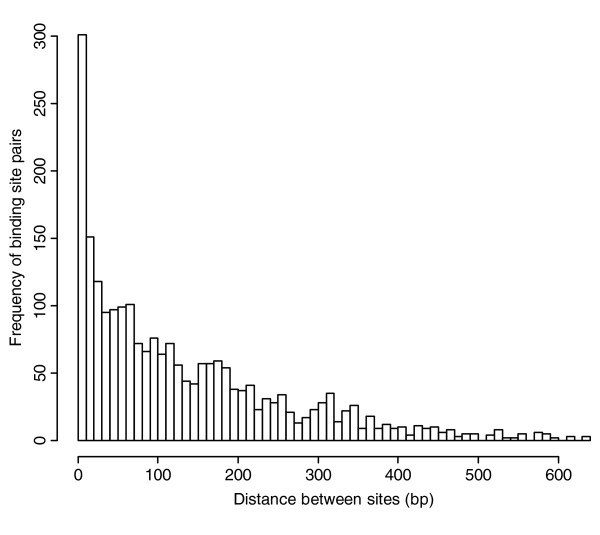
Here we report factors that influence miRNA regulation by considering the effects of both single and multiple miRNAs targeting human genes. In the case of single miRNA targeting, we developed a metric that integrates miRNA and mRNA expression data to calculate how changes in miRNA expression affect target mRNA expression. Using the metric, our global analysis shows that the repression of a given miRNA on a target mRNA is modulated by 3' untranslated region length, the number of target sites, and the distance between a pair of binding sites. Additionally, we show that some miRNAs preferentially repress transcripts with longer CTG repeats, suggesting a possible role for miRNAs in repeat expansion disorders such as myotonic dystrophy. We also examine the large class of genes targeted by multiple miRNAs and show that specific types of genes are progressively more enriched as the number of targeting miRNAs increases. Expression microarray data further show that these highly targeted genes are downregulated relative to genes targeted by few miRNAs, which suggests that highly targeted genes are tightly regulated and that their dysregulation may lead to disease. In support of this idea, cancer genes are strongly enriched among highly targeted genes.
Our data show that the rules governing miRNA targeting are complex, but that understanding the mechanisms that drive such control can uncover miRNAs' role in disease. Our study suggests that the number and arrangement of miRNA recognition sites can influence the degree and specificity of miRNA-mediated gene repression.
微小RNA(miRNA)是一类小的非编码RNA,可与mRNA靶转录本结合并抑制基因表达。它们与多种疾病有关,如癌症,但其参与这些疾病的机制尚未完全了解。鉴于miRNA与靶基因之间相互作用的复杂性和程度,了解miRNA如何实现其特异性对于理解miRNA功能及其在疾病中的作用至关重要。
在此,我们通过考虑单个和多个靶向人类基因的miRNA的影响来报告影响miRNA调控的因素。在单个miRNA靶向的情况下,我们开发了一种指标,该指标整合了miRNA和mRNA表达数据,以计算miRNA表达变化如何影响靶mRNA表达。使用该指标,我们的全局分析表明,给定miRNA对靶mRNA的抑制作用受3'非翻译区长度、靶位点数量以及一对结合位点之间的距离调节。此外,我们表明一些miRNA优先抑制具有较长CTG重复序列的转录本,这表明miRNA在诸如强直性肌营养不良等重复序列扩增疾病中可能发挥作用。我们还研究了被多个miRNA靶向的一大类基因,并表明随着靶向miRNA数量的增加,特定类型的基因逐渐富集程度更高。表达微阵列数据进一步表明,相对于被少数miRNA靶向的基因,这些高度靶向的基因表达下调,这表明高度靶向的基因受到严格调控,其失调可能导致疾病。支持这一观点的是,癌症基因在高度靶向的基因中高度富集。
我们的数据表明,控制miRNA靶向的规则很复杂,但了解驱动这种控制的机制可以揭示miRNA在疾病中的作用。我们的研究表明,miRNA识别位点的数量和排列可以影响miRNA介导的基因抑制的程度和特异性。