• 文献检索
  • 文档翻译
  • 深度研究
  • 学术资讯
  • Suppr Zotero 插件Zotero 插件
  • 邀请有礼
  • 套餐&价格
  • 历史记录
应用&插件
Suppr Zotero 插件Zotero 插件浏览器插件Mac 客户端Windows 客户端微信小程序
定价
高级版会员购买积分包购买API积分包
服务
文献检索文档翻译深度研究API 文档MCP 服务
关于我们
关于 Suppr公司介绍联系我们用户协议隐私条款
关注我们

Suppr 超能文献

核心技术专利:CN118964589B侵权必究
粤ICP备2023148730 号-1Suppr @ 2026

文献检索

告别复杂PubMed语法,用中文像聊天一样搜索,搜遍4000万医学文献。AI智能推荐,让科研检索更轻松。

立即免费搜索

文件翻译

保留排版,准确专业,支持PDF/Word/PPT等文件格式,支持 12+语言互译。

免费翻译文档

深度研究

AI帮你快速写综述,25分钟生成高质量综述,智能提取关键信息,辅助科研写作。

立即免费体验

二维琼脂平板微宇宙中的皱缩散布者适应性:适应不良、补偿和生态成功。

Wrinkly-Spreader fitness in the two-dimensional agar plate microcosm: maladaptation, compensation and ecological success.

机构信息

Department of Plant Sciences, University of Oxford, Oxford, United Kingdom.

出版信息

PLoS One. 2007 Aug 15;2(8):e740. doi: 10.1371/journal.pone.0000740.

DOI:10.1371/journal.pone.0000740
PMID:17710140
原文链接:https://pmc.ncbi.nlm.nih.gov/articles/PMC1939736/
Abstract

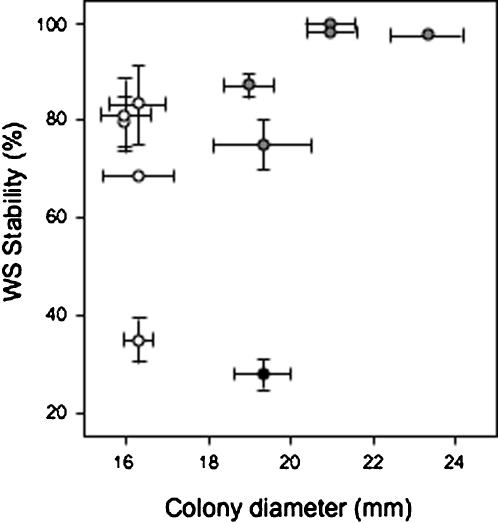
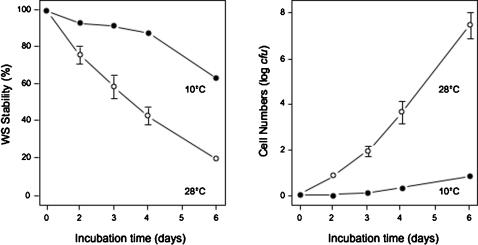
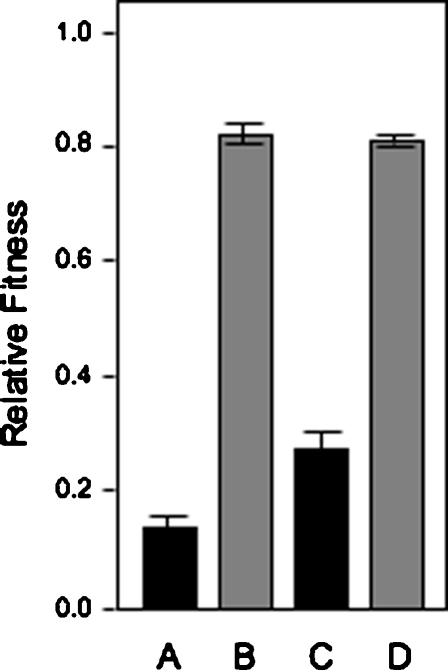
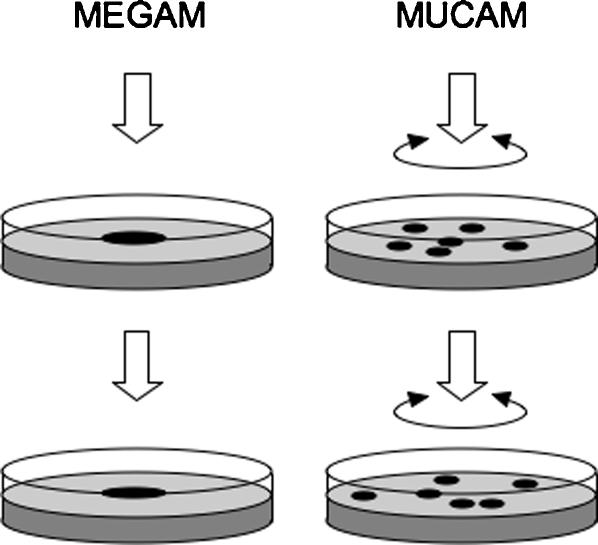
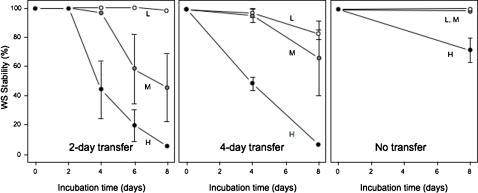
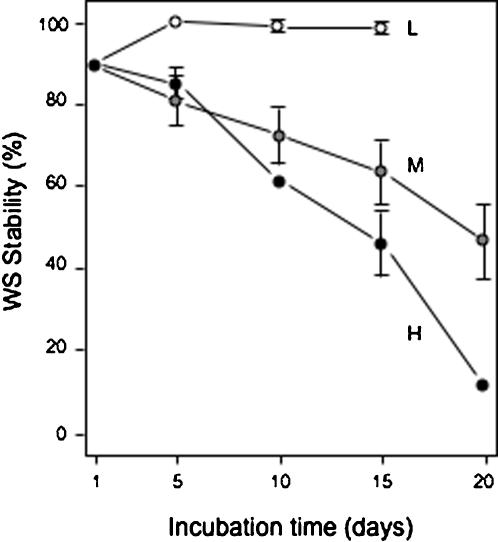
Bacterial adaptation to new environments often leads to the establishment of new genotypes with significantly altered phenotypes. In the Wrinkly Spreader (WS), ecological success in static liquid microcosms was through the rapid colonisation of the air-liquid interface by the production of a cellulose-based biofilm. Rapid surface spreading was also seen on agar plates, but in this two-dimensional environment the WS appears maladapted and rapidly reverts to the ancestral smooth (SM)-like colony genotype. In this work, the fitness of WS relative to SM in mixed colonies was found to be low, confirming the WS instability on agar plates. By examining defined WS mutants, the maladaptive characteristic was found to be the expression of cellulose. SM-like revertants had a higher growth rate than WS and no longer expressed significant amounts of cellulose, further confirming that the expression of this high-cost polymer was the basis of maladaptation and the target of compensatory mutation in developing colonies. However, examination of the fate of WS-founded populations in either multiple-colony or single mega-colony agar plate microcosms demonstrated that the loss of WS lineages could be reduced under conditions in which the rapid spreading colony phenotype could dominate nutrient and oxygen access more effectively than competing SM/SM-like genotypes. WS-like isolates recovered from such populations showed increased WS phenotype stability as well as changes in the degree of colony spreading, confirming that the WS was adapting to the two-dimensional agar plate microcosm.

摘要

细菌对新环境的适应常常导致新基因型的建立,这些基因型的表型有明显改变。在褶皱扩展菌(WS)中,在静态液体微环境中的生态成功是通过产生基于纤维素的生物膜来快速定殖气液界面。在琼脂平板上也观察到快速表面扩散,但在这种二维环境中,WS 似乎适应不良,并迅速恢复到祖先的光滑(SM)样菌落基因型。在这项工作中,发现 WS 相对于 SM 在混合菌落中的适应性较低,这证实了 WS 在琼脂平板上的不稳定性。通过检查定义明确的 WS 突变体,发现适应性差的特征是纤维素的表达。SM 样回复变体的生长速度高于 WS,并且不再表达大量纤维素,这进一步证实了这种高成本聚合物的表达是适应不良的基础,也是在发育中的菌落中发生补偿性突变的目标。然而,对多菌落或单一大菌落琼脂平板微宇宙中 WS 种群的命运进行检查表明,在快速扩散的菌落表型能够比竞争的 SM/SM 样基因型更有效地获取营养和氧气的情况下,可以减少 WS 谱系的丧失。从这些种群中回收的 WS 样分离株显示出 WS 表型稳定性的增加以及菌落扩散程度的变化,这证实了 WS 正在适应二维琼脂平板微宇宙。
https://cdn.ncbi.nlm.nih.gov/pmc/blobs/de49/1939736/afe2cfc8b5c3/pone.0000740.g007.jpg
https://cdn.ncbi.nlm.nih.gov/pmc/blobs/de49/1939736/b0a39bcf1941/pone.0000740.g001.jpg
https://cdn.ncbi.nlm.nih.gov/pmc/blobs/de49/1939736/fd0bc276d3f5/pone.0000740.g002.jpg
https://cdn.ncbi.nlm.nih.gov/pmc/blobs/de49/1939736/6daced86d6ce/pone.0000740.g003.jpg
https://cdn.ncbi.nlm.nih.gov/pmc/blobs/de49/1939736/c8b430751e9b/pone.0000740.g004.jpg
https://cdn.ncbi.nlm.nih.gov/pmc/blobs/de49/1939736/98d9943a9f33/pone.0000740.g005.jpg
https://cdn.ncbi.nlm.nih.gov/pmc/blobs/de49/1939736/0725d470f996/pone.0000740.g006.jpg
https://cdn.ncbi.nlm.nih.gov/pmc/blobs/de49/1939736/afe2cfc8b5c3/pone.0000740.g007.jpg
https://cdn.ncbi.nlm.nih.gov/pmc/blobs/de49/1939736/b0a39bcf1941/pone.0000740.g001.jpg
https://cdn.ncbi.nlm.nih.gov/pmc/blobs/de49/1939736/fd0bc276d3f5/pone.0000740.g002.jpg
https://cdn.ncbi.nlm.nih.gov/pmc/blobs/de49/1939736/6daced86d6ce/pone.0000740.g003.jpg
https://cdn.ncbi.nlm.nih.gov/pmc/blobs/de49/1939736/c8b430751e9b/pone.0000740.g004.jpg
https://cdn.ncbi.nlm.nih.gov/pmc/blobs/de49/1939736/98d9943a9f33/pone.0000740.g005.jpg
https://cdn.ncbi.nlm.nih.gov/pmc/blobs/de49/1939736/0725d470f996/pone.0000740.g006.jpg
https://cdn.ncbi.nlm.nih.gov/pmc/blobs/de49/1939736/afe2cfc8b5c3/pone.0000740.g007.jpg

相似文献

1
Wrinkly-Spreader fitness in the two-dimensional agar plate microcosm: maladaptation, compensation and ecological success.二维琼脂平板微宇宙中的皱缩散布者适应性:适应不良、补偿和生态成功。
PLoS One. 2007 Aug 15;2(8):e740. doi: 10.1371/journal.pone.0000740.
2
Adaptive radiation of Pseudomonas fluorescens SBW25 in experimental microcosms provides an understanding of the evolutionary ecology and molecular biology of A-L interface biofilm formation.荧光假单胞菌SBW25在实验微宇宙中的适应性辐射有助于理解气-液界面生物膜形成的进化生态学和分子生物学。
FEMS Microbiol Lett. 2017 Jul 3;364(12). doi: 10.1093/femsle/fnx109.
3
Penetrating the air-liquid interface is the key to colonization and wrinkly spreader fitness.穿透气液界面是定植和褶皱散布者适应性的关键。
Microbiology (Reading). 2019 Oct;165(10):1061-1074. doi: 10.1099/mic.0.000844.
4
The evolution of biofilm-forming Wrinkly Spreaders in static microcosms and drip-fed columns selects for subtle differences in wrinkleality and fitness.在静态微观世界和滴灌柱中形成生物膜的褶皱扩展菌的进化,导致了褶皱程度和适应性的细微差异。
FEMS Microbiol Ecol. 2015 Jun;91(6). doi: 10.1093/femsec/fiv057. Epub 2015 May 21.
5
Environmental modification and niche construction: developing O2 gradients drive the evolution of the Wrinkly Spreader.环境修饰和生态位构建:开发 O2 梯度驱动皱襞扩张器的演化。
ISME J. 2011 Apr;5(4):665-73. doi: 10.1038/ismej.2010.156. Epub 2010 Oct 21.
6
The Pseudomonas fluorescens SBW25 wrinkly spreader biofilm requires attachment factor, cellulose fibre and LPS interactions to maintain strength and integrity.荧光假单胞菌SBW25褶皱扩展型生物膜需要附着因子、纤维素纤维和脂多糖相互作用来维持强度和完整性。
Microbiology (Reading). 2005 Sep;151(Pt 9):2829-2839. doi: 10.1099/mic.0.27984-0.
7
Adaptive divergence in experimental populations of Pseudomonas fluorescens. I. Genetic and phenotypic bases of wrinkly spreader fitness.荧光假单胞菌实验群体中的适应性分化。I. 褶皱扩展者适应性的遗传和表型基础。
Genetics. 2002 May;161(1):33-46. doi: 10.1093/genetics/161.1.33.
8
Biofilm formation at the air-liquid interface by the Pseudomonas fluorescens SBW25 wrinkly spreader requires an acetylated form of cellulose.荧光假单胞菌SBW25褶皱扩展菌在气液界面形成生物膜需要一种乙酰化形式的纤维素。
Mol Microbiol. 2003 Oct;50(1):15-27. doi: 10.1046/j.1365-2958.2003.03670.x.
9
Three biofilm types produced by a model pseudomonad are differentiated by structural characteristics and fitness advantage.一种模式假单胞菌产生的三种生物膜类型通过结构特征和适应优势来区分。
Microbiology (Reading). 2020 Aug;166(8):707-716. doi: 10.1099/mic.0.000938.
10
Evolutionary convergence in experimental Pseudomonas populations.实验性假单胞菌种群中的进化趋同
ISME J. 2017 Mar;11(3):589-600. doi: 10.1038/ismej.2016.157. Epub 2016 Dec 2.

引用本文的文献

1
Identification of a Transcriptomic Network Underlying the Wrinkly and Smooth Phenotypes of Vibrio fischeri.鉴定发光杆菌皱纹和光滑表型的转录组网络。
J Bacteriol. 2021 Jan 11;203(3). doi: 10.1128/JB.00259-20.
2
New Insights into the Effects of Several Environmental Parameters on the Relative Fitness of a Numerically Dominant Class of Evolved Niche Specialist.关于若干环境参数对一类数量占优的进化生态位专家相对适应性影响的新见解。
Int J Evol Biol. 2016;2016:4846565. doi: 10.1155/2016/4846565. Epub 2016 Dec 22.
3
Sharing the sandbox: Evolutionary mechanisms that maintain bacterial cooperation.

本文引用的文献

1
Diversity in tropical rain forests and coral reefs.热带雨林和珊瑚礁的多样性。
Science. 1978 Mar 24;199(4335):1302-10. doi: 10.1126/science.199.4335.1302.
2
Adaptive divergence in experimental populations of Pseudomonas fluorescens. III. Mutational origins of wrinkly spreader diversity.荧光假单胞菌实验群体中的适应性分化。III. 褶皱扩展菌多样性的突变起源。
Genetics. 2007 May;176(1):441-53. doi: 10.1534/genetics.106.069906. Epub 2007 Mar 4.
3
Biofilm formation and cellulose expression among diverse environmental Pseudomonas isolates.
共享“沙盒”:维持细菌合作的进化机制
F1000Res. 2015 Dec 23;4. doi: 10.12688/f1000research.7363.1. eCollection 2015.
4
Suppressing the Neurospora crassa circadian clock while maintaining light responsiveness in continuous stirred tank reactors.在连续搅拌釜式反应器中抑制粗糙脉孢菌生物钟同时保持光响应性
Sci Rep. 2015 Jun 2;5:10691. doi: 10.1038/srep10691.
5
A mechanistic explanation linking adaptive mutation, niche change, and fitness advantage for the wrinkly spreader.一种将适应性突变、生态位变化与褶皱扩展者的适应性优势联系起来的机制性解释。
Int J Evol Biol. 2014;2014:675432. doi: 10.1155/2014/675432. Epub 2014 Jan 16.
6
Environmental modification and niche construction: developing O2 gradients drive the evolution of the Wrinkly Spreader.环境修饰和生态位构建:开发 O2 梯度驱动皱襞扩张器的演化。
ISME J. 2011 Apr;5(4):665-73. doi: 10.1038/ismej.2010.156. Epub 2010 Oct 21.
不同环境来源的假单胞菌分离株中的生物膜形成及纤维素表达
Environ Microbiol. 2006 Nov;8(11):1997-2011. doi: 10.1111/j.1462-2920.2006.01080.x.
4
Unraveling adaptive evolution: how a single point mutation affects the protein coregulation network.解析适应性进化:一个单点突变如何影响蛋白质共调控网络。
Nat Genet. 2006 Sep;38(9):1015-22. doi: 10.1038/ng1867. Epub 2006 Aug 20.
5
Adaptive divergence in experimental populations of Pseudomonas fluorescens. II. Role of the GGDEF regulator WspR in evolution and development of the wrinkly spreader phenotype.荧光假单胞菌实验群体中的适应性分化。II. GGDEF调节因子WspR在褶皱扩展菌表型进化和发育中的作用。
Genetics. 2006 Jun;173(2):515-26. doi: 10.1534/genetics.106.055863. Epub 2006 Apr 19.
6
The Pseudomonas fluorescens SBW25 wrinkly spreader biofilm requires attachment factor, cellulose fibre and LPS interactions to maintain strength and integrity.荧光假单胞菌SBW25褶皱扩展型生物膜需要附着因子、纤维素纤维和脂多糖相互作用来维持强度和完整性。
Microbiology (Reading). 2005 Sep;151(Pt 9):2829-2839. doi: 10.1099/mic.0.27984-0.
7
Can laboratory reference strains mirror "real-world" pathogenesis?实验室参考菌株能否反映“现实世界”中的发病机制?
Trends Microbiol. 2005 Feb;13(2):58-63. doi: 10.1016/j.tim.2004.11.001.
8
Cyclic di-GMP as a bacterial second messenger.环二鸟苷单磷酸作为一种细菌第二信使。
Microbiology (Reading). 2004 Aug;150(Pt 8):2497-2502. doi: 10.1099/mic.0.27099-0.
9
The evolution of a pleiotropic fitness tradeoff in Pseudomonas fluorescens.荧光假单胞菌中多效性适合度权衡的演变
Proc Natl Acad Sci U S A. 2004 May 25;101(21):8072-7. doi: 10.1073/pnas.0307195101. Epub 2004 May 18.
10
Cyclic di-guanosine-monophosphate comes of age: a novel secondary messenger involved in modulating cell surface structures in bacteria?环二鸟苷单磷酸步入成熟:一种参与调节细菌细胞表面结构的新型第二信使?
Curr Opin Microbiol. 2004 Apr;7(2):185-91. doi: 10.1016/j.mib.2004.02.007.