Bunka David H J, Mantle Benjamin J, Morten Isobel J, Tennent Glenys A, Radford Sheena E, Stockley Peter G
Astbury Centre for Structural Molecular Biology, University of Leeds, Leeds, UK.
J Biol Chem. 2007 Nov 23;282(47):34500-9. doi: 10.1074/jbc.M703679200. Epub 2007 Sep 18.
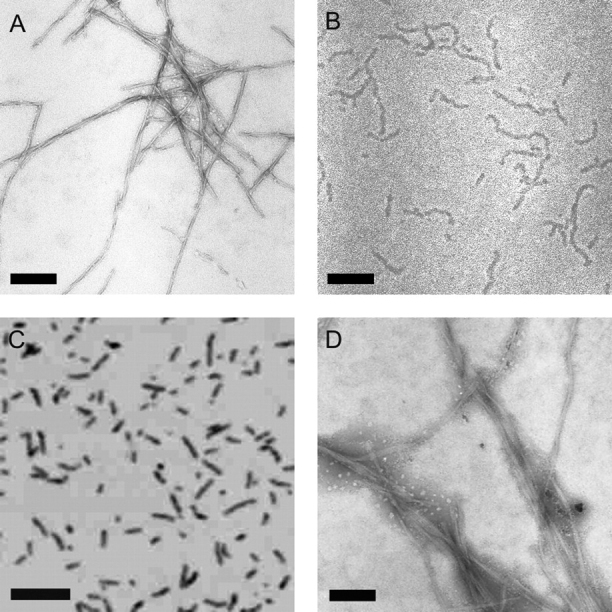
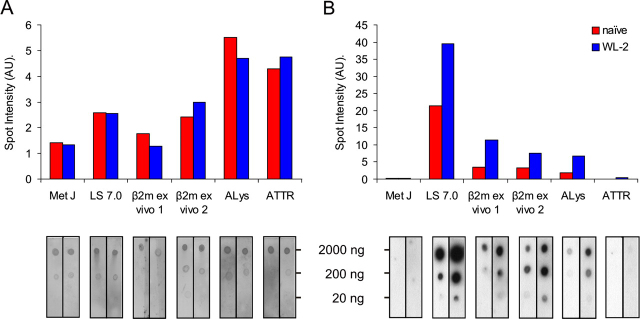
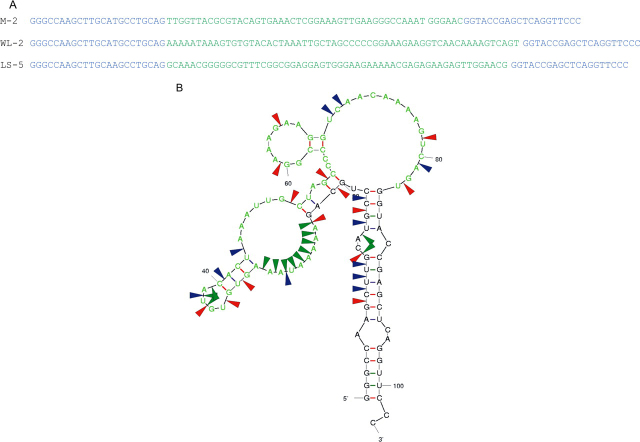
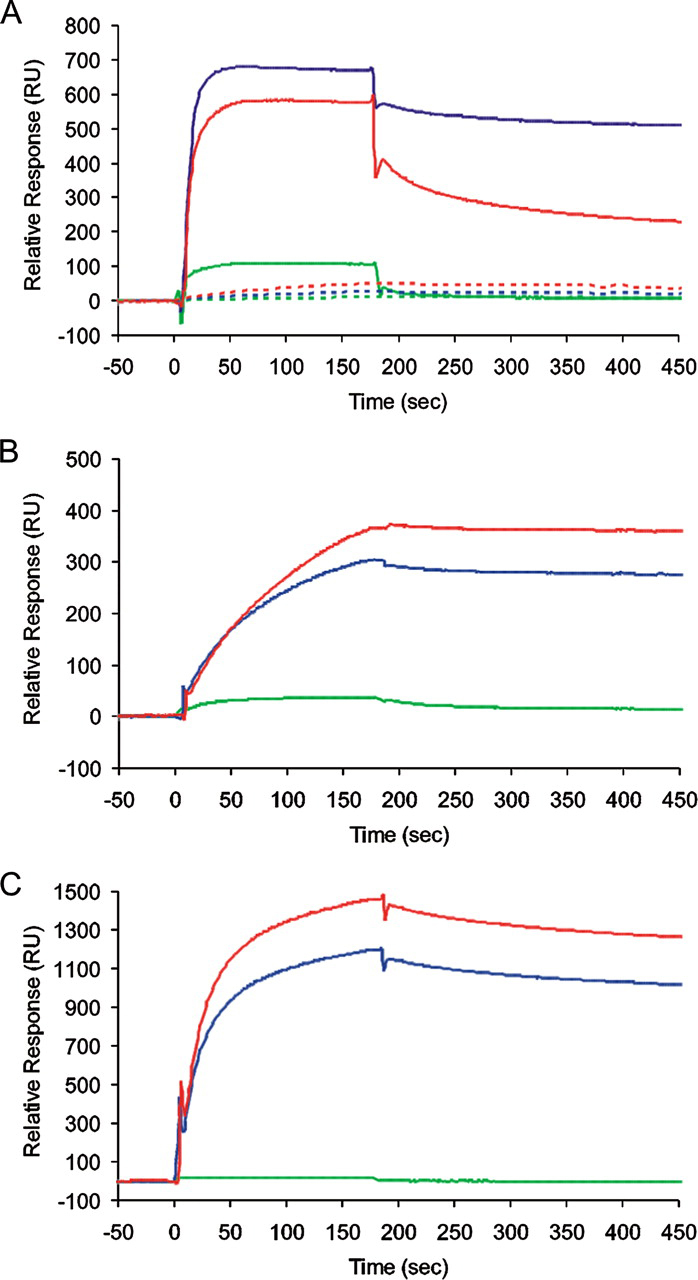
One of the most fascinating features of amyloid fibrils is their generic cross-beta architecture that can be formed from many different and completely unrelated proteins. Nonetheless, amyloid fibrils with diverse structural and phenotypic properties can form, both in vivo and in vitro, from the same protein sequence. Here, we have exploited the power of RNA selection techniques to isolate small, structured, single-stranded RNA molecules known as aptamers that were targeted specifically to amyloid-like fibrils formed in vitro from beta(2)-microglobulin (beta(2)m), the amyloid fibril protein associated with dialysis-related amyloidosis. The aptamers bind with high affinity (apparent K(D) approximately nm) to beta(2)m fibrils with diverse morphologies generated under different conditions in vitro, as well as to amyloid fibrils isolated from tissues of dialysis-related amyloidosis patients, demonstrating that they can detect conserved epitopes between different fibrillar species of beta(2)m. Interestingly, the aptamers also recognize some other, but not all, amyloid fibrils generated in vitro or isolated from ex vivo sources. Based on these observations, we have shown that although amyloid fibrils share many common structural properties, they also have features that are unique to individual fibril types.
淀粉样纤维最引人入胜的特征之一是其通用的交叉β结构,这种结构可以由许多不同且完全不相关的蛋白质形成。尽管如此,具有不同结构和表型特性的淀粉样纤维,无论在体内还是体外,都可以由相同的蛋白质序列形成。在这里,我们利用RNA筛选技术的力量,分离出了小的、结构化的单链RNA分子,即适配体,它们专门针对由β2-微球蛋白(β2m)在体外形成的淀粉样纤维,β2m是与透析相关淀粉样变性相关的淀粉样纤维蛋白。这些适配体以高亲和力(表观K(D)约为纳米)与在体外不同条件下产生的具有不同形态的β2m纤维结合,也与从透析相关淀粉样变性患者组织中分离出的淀粉样纤维结合,这表明它们可以检测β2m不同纤维种类之间的保守表位。有趣的是,这些适配体还能识别一些但不是全部在体外产生或从离体来源分离出的其他淀粉样纤维。基于这些观察结果,我们表明,虽然淀粉样纤维具有许多共同的结构特性,但它们也具有个别纤维类型所特有的特征。