Genescà Meritxell, Rourke Tracy, Li Jun, Bost Kristen, Chohan Barinderpaul, McChesney Michael B, Miller Christopher J
Center for Comparative Medicine, School of Veterinary Medicine, University of California, Davis, CA 95616, USA.
J Immunol. 2007 Oct 1;179(7):4732-40. doi: 10.4049/jimmunol.179.7.4732.
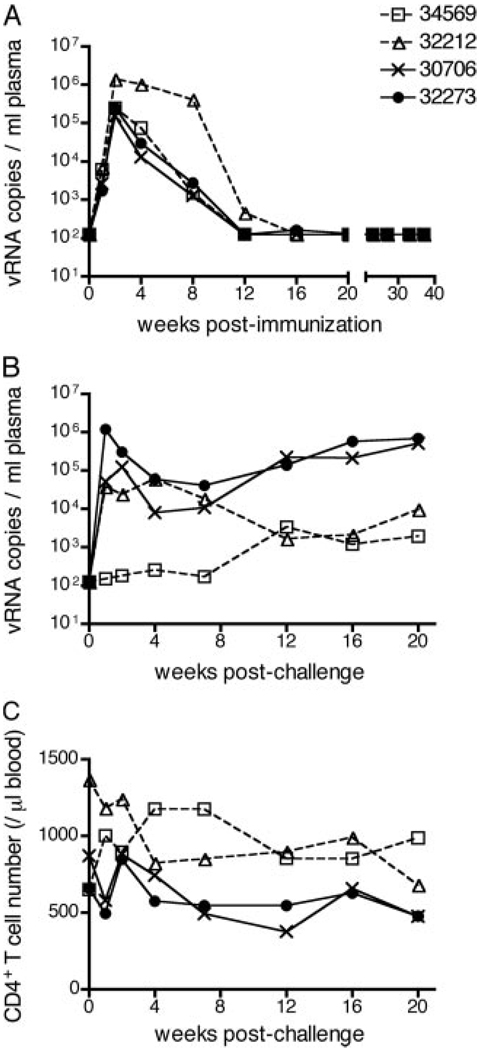
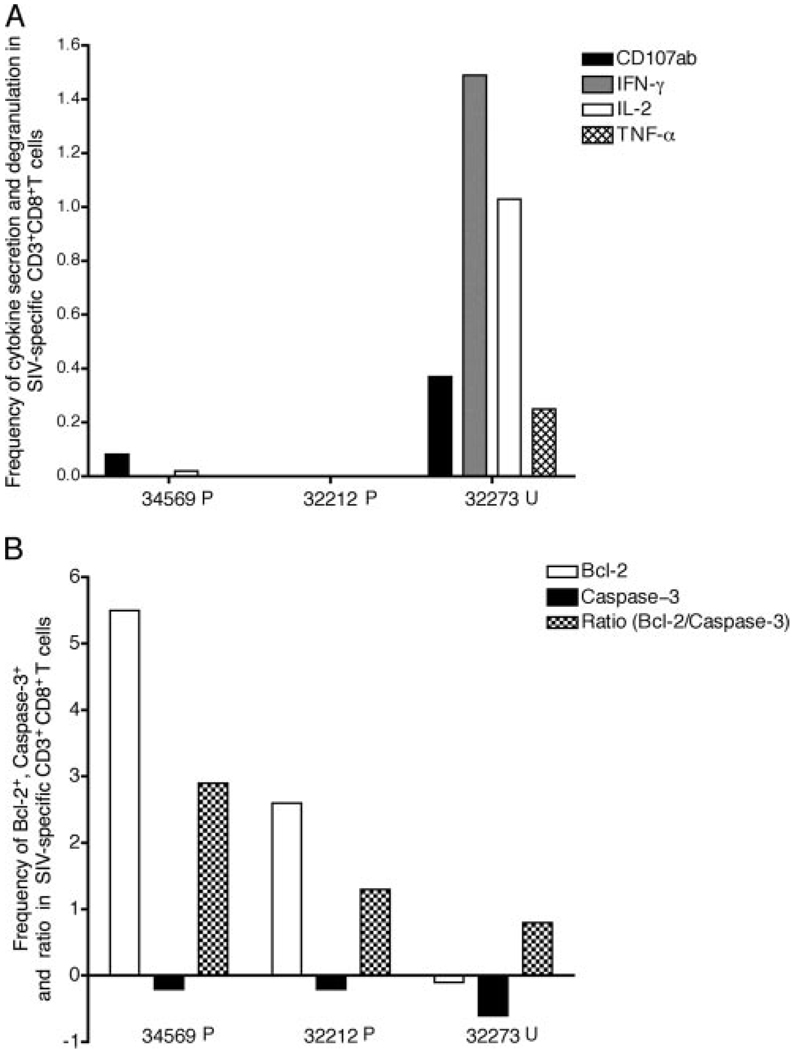
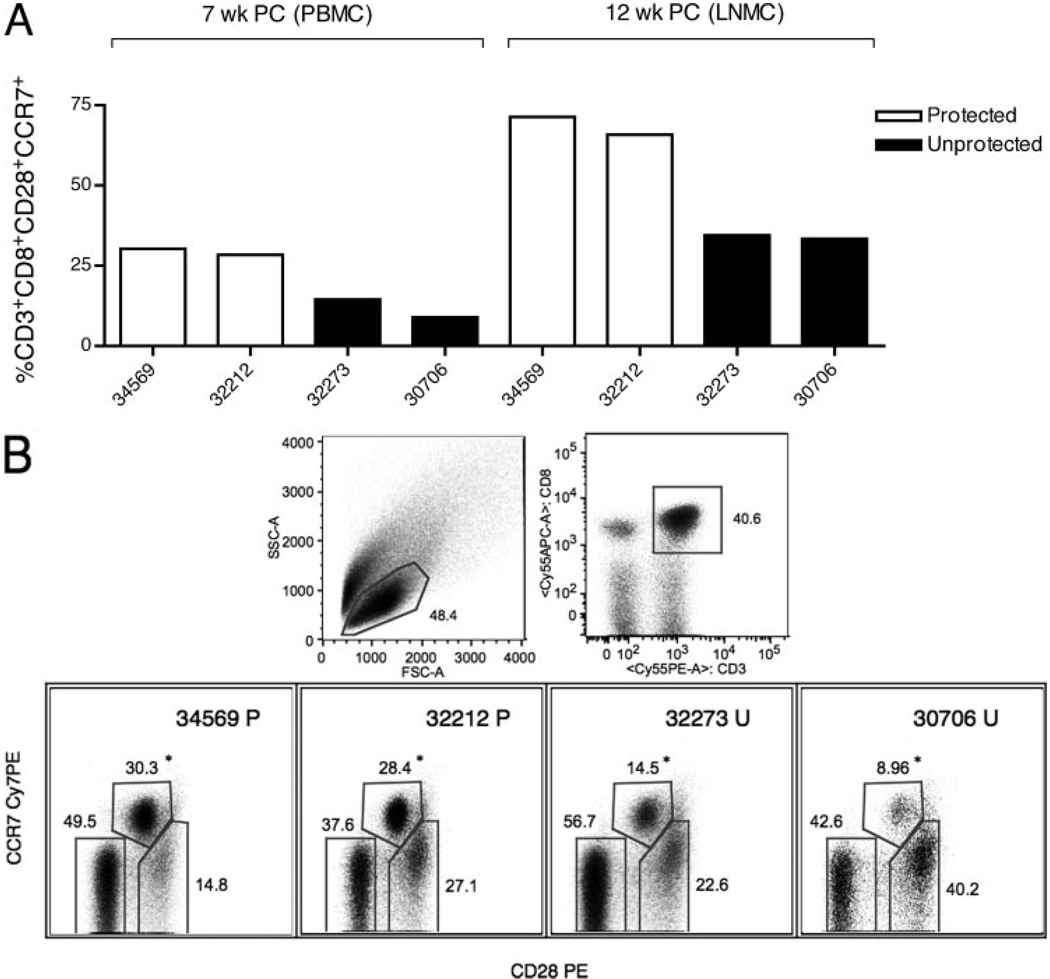
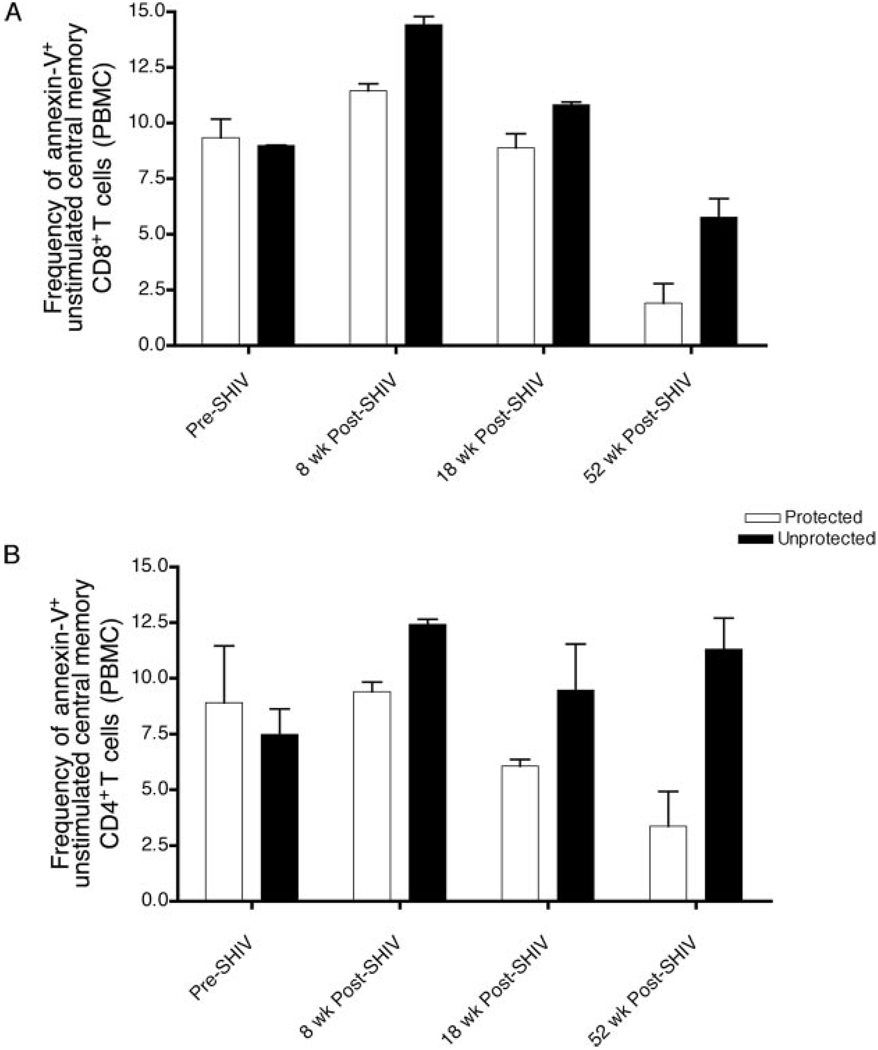
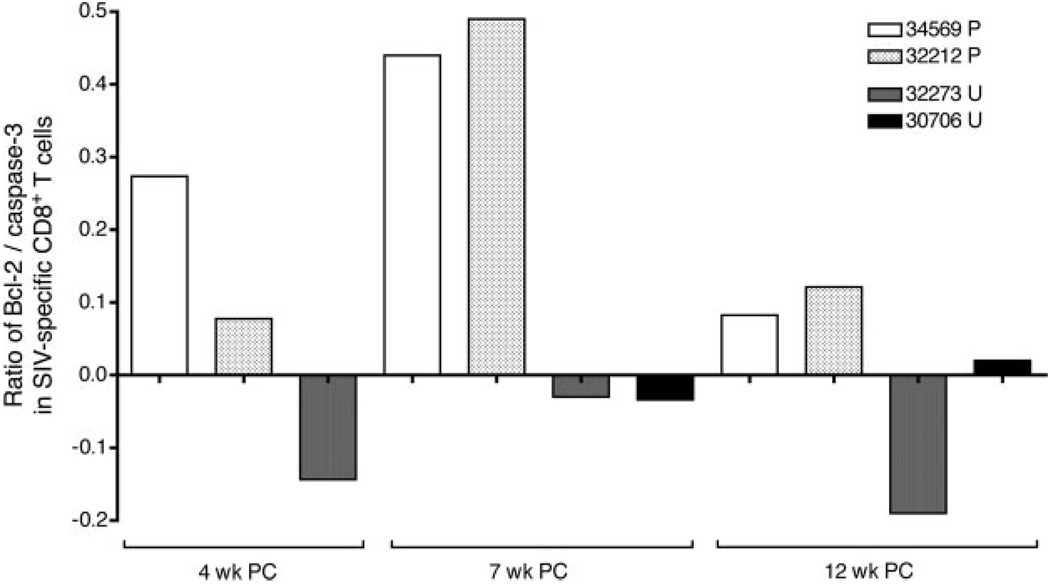
HIV-specific CD8+ T cells that secrete multiple cytokines in response to Ag stimulation are associated with the control of virus replication during chronic HIV infection. To determine whether the presence of polyfunctional CD8+ T cell responses distinguishes protected and unprotected monkeys in a live attenuated lentivirus model, SIV Gag peptide-specific CD8+ T cell responses of simian HIV (SHIV) 89.6-vaccinated, SIVmac239-challenged rhesus macaques were compared in two monkeys that controlled challenge virus replication and two that did not. The ratio of Bcl-2+ Gag-specific CD8+ T cells to caspase-3+ Gag-specific CD8+ T cells was higher in the vaccinated-protected animals compared with unprotected monkeys. In addition, polyfunctional SIV-specific CD8+ T cells were consistently detected through 12 wk postchallenge in the protected animals but not in the unprotected animals. In the unprotected monkeys, there was an increased frequency of CD8+ T cells expressing markers associated with effector memory T cells. Further, there was increased annexin V expression in central memory T cells of the unprotected animals before challenge. Thus, monkeys that control viral replication after live attenuated SHIV infection have polyfunctional SIV-specific CD8+ T cells with an increased survival potential. Importantly, the differences in the nature of the SIV-specific CD8+ T cell response in the protected and unprotected animals are present during acute stages postchallenge, before different antigenic levels are established. Thus, the polyfunctional capacity and increased survival potential of CD8+ SIV-specific T cells may account for live attenuated, SHIV89.6-mediated protection from uncontrolled SIV replication.
在慢性HIV感染期间,对抗原刺激产生多种细胞因子的HIV特异性CD8 + T细胞与病毒复制的控制相关。为了确定在减毒活慢病毒模型中多功能CD8 + T细胞反应的存在是否能区分受保护和未受保护的猴子,在两只控制攻击病毒复制的猴子和两只未控制的猴子中,比较了接种猿猴免疫缺陷病毒(SHIV)89.6并受到SIVmac239攻击的恒河猴的SIV Gag肽特异性CD8 + T细胞反应。与未受保护的猴子相比,接种疫苗后受保护动物中Bcl-2 + Gag特异性CD8 + T细胞与caspase-3 + Gag特异性CD8 + T细胞的比例更高。此外,在受保护的动物中,在攻击后12周内持续检测到多功能SIV特异性CD8 + T细胞,而在未受保护的动物中则未检测到。在未受保护的猴子中,表达与效应记忆T细胞相关标志物的CD8 + T细胞频率增加。此外,在攻击前,未受保护动物的中枢记忆T细胞中膜联蛋白V表达增加。因此,在减毒活SHIV感染后控制病毒复制的猴子具有多功能SIV特异性CD8 + T细胞,其存活潜力增加。重要的是,在攻击后的急性期,在建立不同抗原水平之前,受保护和未受保护动物中SIV特异性CD8 + T细胞反应的性质差异就已存在。因此,CD8 + SIV特异性T细胞的多功能能力和增加的存活潜力可能是减毒活SHIV89.6介导的免受不受控制的SIV复制保护的原因。