Pistello Mauro, Vannucci Laura, Ravani Alessia, Bonci Francesca, Chiuppesi Flavia, del Santo Barbara, Freer Giulia, Bendinelli Mauro
Retrovirus Center and Virology Section, Department of Experimental Pathology, University of Pisa, Pisa, Italy.
Genet Vaccines Ther. 2007 Sep 19;5:8. doi: 10.1186/1479-0556-5-8.
Safe and efficient vector systems for delivering antigens or immunomodulatory molecules to dendritic cells (DCs), T lymphocytes or both are considered effective means of eliciting adaptive immune responses and modulating their type, extent, and duration. As a possible tool toward this end, we have developed a self-inactivating vector derived from feline immunodeficiency virus (FIV) showing performance characteristics similar to human immunodeficiency virus-derived vectors but devoid of the safety concerns these vectors have raised.
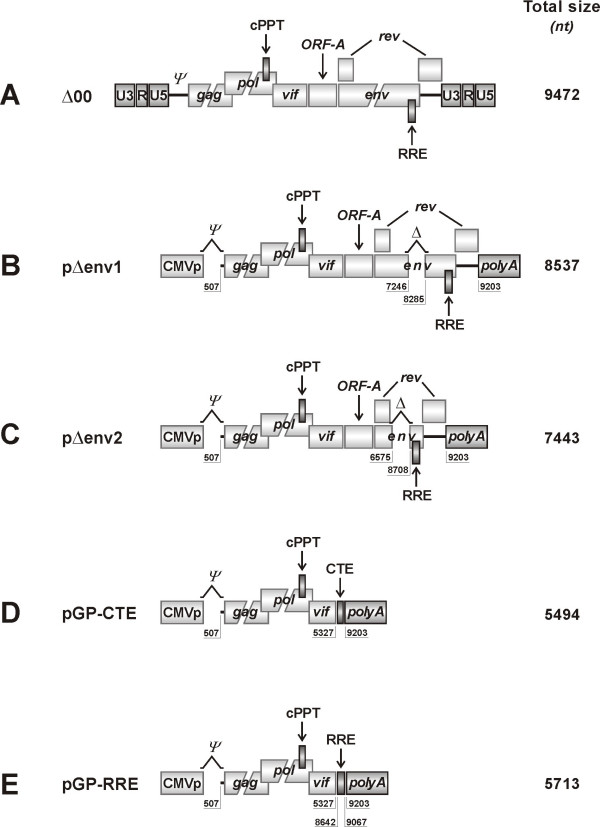
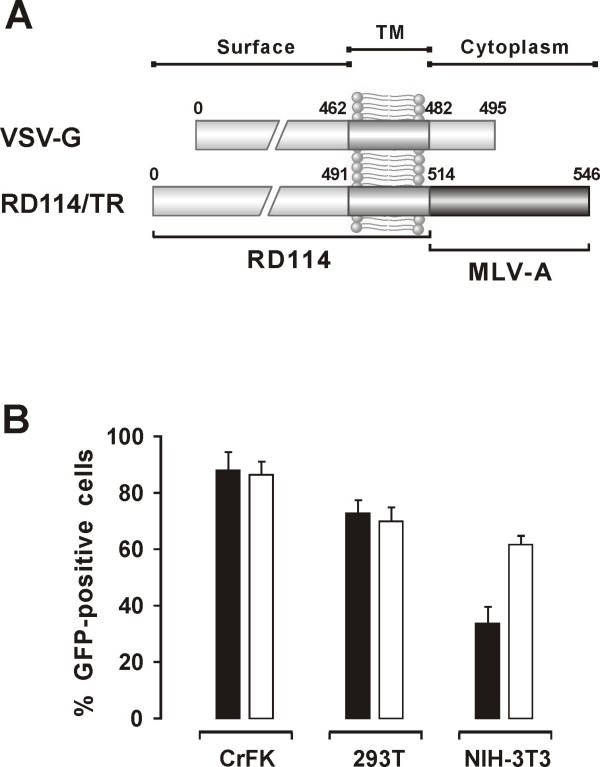
The pseudotyped FIV particles were generated with a three-plasmid system consisting of: the packaging construct, providing Gag, Pol and the accessory proteins; the vector(s), basically containing FIV packaging signal (psi), Rev responsive element, R-U5 region at both ends, and the green fluorescent protein as reporter gene; and the Env plasmid, encoding the G protein of vesicular stomatitis virus (VSV-G) or the chimeric RD114 protein. Both packaging and vector constructs were derived from p34TF10, a replication competent molecular clone of FIV. The pseudotyped particles were produced by transient transfection in the Crandell feline fibroblast kidney (CrFK) or the human epithelial (293T) cell line.
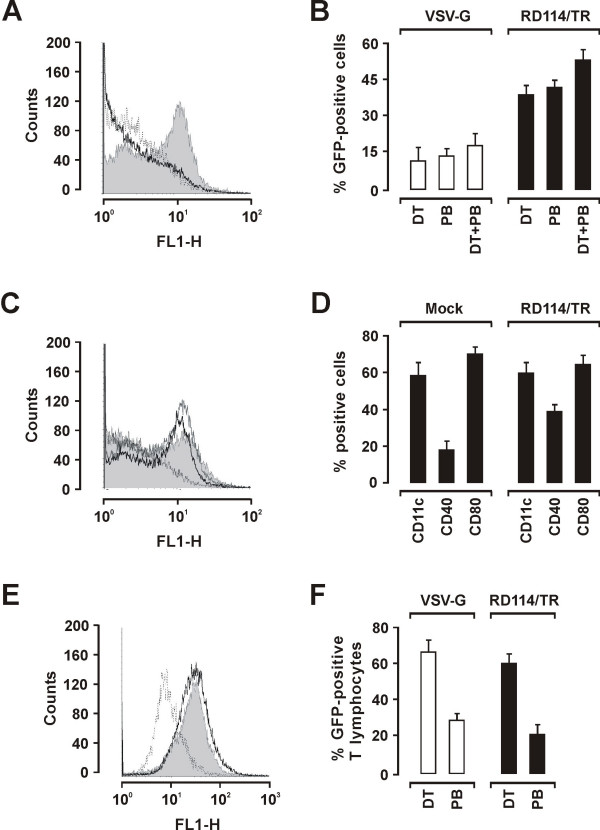
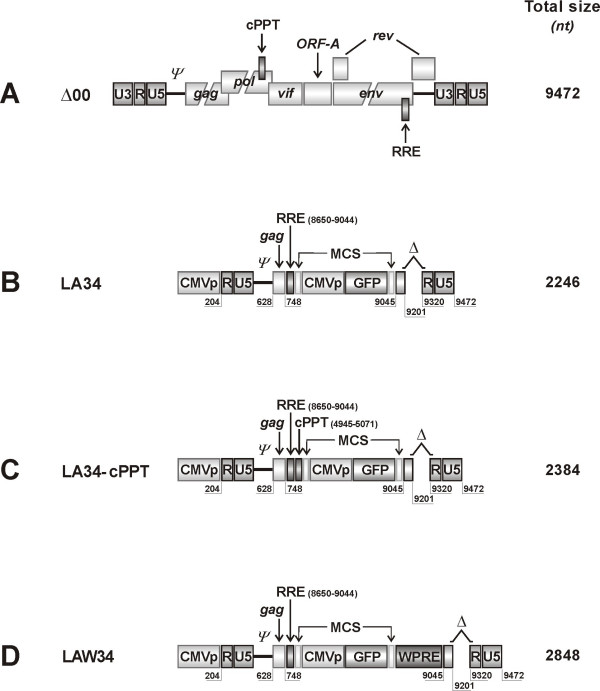
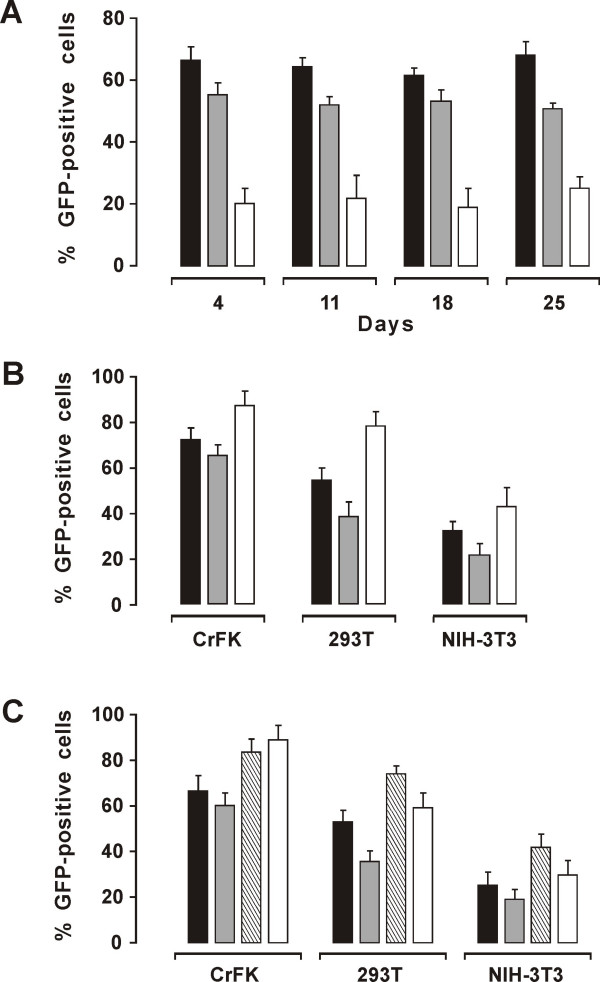
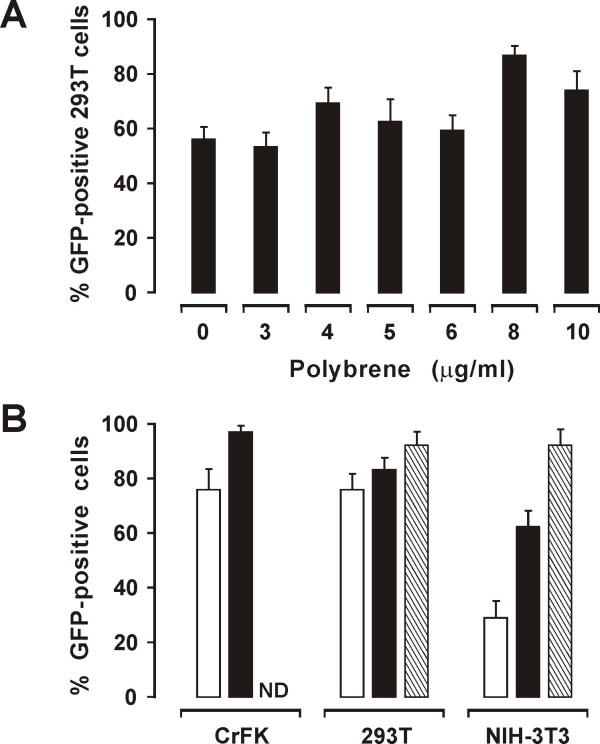
To broaden its species tropism, the final vector construct was achieved through a series of intermediate constructs bearing a longer psi, the FIV central polypurin tract sequence (cPPT), or the woodchuck hepatitis post-regulatory element (WPRE). These constructs were compared for efficiency and duration of transduction in CrFK or 293T cells and in the murine fibroblast cell line NIH-3T3. Whereas psi elongation and cPPT addition did not bring any obvious benefit, insertion of WPRE downstream GFP greatly improved vector performances. To maximize the efficiency of transduction for ex-vivo murine DCs and T-lymphocytes, this construct was tested with VSV-G or RD114 and using different transduction protocols. The results indicated that the FIV construct derived herein stably transduced both cell types, provided that appropriate vector makeup and transduction protocol were used. Further, transduced DCs underwent changes suggestive of an induced maturation.
In contrast to previously described FIV vectors that were poorly efficient in delivering genetic material to DCs and T lymphocytes, the vector developed herein has potential for use in experimental immunization strategies.
用于将抗原或免疫调节分子递送至树突状细胞(DC)、T淋巴细胞或两者的安全高效载体系统被认为是引发适应性免疫反应并调节其类型、程度和持续时间的有效手段。作为实现这一目标的一种可能工具,我们开发了一种源自猫免疫缺陷病毒(FIV)的自失活载体,其表现出与源自人类免疫缺陷病毒的载体相似的性能特征,但没有这些载体所引发的安全问题。
用三质粒系统产生假型FIV颗粒,该系统由以下部分组成:包装构建体,提供Gag、Pol和辅助蛋白;载体,基本包含FIV包装信号(ψ)、Rev反应元件、两端的R-U5区域以及作为报告基因的绿色荧光蛋白;以及Env质粒,编码水疱性口炎病毒(VSV-G)的G蛋白或嵌合RD114蛋白。包装构建体和载体构建体均源自p34TF10,这是一种具有复制能力的FIV分子克隆。通过在克兰德尔猫肾成纤维细胞(CrFK)或人上皮细胞(293T)系中进行瞬时转染来产生假型颗粒。
为了拓宽其物种嗜性,通过一系列带有更长ψ、FIV中央多聚嘌呤序列(cPPT)或土拨鼠肝炎后调控元件(WPRE)的中间构建体获得了最终的载体构建体。比较了这些构建体在CrFK或293T细胞以及小鼠成纤维细胞系NIH-3T3中的转导效率和持续时间。虽然ψ延长和添加cPPT没有带来任何明显益处,但在GFP下游插入WPRE大大提高了载体性能。为了使体外小鼠DC和T淋巴细胞的转导效率最大化,用VSV-G或RD114并使用不同的转导方案对该构建体进行了测试。结果表明,只要使用适当的载体组成和转导方案,本文衍生的FIV构建体就能稳定转导这两种细胞类型。此外,转导的DC发生了提示诱导成熟的变化。
与先前描述的在将遗传物质递送至DC和T淋巴细胞方面效率低下的FIV载体不同,本文开发的载体具有用于实验性免疫策略的潜力。