Epidemiology and Biostatistics, School of Population Health, University of Auckland, Auckland, New Zealand.
Int J Behav Nutr Phys Act. 2007 Sep 19;4:40. doi: 10.1186/1479-5868-4-40.
Little research has given consideration to how people's weight control behaviors may moderate the relationships between nutrition and body mass index (BMI) in large cross-sectional studies. The objective of the current study is to determine how attempts to lose weight confound the relationships between nutrition behaviors and BMI among a population of predominately overweight adolescents.
Data were drawn from the baseline measurements of the Pacific OPIC (Obesity Prevention In Communities). Participants included approximately 3500 high school students in New Zealand. Students in the sample primarily identified as a Pacific Island ethnicity (57%) and the mean age for participants was 14.8 years. Participants completed a questionnaire about nutrition and physical activity patterns and were weighed and measured for height.
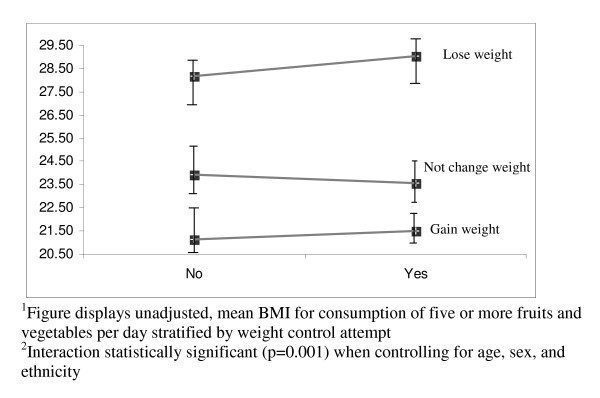
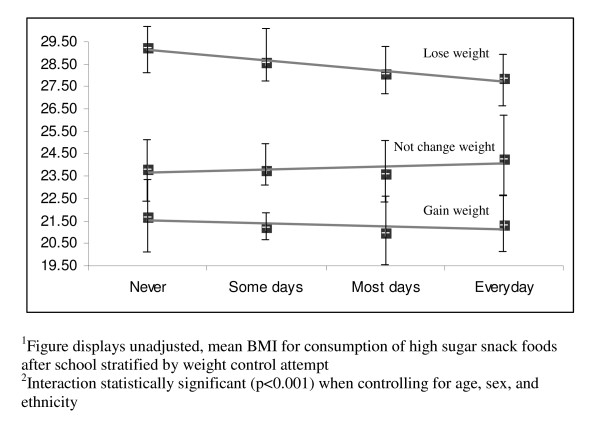
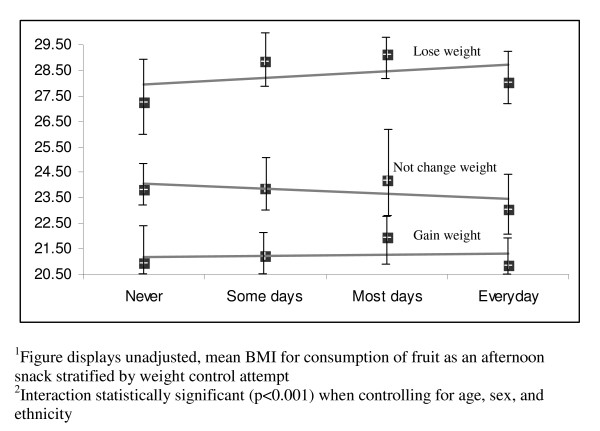
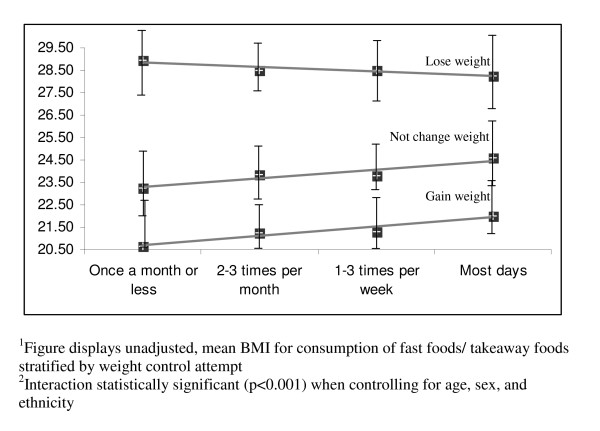
In our sample, 57% of students were overweight/obese, with the highest prevalence among Pacific Island students (71%). Approximately 50% of students were currently trying to lose weight, and this was more common among females, Pacific Island students and overweight/obese students. Examination of the nutritional correlates of BMI in the total population found inverse relationships between BMI and consumption of high-fat/high-sugar foods and positive relationships between BMI and eating 5 or more fruits and vegetables a day (all significant after controlling for age, sex, and ethnicity). For example, students who drank the most soft drinks or ate fruit and vegetables infrequently had the lowest mean BMI. Students' attempts to change their weight significantly moderated the relationships between most nutritional behaviors and BMI. In most cases, among students not trying to change their weight, expected relationships were observed; among students trying to lose weight, unexpected or no relationships were observed.
Our findings suggest that among this population of predominately overweight students, solely relying on cross-sectional findings between nutrition behaviours and BMI would misinform intervention strategies. It appears that many students are already taking appropriate steps to reduce their weight. Intervention efforts should now move beyond education-based strategies to environmental changes that support students in adopting healthier nutrition practices.
很少有研究关注人们的体重控制行为如何在大型横断面研究中调节营养与体重指数(BMI)之间的关系。本研究的目的是确定在以超重青少年为主的人群中,减肥尝试如何使营养行为与 BMI 之间的关系复杂化。
数据来自太平洋 OPIC(社区肥胖预防)的基线测量。参与者包括新西兰约 3500 名高中生。样本中的学生主要是太平洋岛民(57%),参与者的平均年龄为 14.8 岁。学生完成了一份关于营养和体育活动模式的问卷,并称重和测量身高。
在我们的样本中,57%的学生超重/肥胖,其中太平洋岛民学生的比例最高(71%)。大约 50%的学生目前正在试图减肥,而女性、太平洋岛民学生和超重/肥胖学生中这种情况更为常见。对整个人群 BMI 的营养相关因素进行检查发现,BMI 与高脂肪/高糖食物的摄入呈负相关,与每天吃 5 份或更多水果和蔬菜呈正相关(所有相关因素在控制年龄、性别和种族后均有统计学意义)。例如,喝软饮料最多或很少吃水果和蔬菜的学生平均 BMI 最低。学生改变体重的尝试显著调节了大多数营养行为与 BMI 之间的关系。在大多数情况下,在不试图改变体重的学生中,观察到了预期的关系;在试图减肥的学生中,观察到了意外的或没有关系。
我们的研究结果表明,在以超重学生为主的人群中,仅依靠营养行为与 BMI 之间的横断面研究结果会误导干预策略。似乎许多学生已经采取了适当的措施来减肥。干预工作现在应该从以教育为基础的策略转移到环境变化,以支持学生采取更健康的营养实践。