Luke Cliff J, Pak Stephen C, Askew Yuko S, Naviglia Terra L, Askew David J, Nobar Shila M, Vetica Anne C, Long Olivia S, Watkins Simon C, Stolz Donna B, Barstead Robert J, Moulder Gary L, Brömme Dieter, Silverman Gary A
UPMC Newborn Medicine Program, Departments of Pediatrics Children's Hospital of Pittsburgh and Magee-Womens Research Institute, 204 Craft Avenue, Pittsburgh, PA 15213, USA.
Cell. 2007 Sep 21;130(6):1108-19. doi: 10.1016/j.cell.2007.07.013.
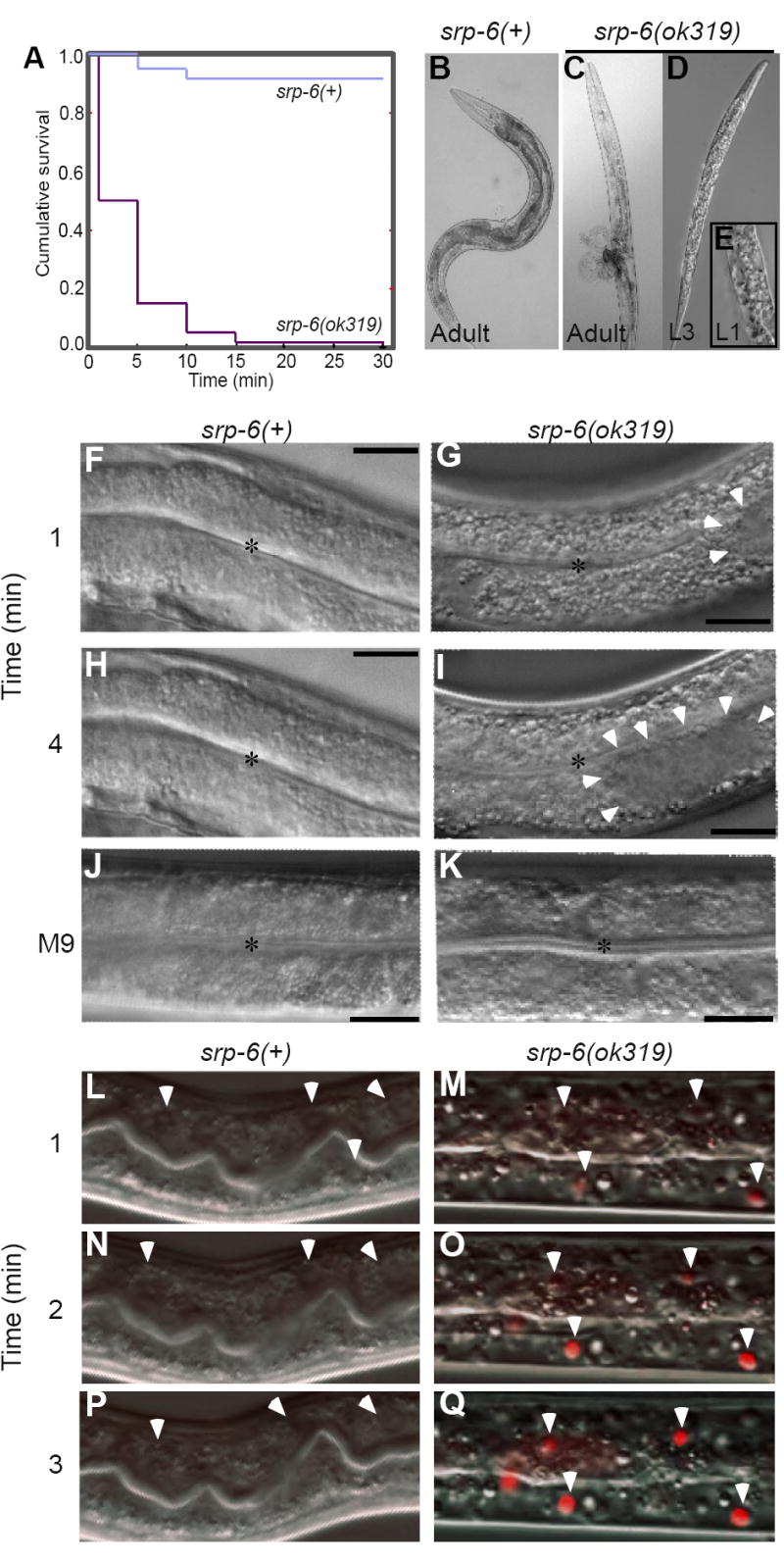
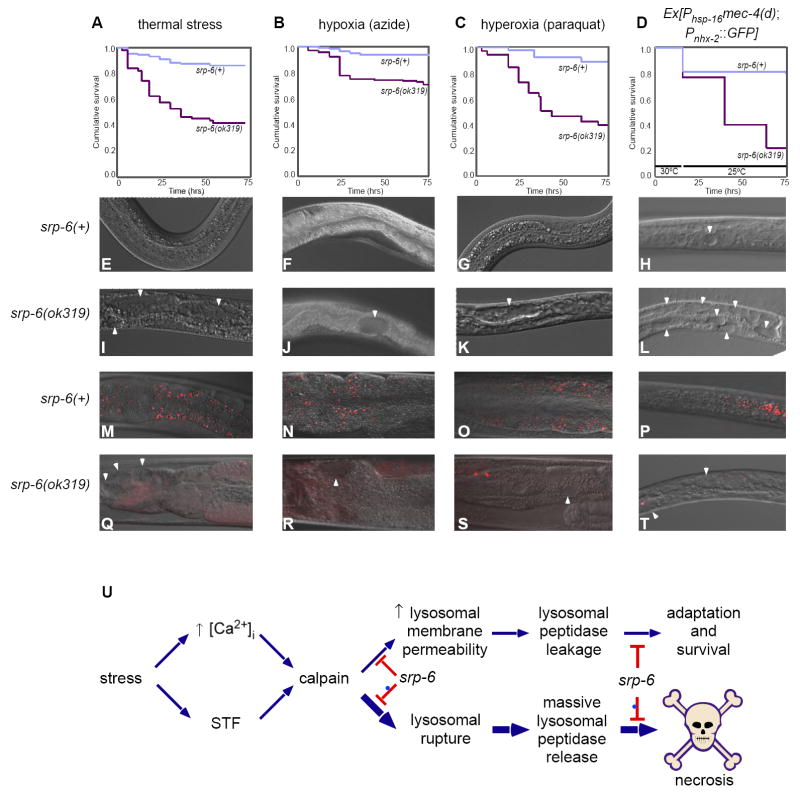
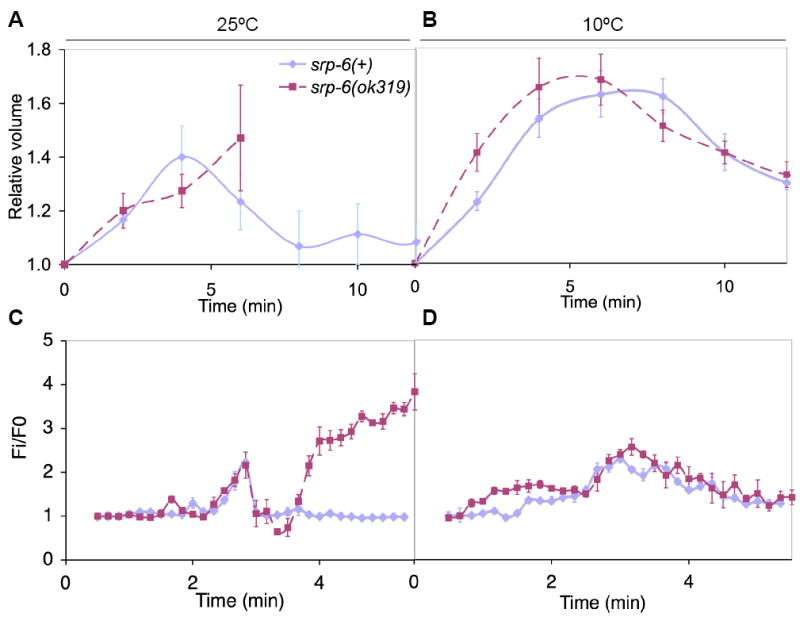
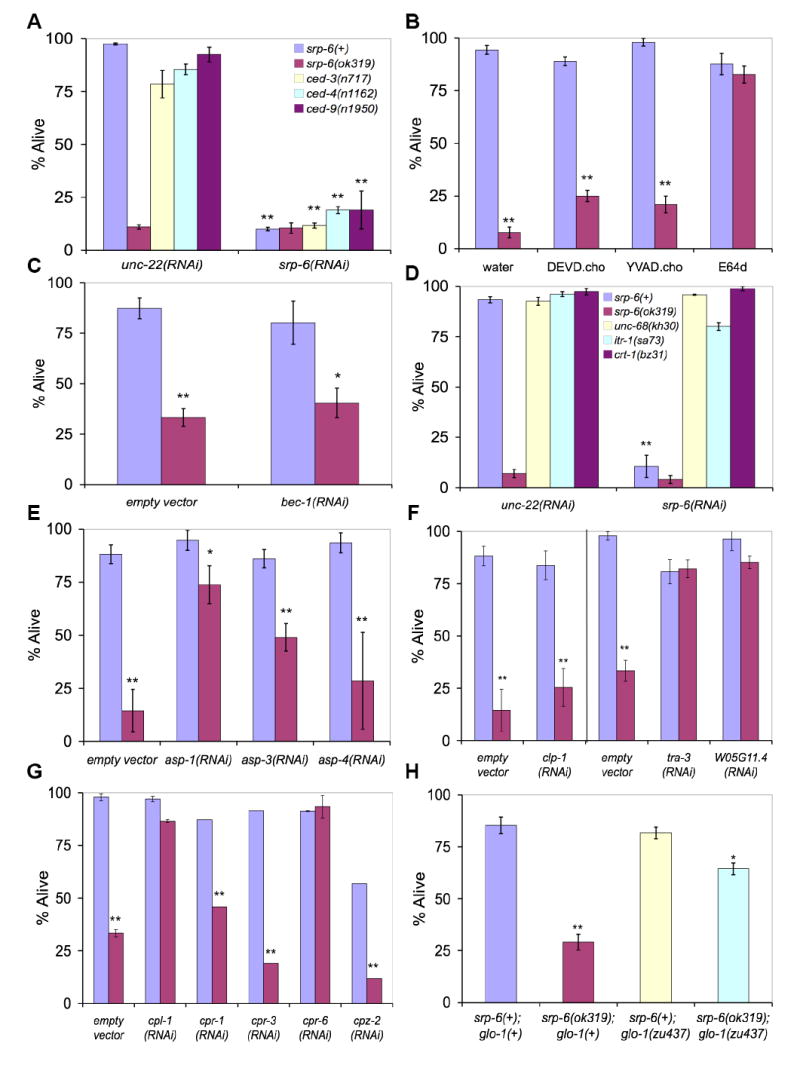
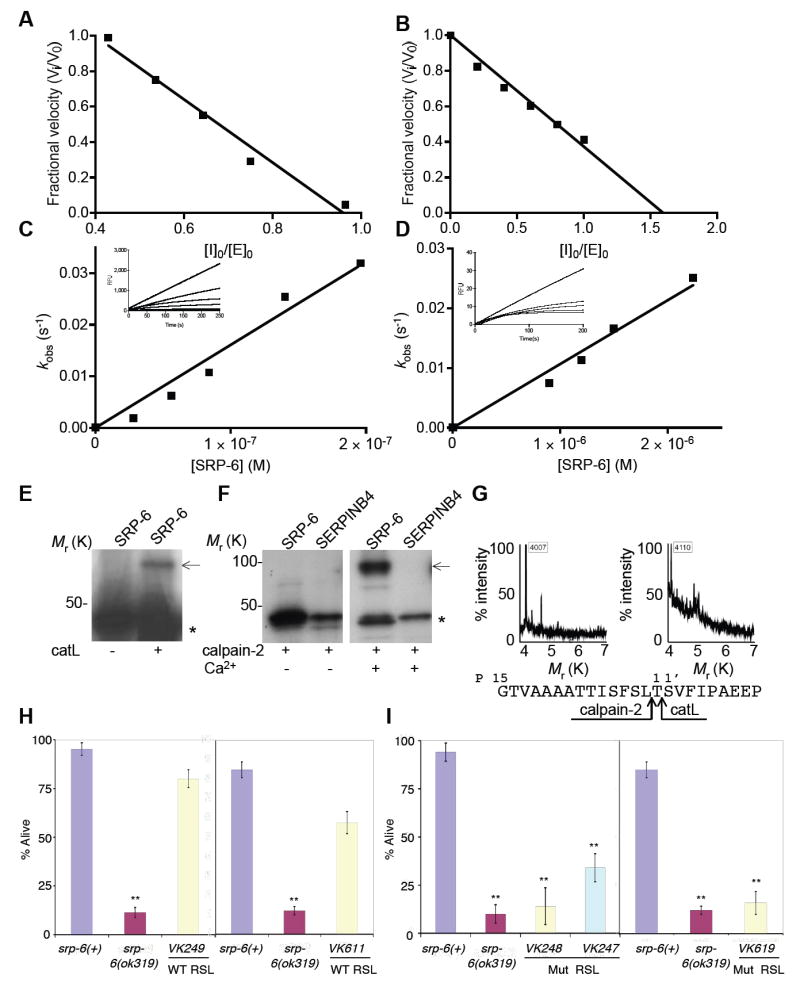
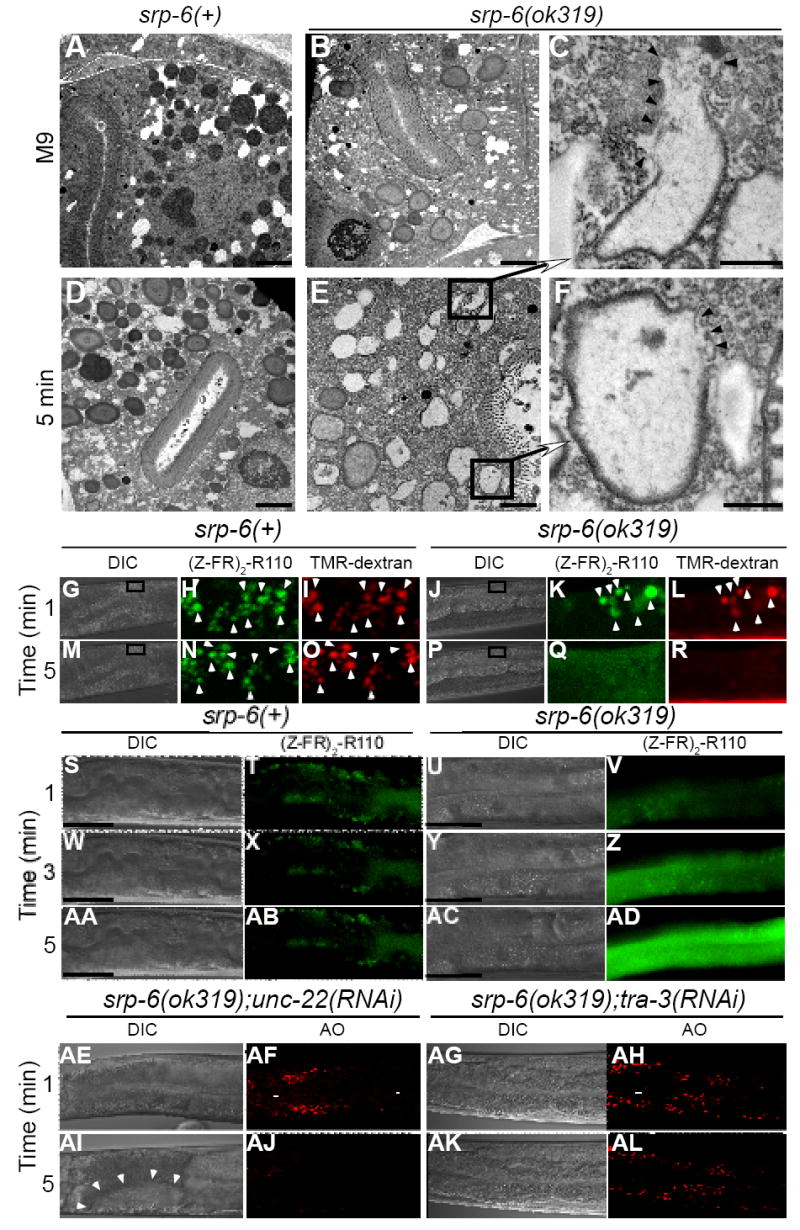
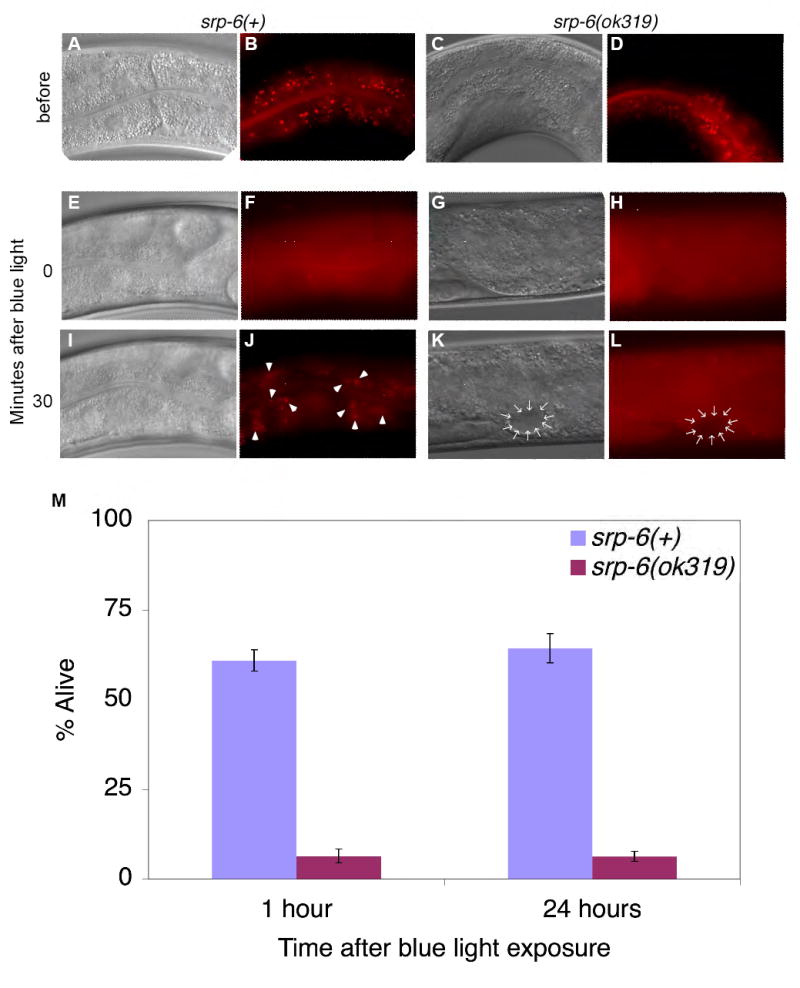
Extracellular serpins such as antithrombin and alpha1-antitrypsin are the quintessential regulators of proteolytic pathways. In contrast, the biological functions of the intracellular serpins remain obscure. We now report that the C. elegans intracellular serpin, SRP-6, exhibits a prosurvival function by blocking necrosis. Minutes after hypotonic shock, srp-6 null animals underwent a catastrophic series of events culminating in lysosomal disruption, cytoplasmic proteolysis, and death. This newly defined hypo-osmotic stress lethal (Osl) phenotype was dependent upon calpains and lysosomal cysteine peptidases, two in vitro targets of SRP-6. By protecting against both the induction of and the lethal effects from lysosomal injury, SRP-6 also blocked death induced by heat shock, oxidative stress, hypoxia, and cation channel hyperactivity. These findings suggest that multiple noxious stimuli converge upon a peptidase-driven, core stress response pathway that, in the absence of serpin regulation, triggers a lysosomal-dependent necrotic cell death routine.
细胞外丝氨酸蛋白酶抑制剂,如抗凝血酶和α1-抗胰蛋白酶,是蛋白水解途径的典型调节因子。相比之下,细胞内丝氨酸蛋白酶抑制剂的生物学功能仍不清楚。我们现在报告,秀丽隐杆线虫的细胞内丝氨酸蛋白酶抑制剂SRP-6通过阻止坏死发挥促生存功能。低渗休克几分钟后,srp-6基因缺失的动物经历了一系列灾难性事件,最终导致溶酶体破裂、细胞质蛋白水解和死亡。这种新定义的低渗应激致死(Osl)表型依赖于钙蛋白酶和溶酶体半胱氨酸肽酶,这是SRP-6在体外的两个作用靶点。通过防止溶酶体损伤的诱导及其致死效应,SRP-6还阻止了热休克、氧化应激、缺氧和阳离子通道过度激活诱导的死亡。这些发现表明,多种有害刺激汇聚到一个由肽酶驱动的核心应激反应途径,在没有丝氨酸蛋白酶抑制剂调节的情况下,该途径会触发溶酶体依赖性坏死性细胞死亡程序。