Lewek Michael D, Hornby T George, Dhaher Yasin Y, Schmit Brian D
Sensory Motor Performance Program, Rehabilitation Institute of Chicago, IL, USA.
J Neurophysiol. 2007 Dec;98(6):3153-62. doi: 10.1152/jn.00726.2007. Epub 2007 Sep 26.
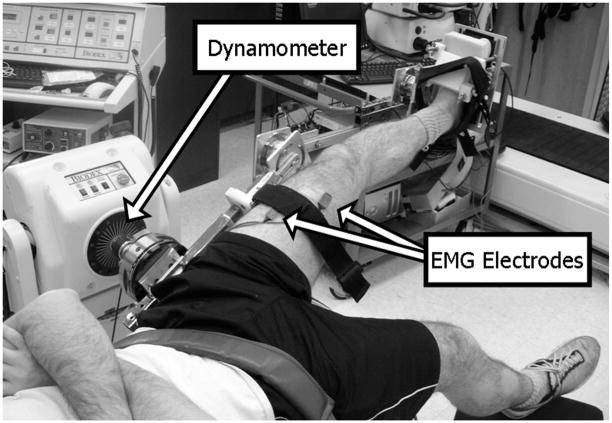
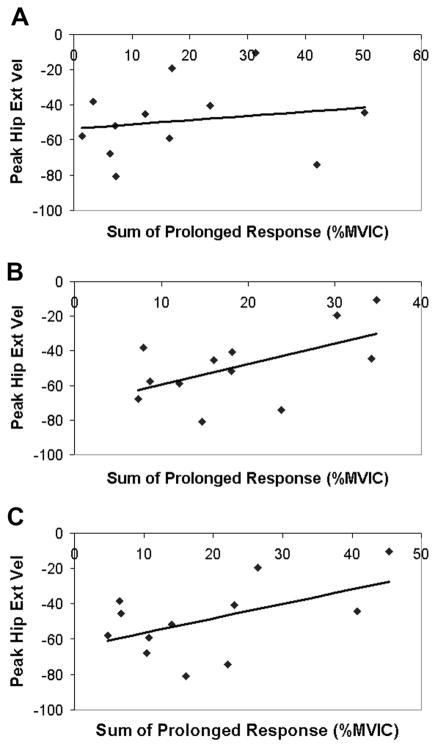
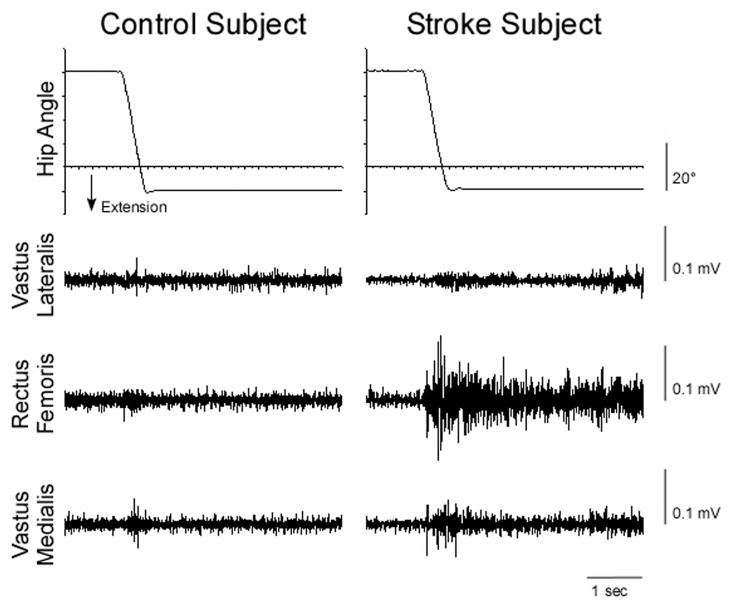
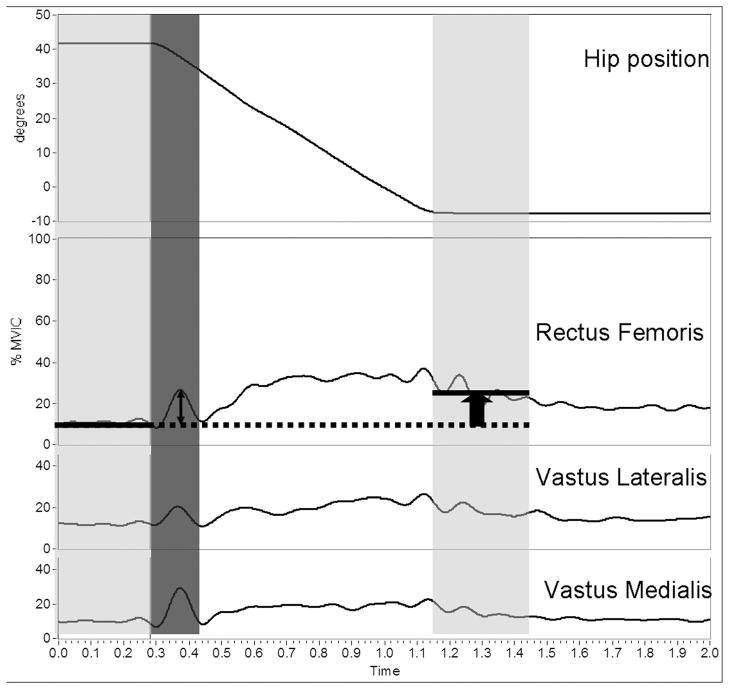
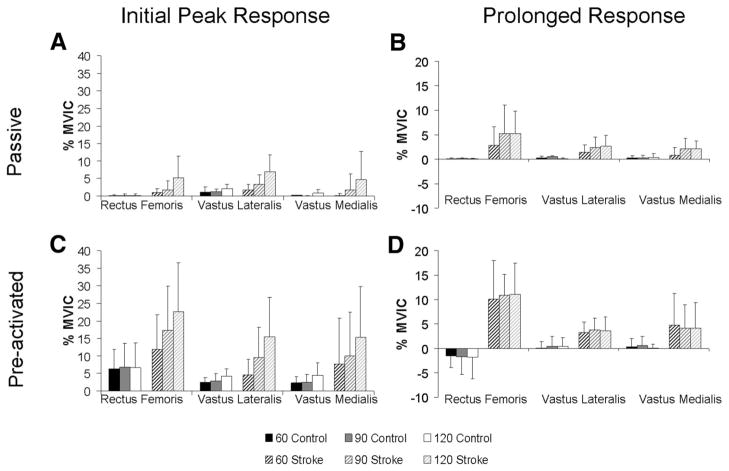
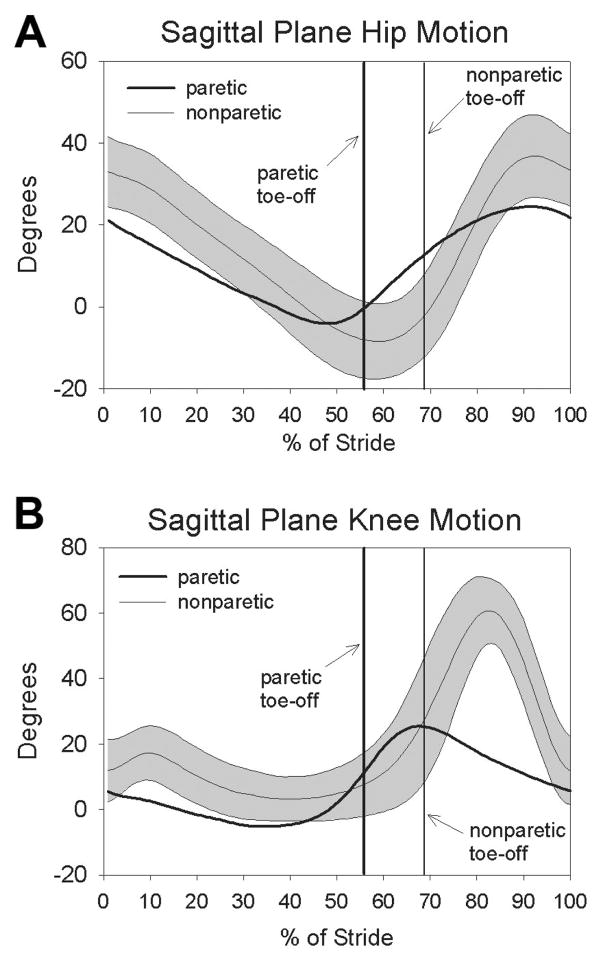
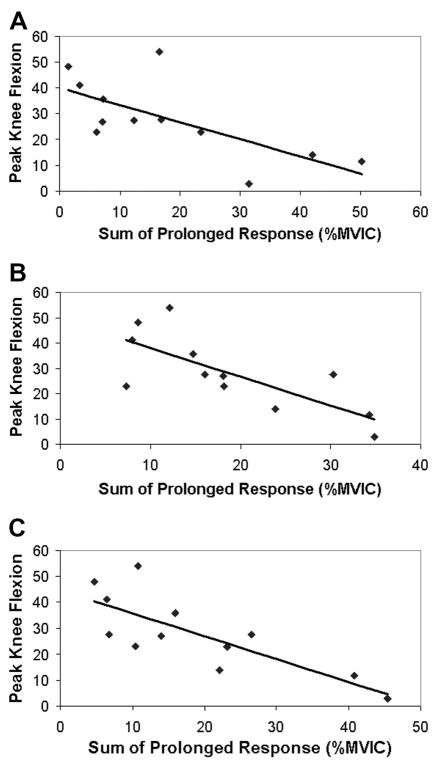
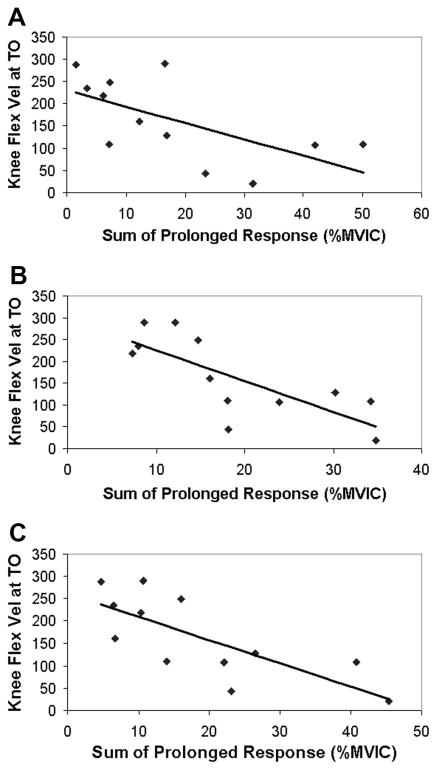
The biomechanical characteristics of stiff knee gait following neurological injury include decreased knee flexion velocity at toe-off, which may be due to exaggerated quadriceps activity. The neuromuscular mechanism underlying this abnormal activity is unclear, although hyperexcitable heteronymous reflexes may be a source of impaired coordination. The present study examines the contribution of reflex activity from hip flexors on knee extensors following stroke and its association with reduced swing-phase knee flexion during walking. Twelve individuals poststroke and six control subjects were positioned in supine on a Biodex dynamometer with the ankle and knee held in a static position. Isolated hip extension movements were imposed at 60, 90, and 120 degrees /s through a 50 degrees excursion to end-range hip extension. Reflexive responses of the rectus femoris (RF), vastus lateralis (VL), and vastus medialis (VM) were quantified during and after the imposed hip rotation. Gait analysis was also performed for all subjects in the stroke group. In subjects with stroke, imposed hip extension evoked a brief reflexive response in the quadriceps, followed by a heightened level of sustained activity. The initial response was velocity dependent and was larger in the stroke group than in the control group. In contrast, the prolonged response was not velocity dependent, was significantly greater in the VL and RF in subjects with stroke, and, importantly, was correlated to decreased swing-phase knee flexion. Hyperexcitable heteronymous connections from hip flexors to knee extensors appear to elicit prolonged quadriceps activity and may contribute to altered swing-phase knee kinematics following stroke.
神经损伤后僵硬膝关节步态的生物力学特征包括在足趾离地时膝关节屈曲速度降低,这可能是由于股四头肌活动过度所致。尽管兴奋性过高的异源反射可能是协调受损的一个原因,但这种异常活动背后的神经肌肉机制尚不清楚。本研究探讨了中风后髋部屈肌对膝部伸肌反射活动的作用及其与步行时摆动相膝关节屈曲减少的关系。12名中风后个体和6名对照受试者仰卧于Biodex测力计上,踝关节和膝关节保持在静态位置。通过50度的行程至髋关节伸展终末范围,以60、90和120度/秒的速度进行孤立的髋关节伸展运动。在施加髋关节旋转期间和之后,对股直肌(RF)、股外侧肌(VL)和股内侧肌(VM)的反射反应进行量化。还对中风组的所有受试者进行了步态分析。在中风患者中,施加髋关节伸展会在股四头肌中诱发短暂的反射反应,随后是持续活动水平的升高。初始反应与速度有关,中风组比对照组更大。相比之下,延长反应与速度无关,在中风患者的VL和RF中显著更大,重要的是,与摆动相膝关节屈曲减少相关。从髋部屈肌到膝部伸肌的兴奋性过高的异源连接似乎会引发股四头肌的延长活动,并可能导致中风后摆动相膝关节运动学改变。