Fewer David P, Rouhiainen Leo, Jokela Jouni, Wahlsten Matti, Laakso Kati, Wang Hao, Sivonen Kaarina
Department of Applied Chemistry and Microbiology, PO Box 56, Viikki Biocenter, Viikinkaari 9, FIN-00014, University of Helsinki, Finland.
BMC Evol Biol. 2007 Oct 1;7:183. doi: 10.1186/1471-2148-7-183.
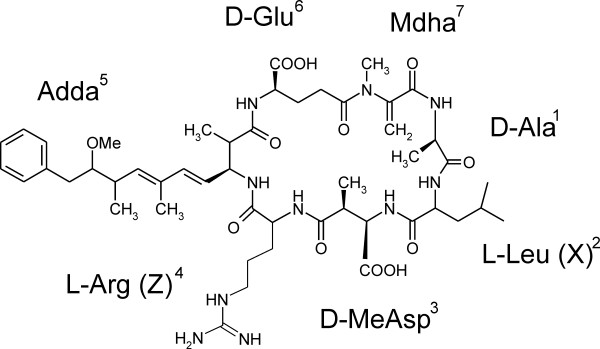
Microcystins are small cyclic heptapeptide toxins produced by a range of distantly related cyanobacteria. Microcystins are synthesized on large NRPS-PKS enzyme complexes. Many structural variants of microcystins are produced simultaneously. A recombination event between the first module of mcyB (mcyB1) and mcyC in the microcystin synthetase gene cluster is linked to the simultaneous production of microcystin variants in strains of the genus Microcystis.
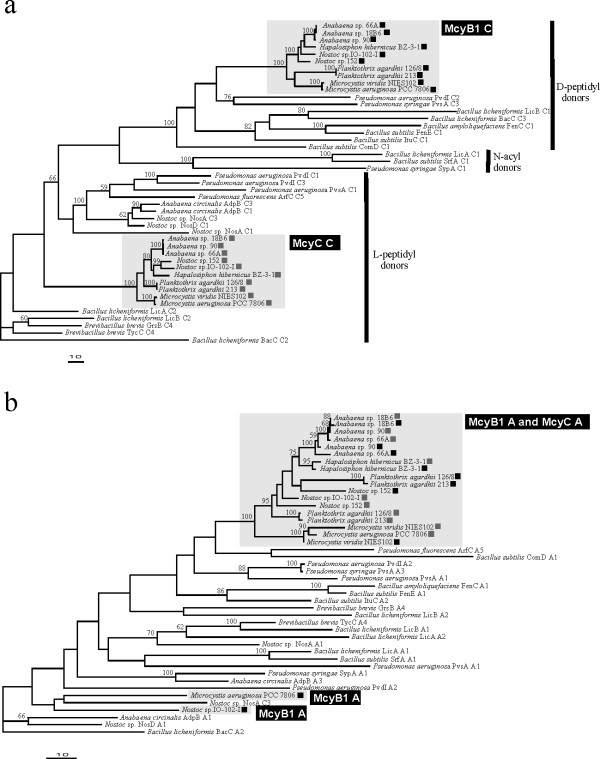
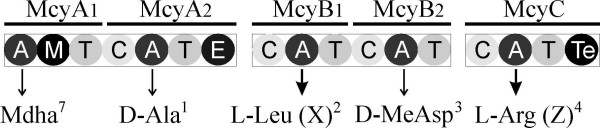
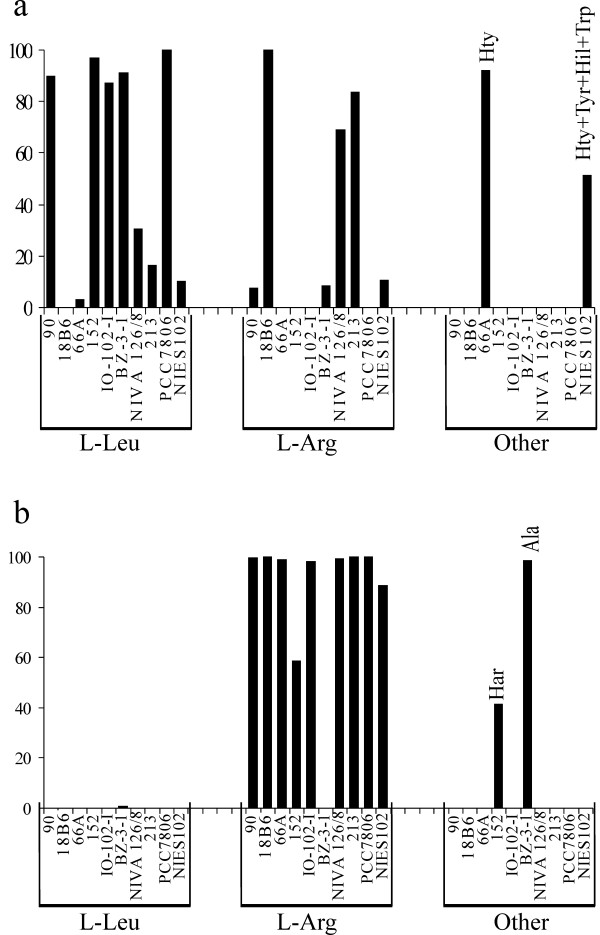
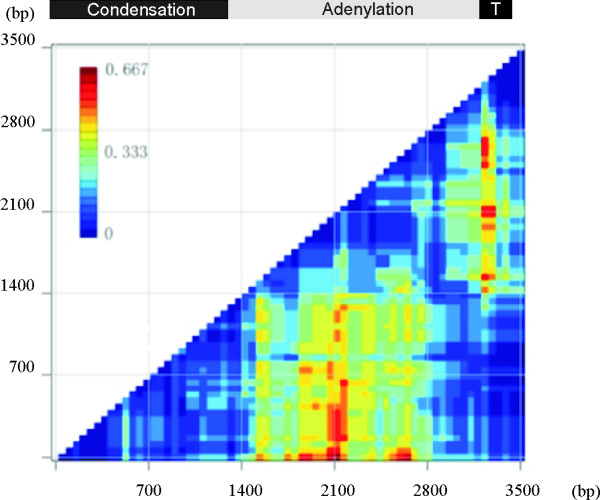
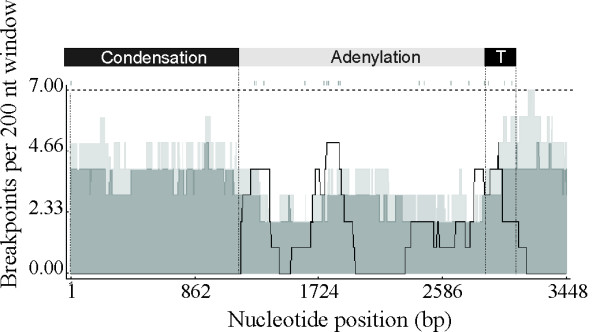
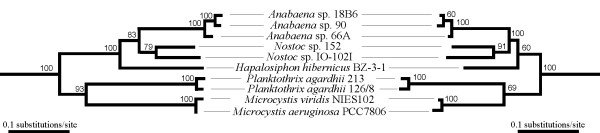
Here we undertook a phylogenetic study to investigate the order and timing of recombination between the mcyB1 and mcyC genes in a diverse selection of microcystin producing cyanobacteria. Our results provide support for complex evolutionary processes taking place at the mcyB1 and mcyC adenylation domains which recognize and activate the amino acids found at X and Z positions. We find evidence for recent recombination between mcyB1 and mcyC in strains of the genera Anabaena, Microcystis, and Hapalosiphon. We also find clear evidence for independent adenylation domain conversion of mcyB1 by unrelated peptide synthetase modules in strains of the genera Nostoc and Microcystis. The recombination events replace only the adenylation domain in each case and the condensation domains of mcyB1 and mcyC are not transferred together with the adenylation domain. Our findings demonstrate that the mcyB1 and mcyC adenylation domains are recombination hotspots in the microcystin synthetase gene cluster.
Recombination is thought to be one of the main mechanisms driving the diversification of NRPSs. However, there is very little information on how recombination takes place in nature. This study demonstrates that functional peptide synthetases are created in nature through transfer of adenylation domains without the concomitant transfer of condensation domains.
微囊藻毒素是由一系列远缘蓝藻产生的小型环状七肽毒素。微囊藻毒素在大型非核糖体肽合成酶-聚酮合酶(NRPS-PKS)酶复合物上合成。微囊藻毒素的许多结构变体同时产生。微囊藻毒素合成酶基因簇中mcyB的第一个模块(mcyB1)与mcyC之间的重组事件与微囊藻属菌株中微囊藻毒素变体的同时产生有关。
在此,我们进行了一项系统发育研究,以调查多种产微囊藻毒素蓝藻中mcyB1和mcyC基因之间重组的顺序和时间。我们的结果为在mcyB1和mcyC腺苷化结构域发生的复杂进化过程提供了支持,这些结构域识别并激活在X和Z位置发现的氨基酸。我们发现鱼腥藻属、微囊藻属和软管藻属菌株中mcyB1和mcyC之间近期重组的证据。我们还在念珠藻属和微囊藻属菌株中发现了明确的证据,表明不相关的肽合成酶模块对mcyB1进行了独立的腺苷化结构域转换。在每种情况下,重组事件仅替换腺苷化结构域,mcyB1和mcyC的缩合结构域不会与腺苷化结构域一起转移。我们的研究结果表明,mcyB1和mcyC腺苷化结构域是微囊藻毒素合成酶基因簇中的重组热点。
重组被认为是驱动非核糖体肽合成酶多样化的主要机制之一。然而,关于重组在自然界中如何发生的信息非常少。这项研究表明,功能性肽合成酶是通过腺苷化结构域的转移在自然界中产生的,而缩合结构域不会随之转移。