Danko Charles G, McIlvain Vera A, Qin Maochun, Knox Barry E, Pertsov Arkady M
Department of Pharmacology, SUNY Upstate Medical University, Syracuse, NY, USA.
BMC Bioinformatics. 2007 Oct 22;8:407. doi: 10.1186/1471-2105-8-407.
Cell specific gene expression is largely regulated by different combinations of transcription factors that bind cis-elements in the upstream promoter sequence. However, experimental detection of cis-elements is difficult, expensive, and time-consuming. This provides a motivation for developing bioinformatic methods to identify cis-elements that could prioritize future experimental studies. Here, we use motif discovery algorithms to predict transcription factor binding sites involved in regulating the differences between murine rod and cone photoreceptor populations.
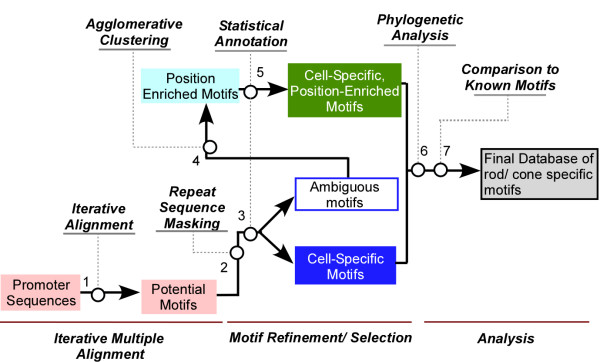
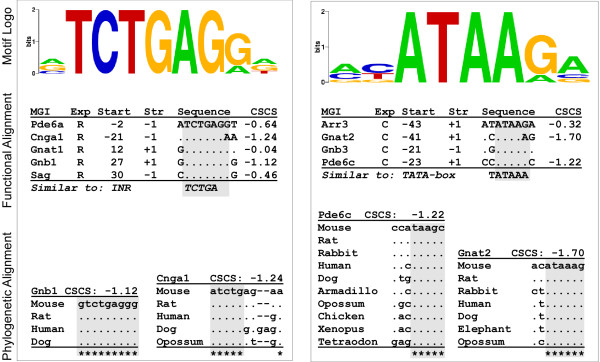
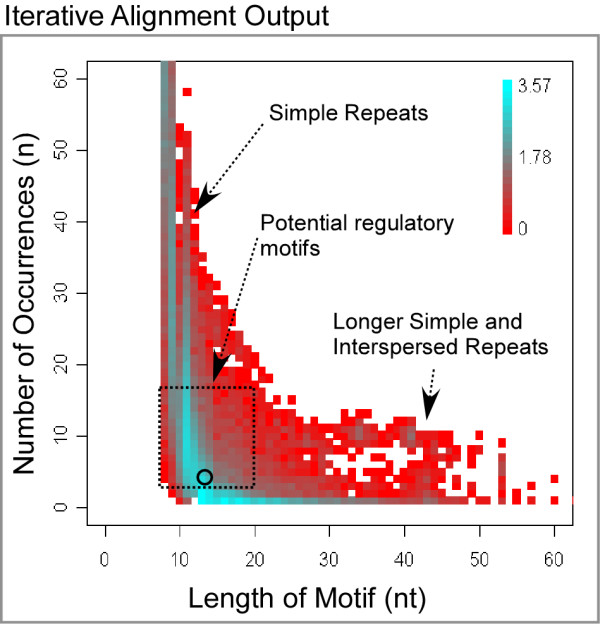
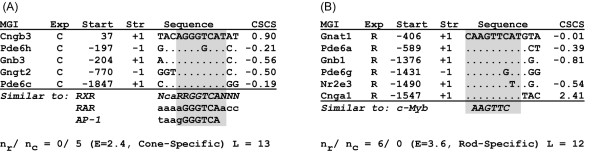
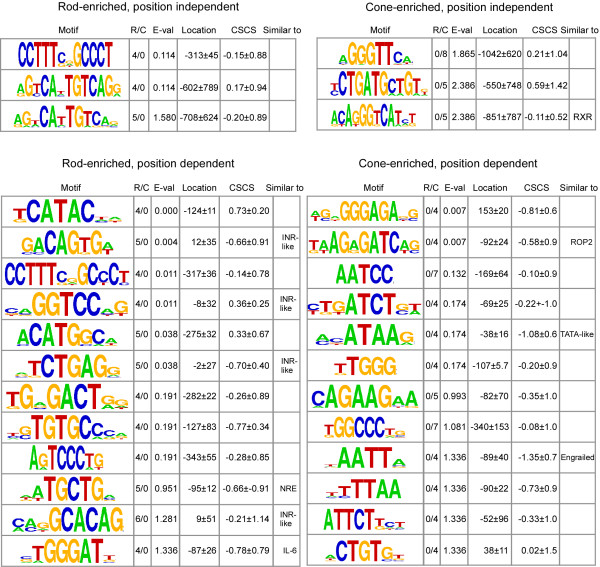
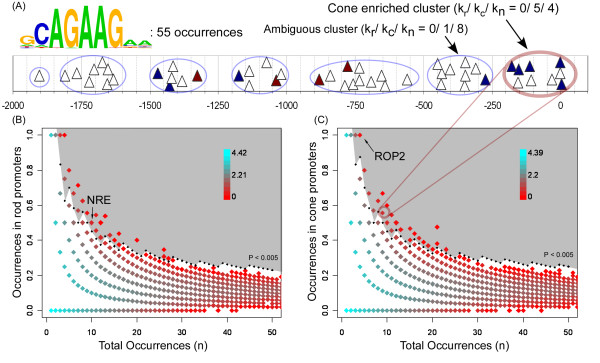
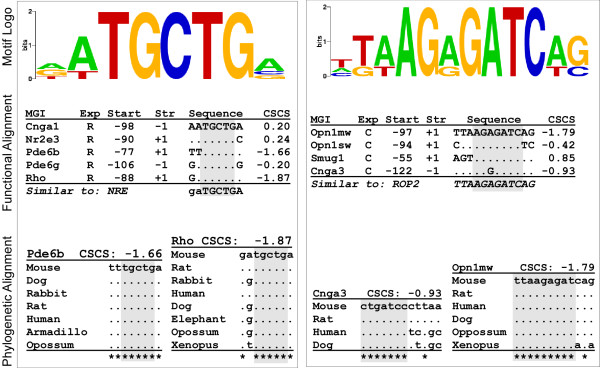
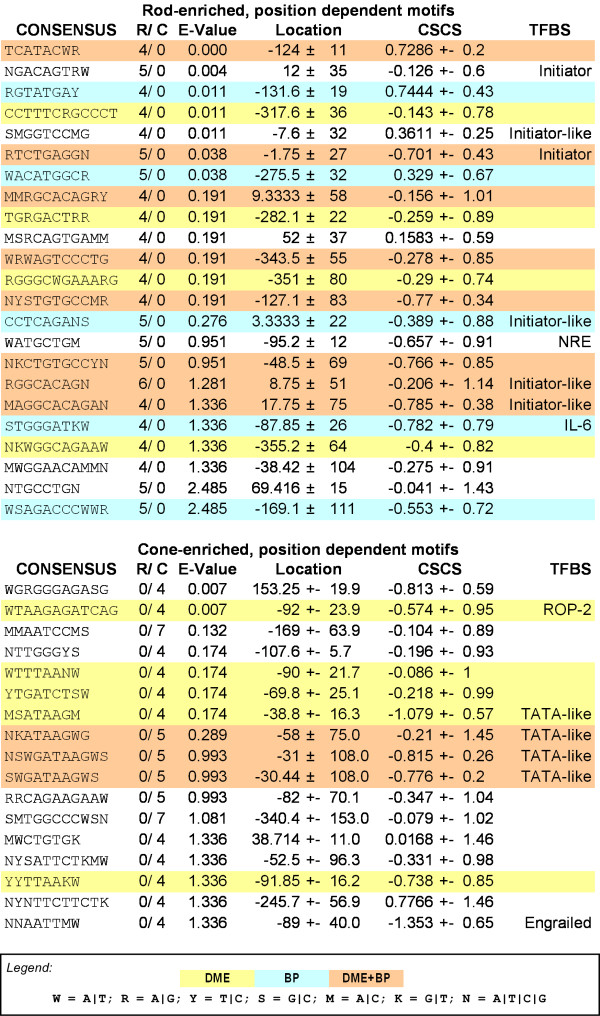
To identify highly conserved motifs enriched in promoters that drive expression in either rod or cone photoreceptors, we assembled a set of murine rod-specific, cone-specific, and non-photoreceptor background promoter sequences. These sets were used as input to a newly devised motif discovery algorithm called Iterative Alignment/Modular Motif Selection (IAMMS). Using IAMMS, we predicted 34 motifs that may contribute to rod-specific (19 motifs) or cone-specific (15 motifs) expression patterns. Of these, 16 rod- and 12 cone-specific motifs were found in clusters near the transcription start site. New findings include the observation that cone promoters tend to contain TATA boxes, while rod promoters tend to be TATA-less (exempting Rho and Cnga1). Additionally, we identify putative sites for IL-6 effectors (in rods) and RXR family members (in cones) that can explain experimental data showing changes to cell-fate by activating these signaling pathways during rod/cone development. Two of the predicted motifs (NRE and ROP2) have been confirmed experimentally to be involved in cell-specific expression patterns. We provide a full database of predictions as additional data that may contain further valuable information. IAMMS predictions are compared with existing motif discovery algorithms, DME and BioProspector. We find that over 60% of IAMMS predictions are confirmed by at least one other motif discovery algorithm.
We predict novel, putative cis-elements enriched in the promoter of rod-specific or cone-specific genes. These are candidate binding sites for transcription factors involved in maintaining functional differences between rod and cone photoreceptor populations.
细胞特异性基因表达在很大程度上受结合上游启动子序列中顺式元件的转录因子不同组合的调控。然而,顺式元件的实验检测困难、昂贵且耗时。这为开发生物信息学方法以识别可优先进行未来实验研究的顺式元件提供了动力。在此,我们使用基序发现算法来预测参与调节小鼠视杆和视锥光感受器群体差异的转录因子结合位点。
为了识别在驱动视杆或视锥光感受器表达的启动子中富集的高度保守基序,我们组装了一组小鼠视杆特异性、视锥特异性和非光感受器背景启动子序列。这些序列集被用作一种新设计的基序发现算法——迭代比对/模块化基序选择(IAMMS)的输入。使用IAMMS,我们预测了34个可能促成视杆特异性(19个基序)或视锥特异性(15个基序)表达模式的基序。其中,16个视杆特异性和12个视锥特异性基序在转录起始位点附近的簇中被发现。新发现包括观察到视锥启动子倾向于包含TATA盒,而视杆启动子倾向于无TATA盒(Rho和Cnga1除外)。此外,我们确定了IL-6效应器(在视杆中)和RXR家族成员(在视锥中)的假定位点,这些位点可以解释实验数据,即通过在视杆/视锥发育过程中激活这些信号通路来改变细胞命运。两个预测的基序(NRE和ROP2)已通过实验证实参与细胞特异性表达模式。我们提供了一个完整的预测数据库作为可能包含更多有价值信息的额外数据。将IAMMS的预测结果与现有的基序发现算法DME和BioProspector进行了比较。我们发现至少一种其他基序发现算法证实了超过60%的IAMMS预测结果。
我们预测了在视杆特异性或视锥特异性基因启动子中富集的新型假定顺式元件。这些是参与维持视杆和视锥光感受器群体功能差异的转录因子的候选结合位点。