Ball Stephen G, Shuttleworth C Adrian, Kielty Cay M
UK Centre for Tissue Engineering, Wellcome Trust Centre for Cell-Matrix Research, Faculty of Life Sciences, The University of Manchester, Manchester, UK.
J Cell Mol Med. 2007 Sep-Oct;11(5):1012-30. doi: 10.1111/j.1582-4934.2007.00120.x.
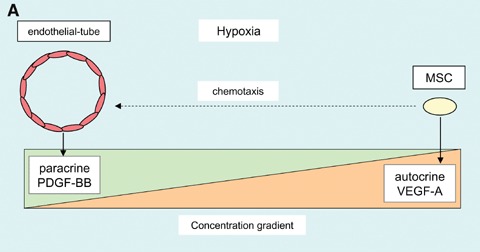
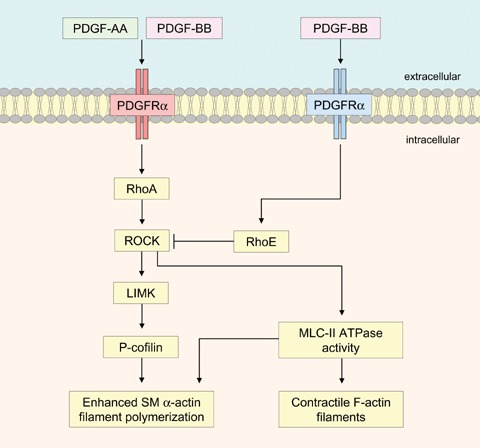
There is now accumulating evidence that bone marrow-derived mesenchymal stem cells (MSCs) make an important contribution to postnatal vasculogenesis, especially during tissue ischaemia and tumour vascularization. Identifying mechanisms which regulate the role of MSCs in vasculogenesis is a key therapeutic objective, since while increased neovascularization can be advantageous during tissue ischaemia, it is deleterious during tumourigenesis. The potent angiogenic stimulant vascular endothelial growth factor (VEGF) is known to regulate MSC mobilization and recruitment to sites of neovascularization, as well as directing the differentiation of MSCs to a vascular cell fate. Despite the fact that MSCs did not express VEGF receptors, we have recently identified that VEGF-A can stimulate platelet-derived growth factor (PDGF) receptors, which regulates MSC migration and proliferation. This review focuses on the role of PDGF receptors in regulating the vascular cell fate of MSCs, with emphasis on the function of the novel VEGF-A/PDGF receptor signalling mechanism.
目前越来越多的证据表明,骨髓来源的间充质干细胞(MSC)对出生后血管生成有重要贡献,尤其是在组织缺血和肿瘤血管形成过程中。确定调节MSC在血管生成中作用的机制是一个关键的治疗目标,因为虽然在组织缺血期间增加新血管形成可能是有益的,但在肿瘤发生过程中却是有害的。已知强效血管生成刺激因子血管内皮生长因子(VEGF)可调节MSC向新血管形成部位的动员和募集,并指导MSC向血管细胞命运分化。尽管MSC不表达VEGF受体,但我们最近发现VEGF-A可刺激血小板衍生生长因子(PDGF)受体,从而调节MSC的迁移和增殖。本综述重点关注PDGF受体在调节MSC血管细胞命运中的作用,重点是新型VEGF-A/PDGF受体信号机制的功能。