Li Dong, Da Liang, Tang Hong, Li Tsaiping, Zhao Mujun
State Key Laboratory of Molecular Biology, Institute of Biochemistry and Cell Biology, Shanghai Institutes for Biological Sciences, Chinese Academy of Sciences, Shanghai 200031, China.
Nucleic Acids Res. 2008 Jan;36(1):330-41. doi: 10.1093/nar/gkm1028. Epub 2007 Nov 22.
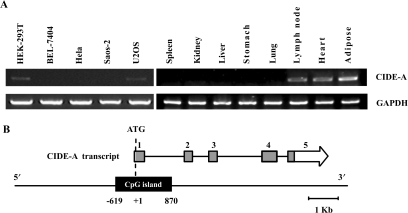
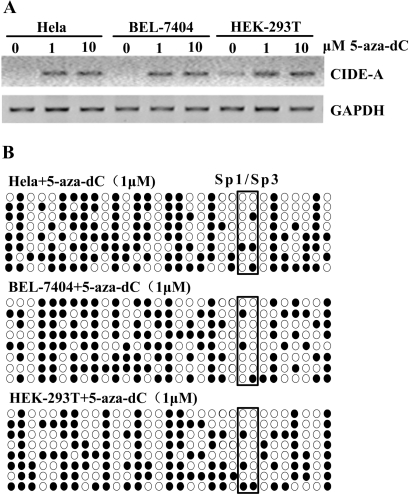
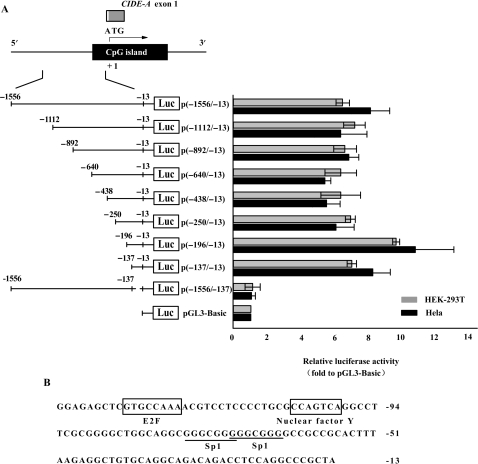
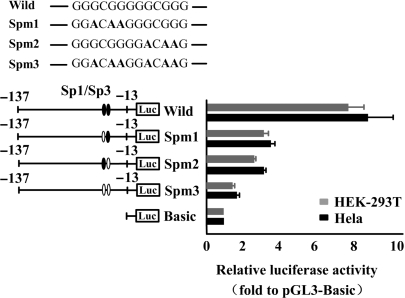
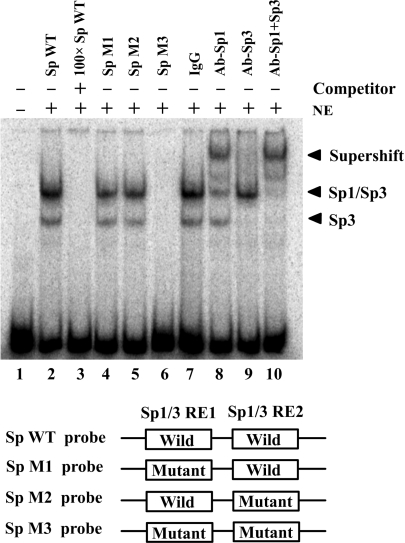
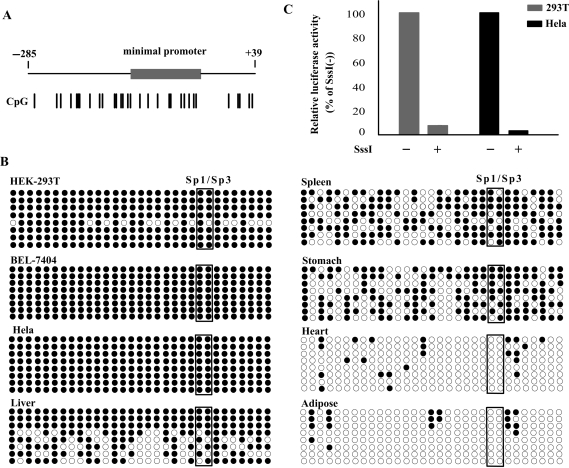
Cell-death-inducing DFF45-like effector A (CIDE-A) belongs to a family of proapoptotic proteins, the expression of which is highly restricted in human tissues and cells. Here, the core region of the human CIDE-A promoter was characterized. Surprisingly, two Sp1/Sp3-binding sites, rather than tissue-specific transcription factors, were found to be required for the promoter activity. Although the ubiquitously expressed Sp1 and Sp3 were crucial, they alone could not adequately regulate the specific expression of CIDE-A. We found that the expression of CIDE-A was further regulated by CpG methylation of the promoter region. By performing bisulfite sequencing, we observed dense CpG methylation of the promoter region in tissues and cells with low or no expression of CIDE-A but not in tissues with high level of CIDE-A expression. In vitro methylation of this region showed significantly reduced transcriptional activity. Treatment of CIDE-A-negative cells with 5-aza-2'-deoxycytidine demethylated the CpG sites; this opened the closed chromatin conformation and markedly enhanced the binding affinity of Sp1/Sp3 to the promoter in vivo, thereby restoring CIDE-A expression. These data indicated that CpG methylation plays a crucial role in establishing and maintaining tissue- and cell-specific transcription of the CIDE-A gene through the regulation of Sp1/Sp3 binding.
细胞死亡诱导因子DFF45样效应因子A(CIDE-A)属于促凋亡蛋白家族,其表达在人体组织和细胞中受到高度限制。在此,对人CIDE-A启动子的核心区域进行了表征。令人惊讶的是,发现启动子活性需要两个Sp1/Sp3结合位点,而不是组织特异性转录因子。虽然普遍表达的Sp1和Sp3至关重要,但它们单独不足以调节CIDE-A的特异性表达。我们发现CIDE-A的表达受到启动子区域CpG甲基化的进一步调控。通过亚硫酸氢盐测序,我们观察到在CIDE-A低表达或无表达的组织和细胞中启动子区域存在密集的CpG甲基化,而在CIDE-A高表达的组织中则没有。该区域的体外甲基化显示转录活性显著降低。用5-氮杂-2'-脱氧胞苷处理CIDE-A阴性细胞可使CpG位点去甲基化;这打开了封闭的染色质构象,并在体内显著增强了Sp1/Sp3与启动子的结合亲和力,从而恢复CIDE-A的表达。这些数据表明,CpG甲基化通过调节Sp1/Sp3结合,在建立和维持CIDE-A基因的组织和细胞特异性转录中起关键作用。