Zhang Jin, He Qiang, Liu Qiu Y, Guo Wei, Deng Xue M, Zhang Wei W, Hu Xiao X, Li Ning
State Key Laboratory for Agrobiotechnology, China Agricultural University, Beijing 100094, China.
BMC Genomics. 2007 Nov 26;8:433. doi: 10.1186/1471-2164-8-433.
Clenbuterol, a beta-agonist, can dramatically reduce pig adipose accumulation at high dosages. However, it has been banned in pig production because people who eat pig products treated with clenbuterol can be poisoned by the clenbuterol residues. To understand the molecular mechanism for this fat reduction, cDNA microarray, real-time PCR, two-dimensional electrophoresis and mass spectra were used to study the differential gene expression profiles of pig adipose tissues treated with/without clenbuterol. The objective of this research is to identify novel genes and physiological pathways that potentially facilitate clenbuterol induced reduction of adipose accumulation.
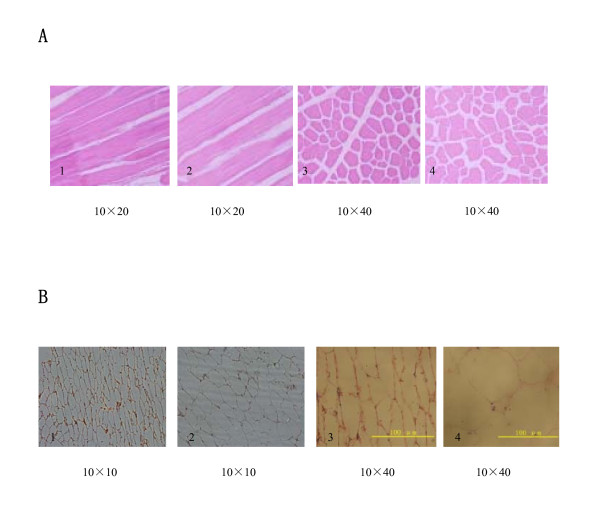
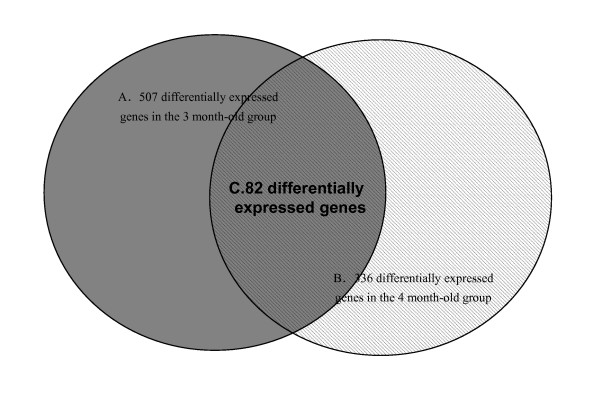
Clenbuterol was found to improve the lean meat percentage about 10 percent (P < 0.05). The adipose cells became smaller and the muscle fibers became thicker with the administration of clenbuterol. The mRNA abundance levels of 82 genes (ESTs) were found to be statistically differentially expressed based on the Student t-test (P < 0.05) in the microarray analyses which contained 3358 genes (ESTs). These 82 genes (ESTs) were divided into four groups according to their Gene Ontology Biological Process descriptions. 16 genes were cellular metabolism related genes (including five related to lipid metabolism such as apolipoprotein D and apolipoprotein R), 10 were signal transduction related genes, 45 were expressed sequence tags (ESTs) and 11 others were of various categories. Eleven of the 82 genes (ESTs) were chosen for real-time PCR analysis, with eight genes showing similar induction magnitude as that seen in the microarray data. Apolipoprotein R was also found to be up-regulated by the proteomic analysis.
Pig fat accumulation was reduced dramatically with clenbuterol treatment. Histological sections and global evaluation of gene expression after administration of clenbuterol in pigs identified profound changes in adipose cells. With clenbuterol stimulation, adipose cell volumes decreased and their gene expression profile changed, which indicate some metabolism processes have been also altered. Although the biological functions of the differentially expressed genes are not completely known, higher expressions of these molecules in adipose tissue might contribute to the reduction of fat accumulation. Among these genes, five lipid metabolism related genes were of special interest for further study, including apoD and apoR. The apoR expression was increased at both the RNA and protein levels. The apoR may be one of the critical molecules through which clenbuterol reduces fat accumulation.
克伦特罗是一种β-激动剂,高剂量使用时可显著减少猪的脂肪堆积。然而,由于食用用克伦特罗处理过的猪肉制品的人可能会因克伦特罗残留而中毒,它已被禁止用于生猪生产。为了解这种脂肪减少的分子机制,利用cDNA微阵列、实时定量PCR、二维电泳和质谱技术研究了用/不用克伦特罗处理的猪脂肪组织的差异基因表达谱。本研究的目的是鉴定可能促进克伦特罗诱导脂肪堆积减少的新基因和生理途径。
发现克伦特罗可使瘦肉率提高约10%(P<0.05)。使用克伦特罗后,脂肪细胞变小,肌纤维变粗。在包含3358个基因(EST)的微阵列分析中,基于学生t检验(P<0.05),发现82个基因(EST)的mRNA丰度水平存在统计学差异表达。根据其基因本体生物学过程描述,这82个基因(EST)被分为四组。16个是细胞代谢相关基因(包括5个与脂质代谢相关的基因,如载脂蛋白D和载脂蛋白R),10个是信号转导相关基因,45个是表达序列标签(EST),其他11个属于各类别的基因。从82个基因(EST)中选择11个进行实时定量PCR分析,其中8个基因的诱导幅度与微阵列数据相似。蛋白质组学分析还发现载脂蛋白R上调。
克伦特罗处理可显著减少猪的脂肪堆积。对猪使用克伦特罗后的组织学切片和基因表达的整体评估发现脂肪细胞有深刻变化。在克伦特罗刺激下,脂肪细胞体积减小,其基因表达谱改变,这表明一些代谢过程也发生了改变。虽然差异表达基因的生物学功能尚不完全清楚,但这些分子在脂肪组织中的高表达可能有助于减少脂肪堆积。在这些基因中,5个与脂质代谢相关的基因特别值得进一步研究,包括载脂蛋白D和载脂蛋白R。载脂蛋白R在RNA和蛋白质水平上均有增加。载脂蛋白R可能是克伦特罗减少脂肪堆积的关键分子之一。