Genelhu Marisa C L S, Cardoso Sérgio V, Gobbi Helenice, Cassali Geovanni D
Laboratory of Comparative Pathology, Biological Sciences Institute, Federal University of Minas Gerais, Belo Horizonte, Minas Gerais, Brazil.
BMC Cancer. 2007 Nov 28;7:218. doi: 10.1186/1471-2407-7-218.
In comparative pathology, canine mammary tumours have special interest because of their similarities with human breast cancer. Mixed tumours are uncommon lesions in the human breast, but they are found most frequently in the mammary gland of the female dogs and in the human salivary glands. The aim of the study was to compare clinical, morphological and immunohistochemical features of human salivary and canine mammary gland mixed tumours, in order to evaluate the latter as an experimental model for salivary gland tumours.
Ten examples of each mixed tumour type (human pleomorphic adenoma and carcinomas ex-pleomorphic adenomas and canine mixed tumour and metaplastic carcinoma) were evaluated. First, clinical and morphologic aspects of benign and malignant variants were compared between the species. Then, streptavidin-biotin-peroxidase immunohistochemistry was performed to detect the expression of cytokeratins, vimentin, p63 protein, estrogen receptor, beta-catenin, and E-cadherin.
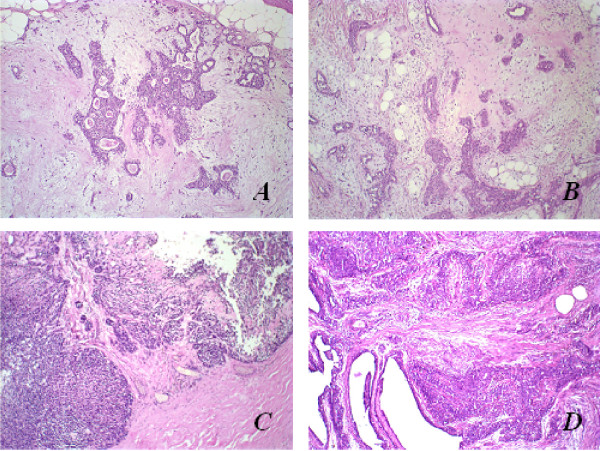
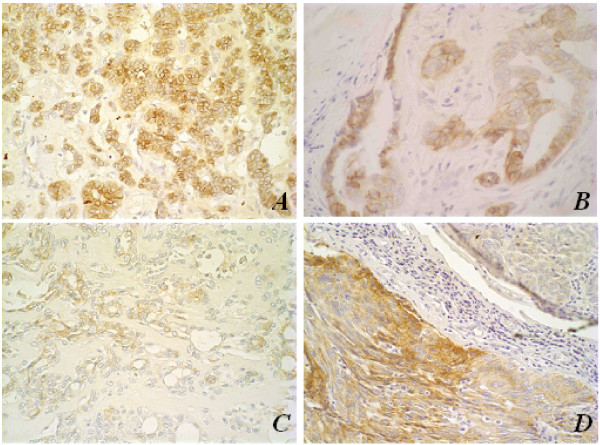
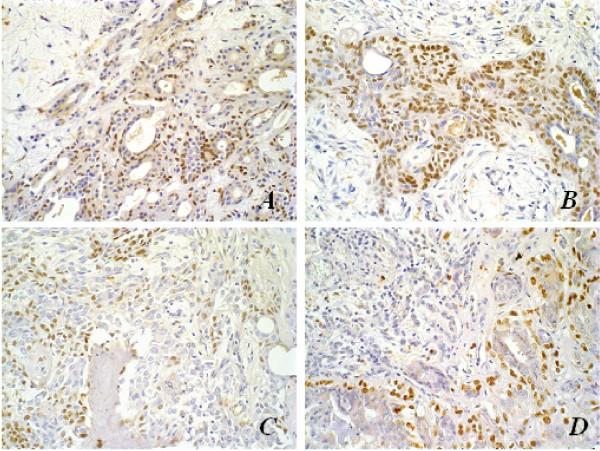
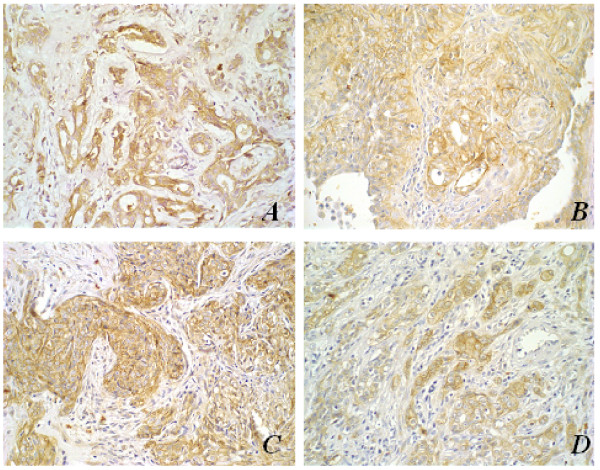
After standardization, similar age and site distributions were observed in human and canine tumours. Histological similarities were identified in the comparison of the benign lesions as well. Metaplastic carcinomas also resembled general aspects of carcinomas ex-pleomorphic adenomas in morphological evaluation. Additionally, immunohistochemical staining further presented similar antigenic expression between lesions.
There are many similar features between human salivary and canine mammary gland mixed tumours. This observation is of great relevance for those interested in the study and management of salivary gland tumours, since canine lesions may constitute useful comparative models for their investigations.
在比较病理学中,犬乳腺肿瘤因其与人类乳腺癌的相似性而备受关注。混合性肿瘤在人类乳腺中较为罕见,但在雌性犬的乳腺和人类唾液腺中最为常见。本研究的目的是比较人类唾液腺和犬乳腺混合性肿瘤的临床、形态学和免疫组化特征,以评估犬乳腺混合性肿瘤作为唾液腺肿瘤实验模型的价值。
对每种混合性肿瘤类型(人类多形性腺瘤、多形性腺瘤癌变、犬混合性肿瘤和化生癌)各选取10例进行评估。首先,比较不同物种良性和恶性变体的临床和形态学方面。然后,采用链霉亲和素-生物素-过氧化物酶免疫组化法检测细胞角蛋白、波形蛋白、p63蛋白、雌激素受体、β-连环蛋白和E-钙黏蛋白的表达。
标准化后,人类和犬类肿瘤的年龄和部位分布相似。在良性病变的比较中也发现了组织学相似性。在形态学评估中,化生癌也与多形性腺瘤癌变的一般特征相似。此外,免疫组化染色进一步显示病变之间存在相似的抗原表达。
人类唾液腺和犬乳腺混合性肿瘤之间存在许多相似特征。这一观察结果对于那些对唾液腺肿瘤的研究和管理感兴趣的人具有重要意义,因为犬类病变可能为他们的研究提供有用的比较模型。