Tan Maw Pin, Kenny Rose Anne
Falls and Syncope Service, Royal Victoria Infirmary, Newcastle upon Tyne, UK.
Clin Interv Aging. 2006;1(1):57-66. doi: 10.2147/ciia.2006.1.1.57.
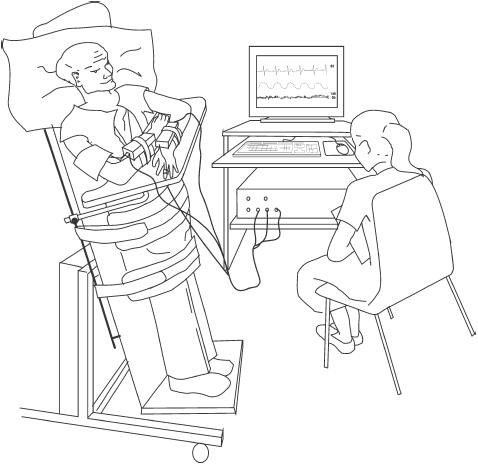
Falls in older people can be caused by underlying cardiovascular disorders, either because of balance instability in persons with background gait and balance disorders, or because of amnesia for loss of consciousness during unwitnessed syncope. Pertinent investigations include a detailed history, 12-lead electrocardiography, lying and standing blood pressure, carotid sinus massage (CSM), head-up tilt, cardiac electrophysiological tests, and ambulatory blood pressure and heart rate monitoring, which includes external and internal cardiac monitoring. The presence of structural heart disease predicts an underlying cardiac cause. Conversely, the absence of either indicates that neurally mediated etiology is likely. CSM and tilt-table testing should be considered in patients with unexplained and recurrent falls. Holter monitoring over 24 hours has a low diagnostic yield. Early use of an implantable loop recorder may be more cost-effective. A dedicated investigation unit increases the likelihood of achieving positive diagnoses and significantly reduces hospital stay and health expenditure.
老年人跌倒可能由潜在的心血管疾病引起,这要么是由于存在步态和平衡障碍的人平衡不稳定,要么是由于在未被目击的晕厥过程中意识丧失后失忆。相关检查包括详细病史、12导联心电图、卧位和立位血压、颈动脉窦按摩(CSM)、头高位倾斜试验、心脏电生理检查以及动态血压和心率监测,其中包括体外和体内心脏监测。结构性心脏病的存在预示着潜在的心脏病因。相反,两者均不存在则表明可能是神经介导的病因。对于不明原因的反复跌倒患者,应考虑进行CSM和倾斜试验。24小时动态心电图监测的诊断率较低。早期使用植入式循环记录仪可能更具成本效益。设立专门的检查科室可提高做出阳性诊断的可能性,并显著缩短住院时间和降低医疗费用。