Rosen David A, Hooton Thomas M, Stamm Walter E, Humphrey Peter A, Hultgren Scott J
Department of Molecular Microbiology and Microbial Pathogenesis, Washington University School of Medicine, St. Louis, Missouri, United States of America.
PLoS Med. 2007 Dec;4(12):e329. doi: 10.1371/journal.pmed.0040329.
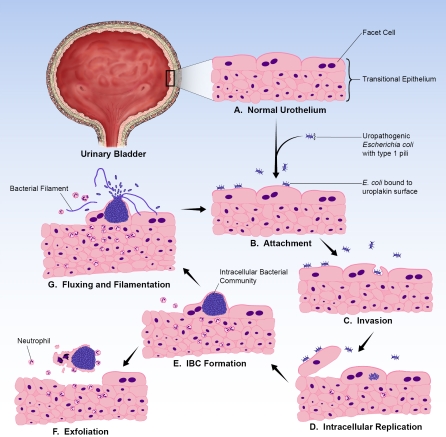
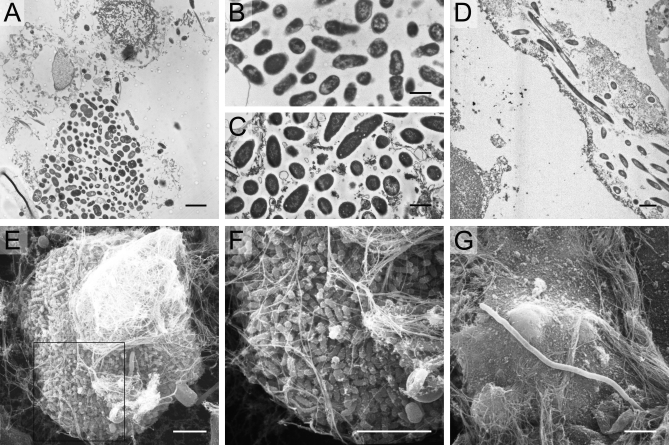
Urinary tract infections (UTIs) are one of the most common bacterial infections and are predominantly caused by uropathogenic Escherichia coli (UPEC). While UTIs are typically considered extracellular infections, it has been recently demonstrated that UPEC bind to, invade, and replicate within the murine bladder urothelium to form intracellular bacterial communities (IBCs). These IBCs dissociate and bacteria flux out of bladder facet cells, some with filamentous morphology, and ultimately establish quiescent intracellular reservoirs that can seed recurrent infection. This IBC pathogenic cycle has not yet been investigated in humans. In this study we sought to determine whether evidence of an IBC pathway could be found in urine specimens from women with acute UTI.
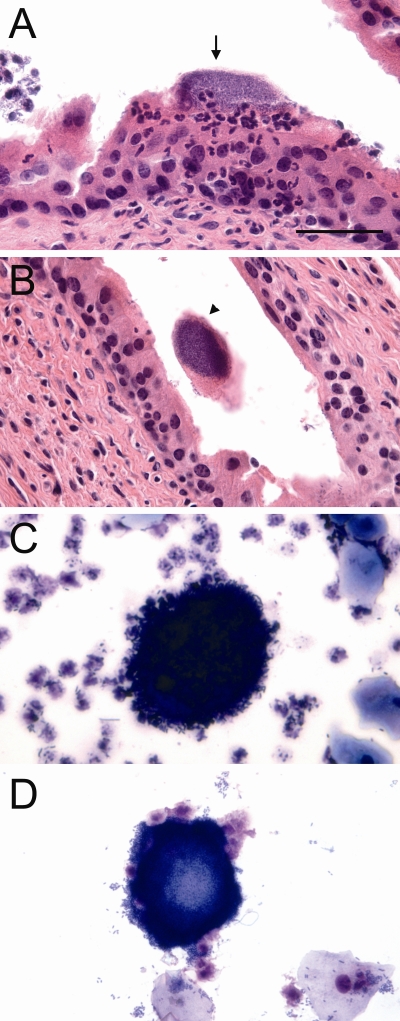
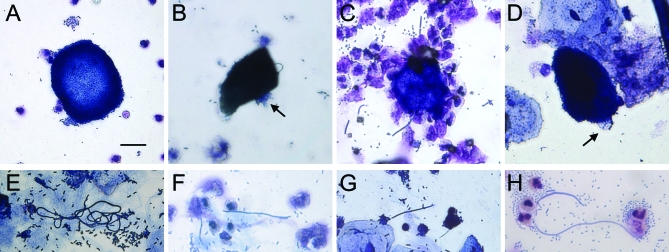
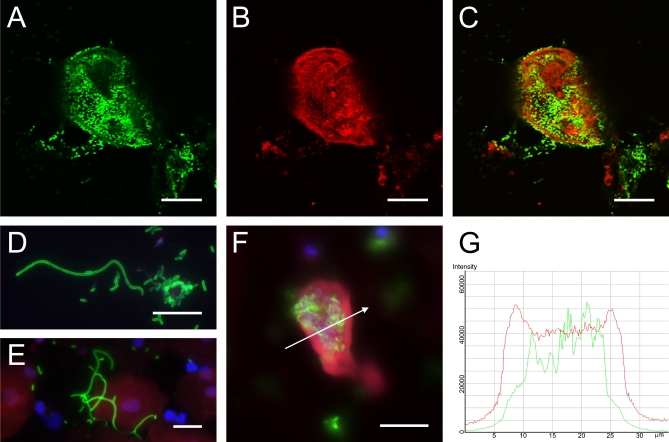
We collected midstream, clean-catch urine specimens from 80 young healthy women with acute uncomplicated cystitis and 20 asymptomatic women with a history of UTI. Investigators were blinded to culture results and clinical history. Samples were analyzed by light microscopy, immunofluorescence, and electron microscopy for evidence of exfoliated IBCs and filamentous bacteria. Evidence of IBCs was found in 14 of 80 (18%) urines from women with UTI. Filamentous bacteria were found in 33 of 80 (41%) urines from women with UTI. None of the 20 urines from the asymptomatic comparative group showed evidence of IBCs or filaments. Filamentous bacteria were present in all 14 of the urines with IBCs compared to 19 (29%) of 66 samples with no evidence of IBCs (p < 0.001). Of 65 urines from patients with E. coli infections, 14 (22%) had evidence of IBCs and 29 (45%) had filamentous bacteria, while none of the gram-positive infections had IBCs or filamentous bacteria.
The presence of exfoliated IBCs and filamentous bacteria in the urines of women with acute cystitis suggests that the IBC pathogenic pathway characterized in the murine model may occur in humans. The findings support the occurrence of an intracellular bacterial niche in some women with cystitis that may have important implications for UTI recurrence and treatment.
尿路感染(UTIs)是最常见的细菌感染之一,主要由尿路致病性大肠杆菌(UPEC)引起。虽然尿路感染通常被认为是细胞外感染,但最近已证明UPEC可与小鼠膀胱尿路上皮细胞结合、侵入并在其中复制,形成细胞内细菌群落(IBCs)。这些IBCs会解离,细菌从膀胱小面细胞中流出,有些呈丝状形态,最终形成可引发复发性感染的静止细胞内储存库。这种IBC致病循环尚未在人类中进行研究。在本研究中,我们试图确定在患有急性UTI的女性尿液标本中是否能找到IBC途径的证据。
我们收集了80名患有急性单纯性膀胱炎的年轻健康女性和20名有UTI病史的无症状女性的中段清洁尿标本。研究人员对培养结果和临床病史不知情。通过光学显微镜、免疫荧光和电子显微镜对样本进行分析,以寻找脱落的IBCs和丝状细菌的证据。在80名患有UTI的女性的14份尿液(18%)中发现了IBCs的证据。在80名患有UTI的女性的33份尿液(41%)中发现了丝状细菌。无症状对照组的20份尿液中均未显示IBCs或丝状细菌的证据。在所有14份有IBCs的尿液中均存在丝状细菌,相比之下,66份无IBCs证据的样本中有19份(29%)存在丝状细菌(p < 0.001)。在65份大肠杆菌感染患者的尿液中,14份(22%)有IBCs证据,29份(45%)有丝状细菌,而革兰氏阳性感染患者的尿液中均无IBCs或丝状细菌。
急性膀胱炎女性尿液中存在脱落的IBCs和丝状细菌,表明小鼠模型中所描述的IBC致病途径可能在人类中发生。这些发现支持了一些膀胱炎女性存在细胞内细菌生态位,这可能对UTI的复发和治疗具有重要意义。