Arvand Mardjan, Feil Edward J, Giladi Michael, Boulouis Henri-Jean, Viezens Juliane
Institut für Medizinische Mikrobiologie, Virologie und Hygiene, Universität Rostock, Rostock, Germany.
PLoS One. 2007 Dec 19;2(12):e1346. doi: 10.1371/journal.pone.0001346.
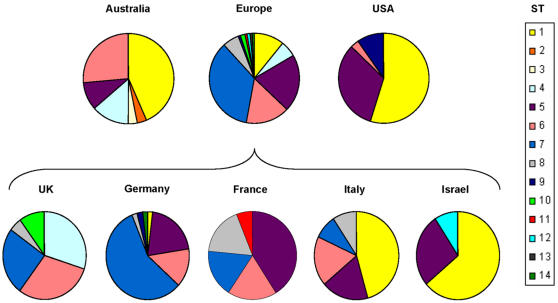
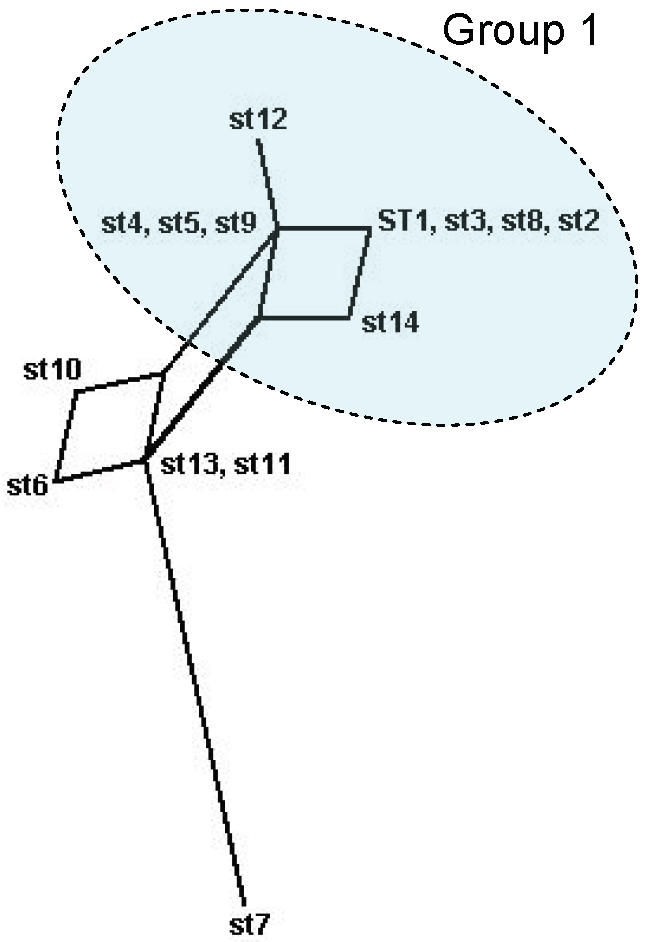
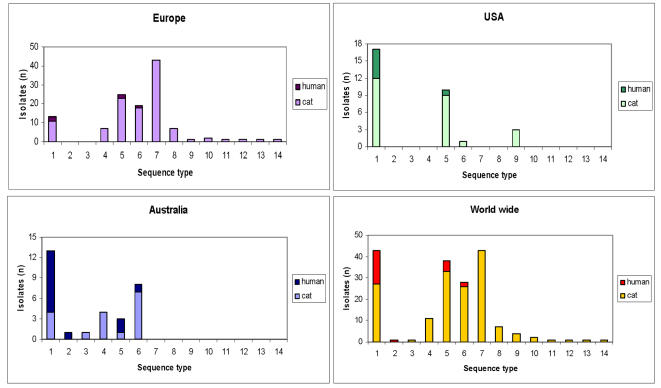
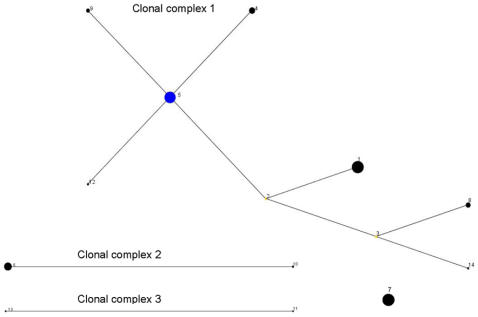
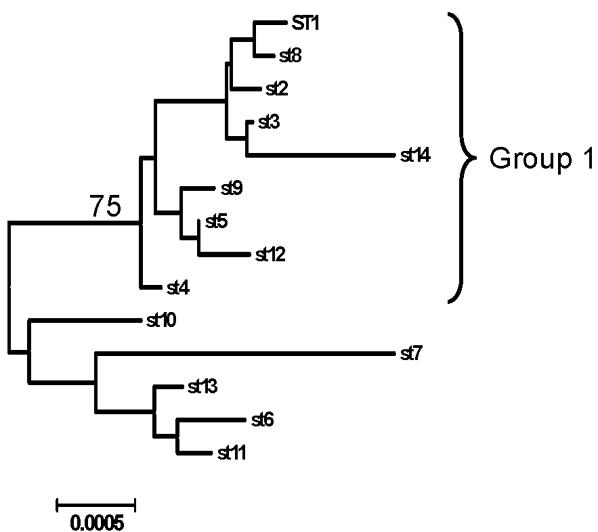
Bartonella henselae is a zoonotic pathogen and the causative agent of cat scratch disease and a variety of other disease manifestations in humans. Previous investigations have suggested that a limited subset of B. henselae isolates may be associated with human disease. In the present study, 182 human and feline B. henselae isolates from Europe, North America and Australia were analysed by multi-locus sequence typing (MLST) to detect any associations between sequence type (ST), host species and geographical distribution of the isolates. A total of 14 sequence types were detected, but over 66% (16/24) of the isolates recovered from human disease corresponded to a single genotype, ST1, and this type was detected in all three continents. In contrast, 27.2% (43/158) of the feline isolates corresponded to ST7, but this ST was not recovered from humans and was restricted to Europe. The difference in host association of STs 1 (human) and 7 (feline) was statistically significant (P< or =0.001). eBURST analysis assigned the 14 STs to three clonal lineages, which contained two or more STs, and a singleton comprising ST7. These groups were broadly consistent with a neighbour-joining tree, although splits decomposition analysis was indicative of a history of recombination. These data indicate that B. henselae lineages differ in their virulence properties for humans and contribute to a better understanding of the population structure of B. henselae.
汉赛巴尔通体是一种人畜共患病原体,是猫抓病及人类多种其他疾病表现的病原体。先前的研究表明,汉赛巴尔通体分离株中有限的一部分可能与人类疾病有关。在本研究中,通过多位点序列分型(MLST)对来自欧洲、北美和澳大利亚的182株人类和猫源汉赛巴尔通体分离株进行分析,以检测序列类型(ST)、宿主物种与分离株地理分布之间的任何关联。共检测到14种序列类型,但从人类疾病中分离出的分离株超过66%(16/24)对应于单一基因型ST1,且在所有三大洲均检测到该类型。相比之下,27.2%(43/158)的猫源分离株对应于ST7,但该ST未从人类中分离出,且仅限于欧洲。ST1(人类)和ST7(猫源)在宿主关联上的差异具有统计学意义(P≤0.001)。eBURST分析将14种ST分为三个包含两个或更多ST的克隆谱系和一个包含ST7的单例。这些组与邻接法树大致一致,尽管分裂分解分析表明存在重组历史。这些数据表明,汉赛巴尔通体谱系对人类的毒力特性不同,有助于更好地理解汉赛巴尔通体的种群结构。