Ramos-Nino Maria E, Blumen Steven R, Pass Harvey, Mossman Brooke T
Department of Pathology, University of Vermont College of Medicine, Burlington VT 05405, USA.
Mol Cancer. 2007 Dec 21;6:81. doi: 10.1186/1476-4598-6-81.
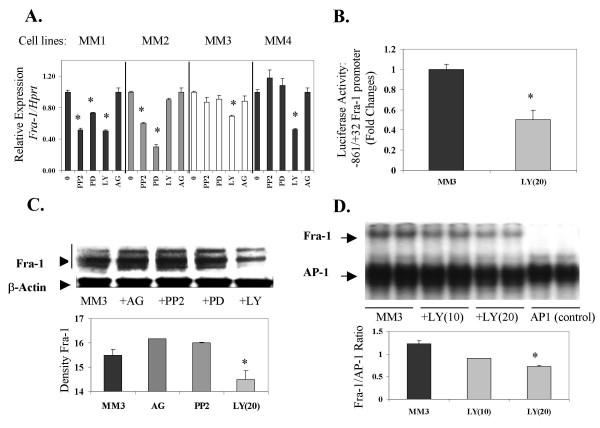
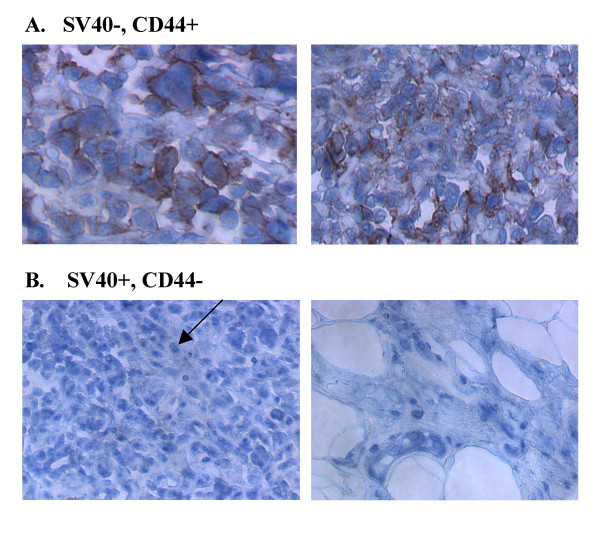
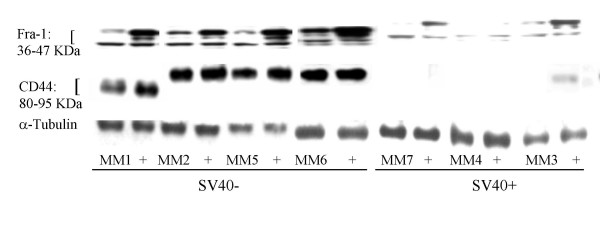
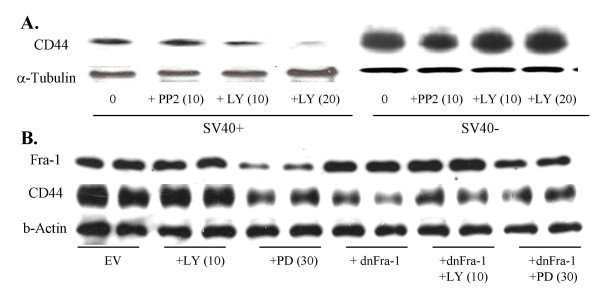
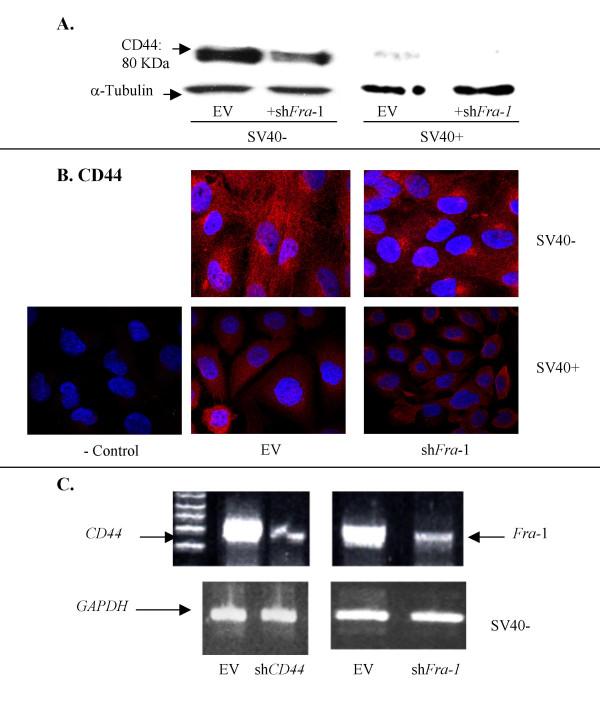
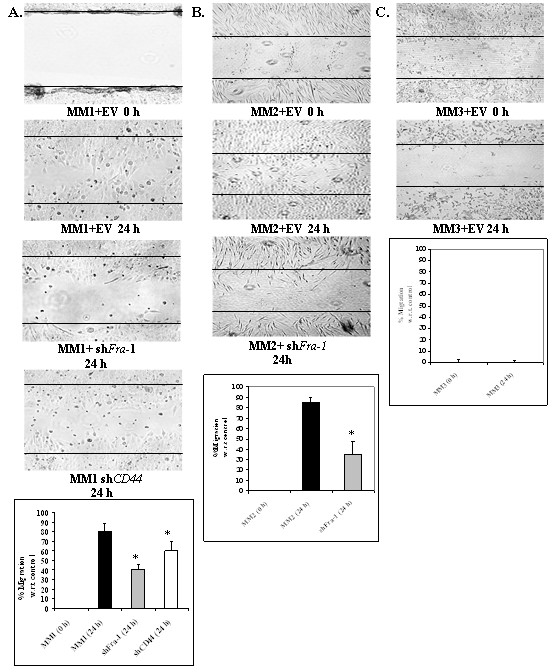
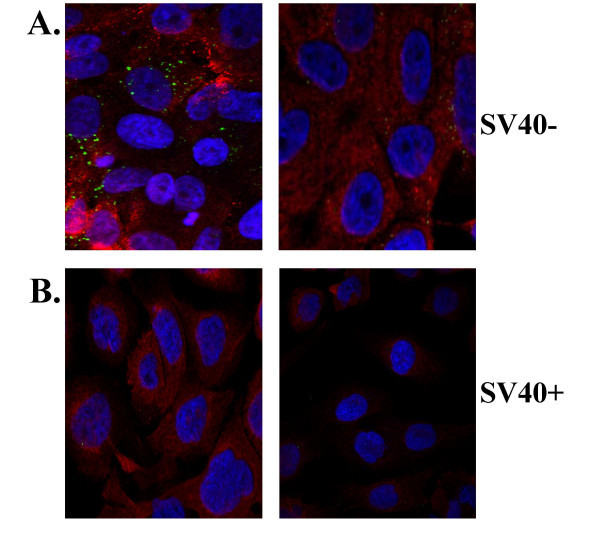
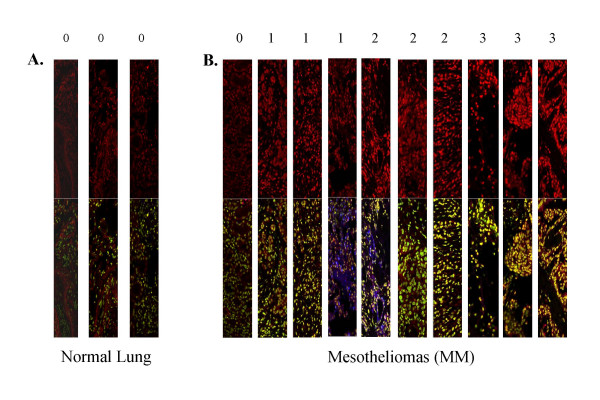
Silencing of Fra-1, a component of the dimeric transcription factor, activator protein-1 (AP-1), inhibits mRNA expression of c-met and cd44 in rat mesothelioma cells and is causally linked to maintenance of the transformed phenotype. However, the mechanisms of Fra-1 regulation and Fra-1 regulated gene expression in human malignant mesothelioma (MM) are unclear. We first show in a panel of human MM cells that Fra-1 mRNA expression in MM is complex and regulated by extracellular signal-regulated kinase (ERK1, ERK2), Src, and phosphatidyl-inositol-3-kinase (PI3K) pathways in a tumor-specific fashion. Cell lines with PI3K-dependent Fra-1 expression were SV40 positive and expressed the lowest basal Fra-1 levels. Levels of Fra-1 expression correlated with amounts of CD44 expression that were greater in simian virus 40 negative (SV40-) MM cells. Using dominant negative (dn), short hairpin (sh) and small interference (si) RNA constructs, we next demonstrate that expression of CD44, the principal hyaluronic receptor in MMs, correlates with Fra-expression in both simian virus 40 positive (SV40+) and SV40- MMs. Moreover, both Fra-1 and CD44 expression are linked to cell migration in SV40- MM cells. Lastly, in contrast to normal lung tissue, tissue microarrays revealed that Fra-1 was expressed in 33 of 34 human MMs, and that all CD44+ tumors were SV40-. These results suggest that Fra-1 is associated with cell migration in human MMs and that Fra-1 modulation of CD44 may govern migration of selected MMs.
Fra-1是二聚体转录因子激活蛋白-1(AP-1)的一个组成部分,沉默Fra-1可抑制大鼠间皮瘤细胞中c-met和cd44的mRNA表达,并与维持转化表型存在因果关系。然而,Fra-1在人恶性间皮瘤(MM)中的调控机制以及Fra-1调控的基因表达尚不清楚。我们首先在一组人MM细胞中发现,MM中Fra-1 mRNA的表达较为复杂,且以肿瘤特异性方式受细胞外信号调节激酶(ERK1、ERK2)、Src和磷脂酰肌醇-3激酶(PI3K)信号通路调控。具有PI3K依赖性Fra-1表达的细胞系为SV40阳性,且基础Fra-1水平最低。Fra-1的表达水平与CD44的表达量相关,在猿猴病毒40阴性(SV40-)的MM细胞中,CD44的表达量更高。接下来,我们使用显性负性(dn)、短发夹(sh)和小干扰(si)RNA构建体证明,MM中主要的透明质酸受体CD44的表达与猿猴病毒40阳性(SV40+)和SV40- MM中的Fra表达相关。此外,Fra-1和CD44的表达均与SV40- MM细胞的迁移有关。最后,与正常肺组织不同,组织芯片显示,在34例人MM中,有33例表达Fra-1,且所有CD44+肿瘤均为SV40-。这些结果表明,Fra-1与人MM中的细胞迁移相关,Fra-1对CD44的调节可能控制特定MM的迁移。