Aulehla Alexander, Wiegraebe Winfried, Baubet Valerie, Wahl Matthias B, Deng Chuxia, Taketo Makoto, Lewandoski Mark, Pourquié Olivier
Stowers Institute for Medical Research, Kansas City, MO 64110, USA.
Nat Cell Biol. 2008 Feb;10(2):186-93. doi: 10.1038/ncb1679. Epub 2007 Dec 23.
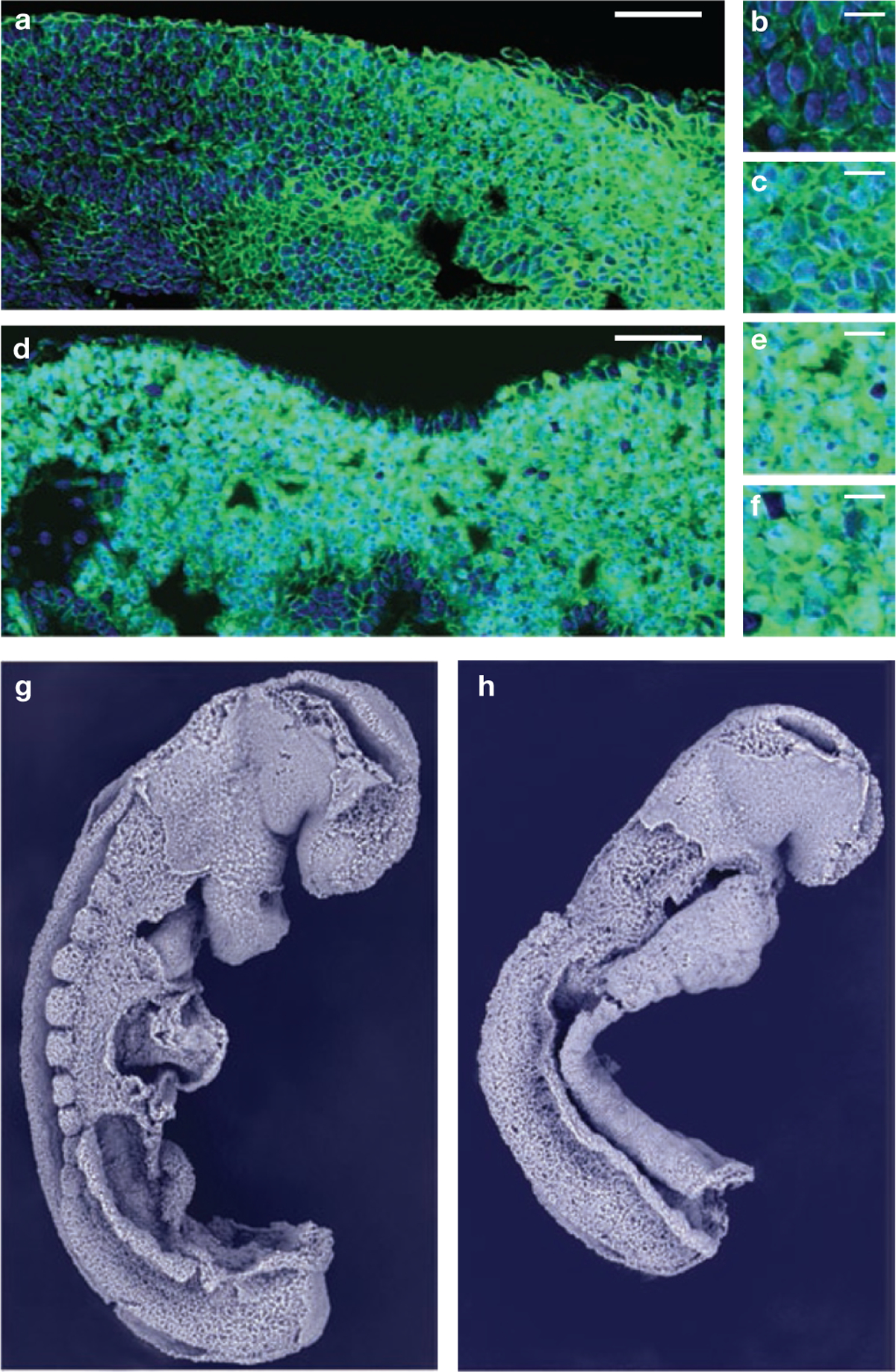
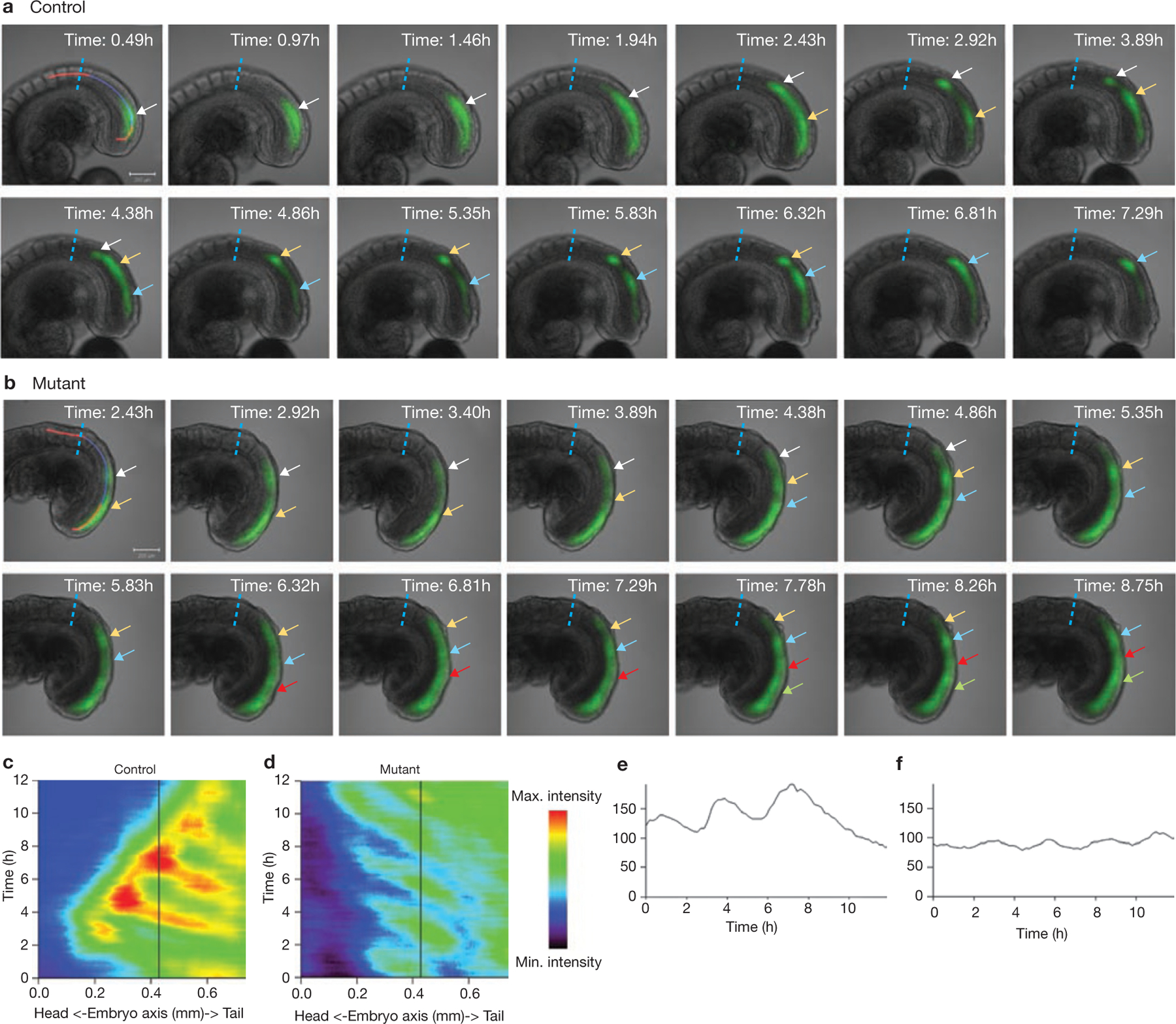
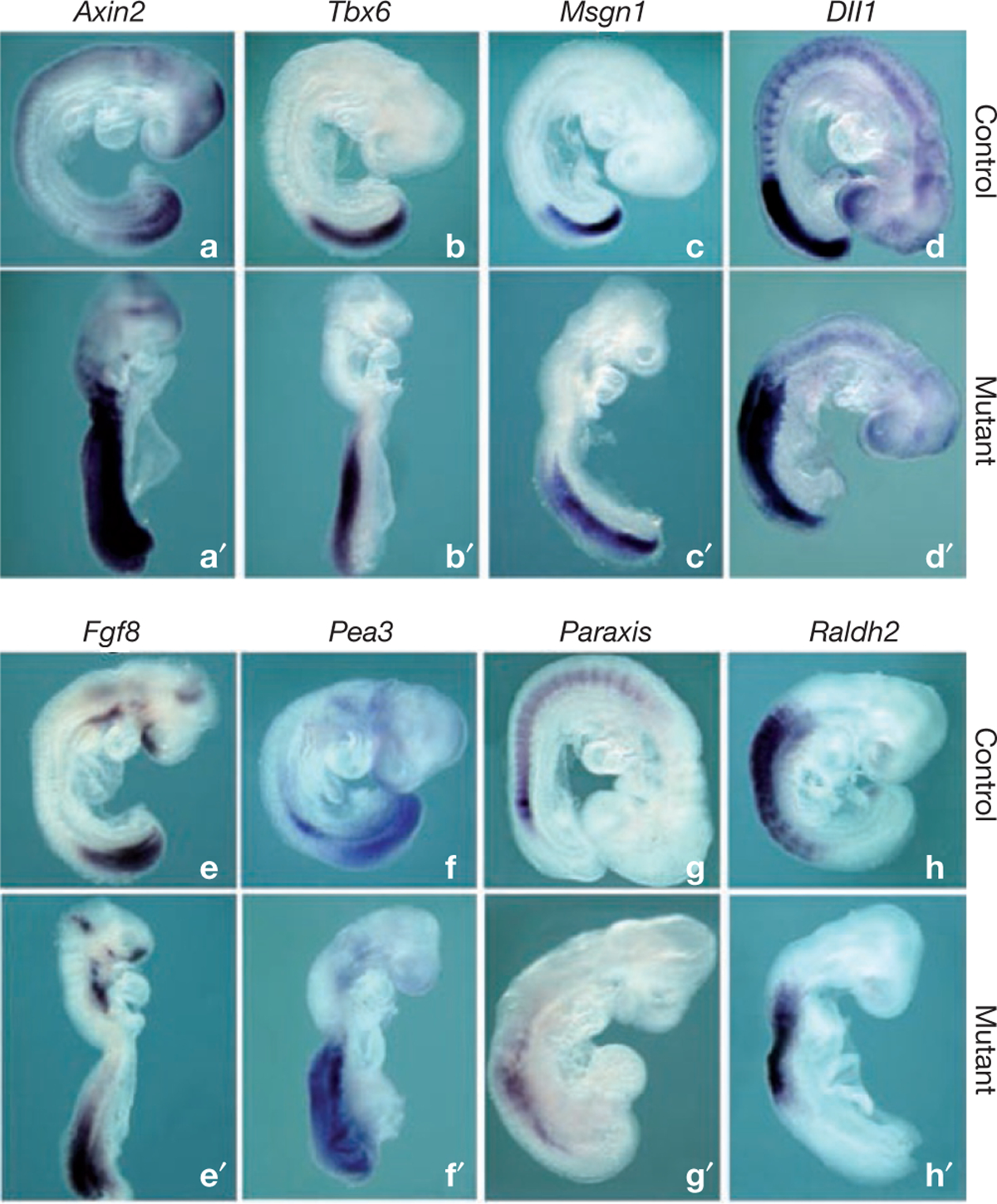
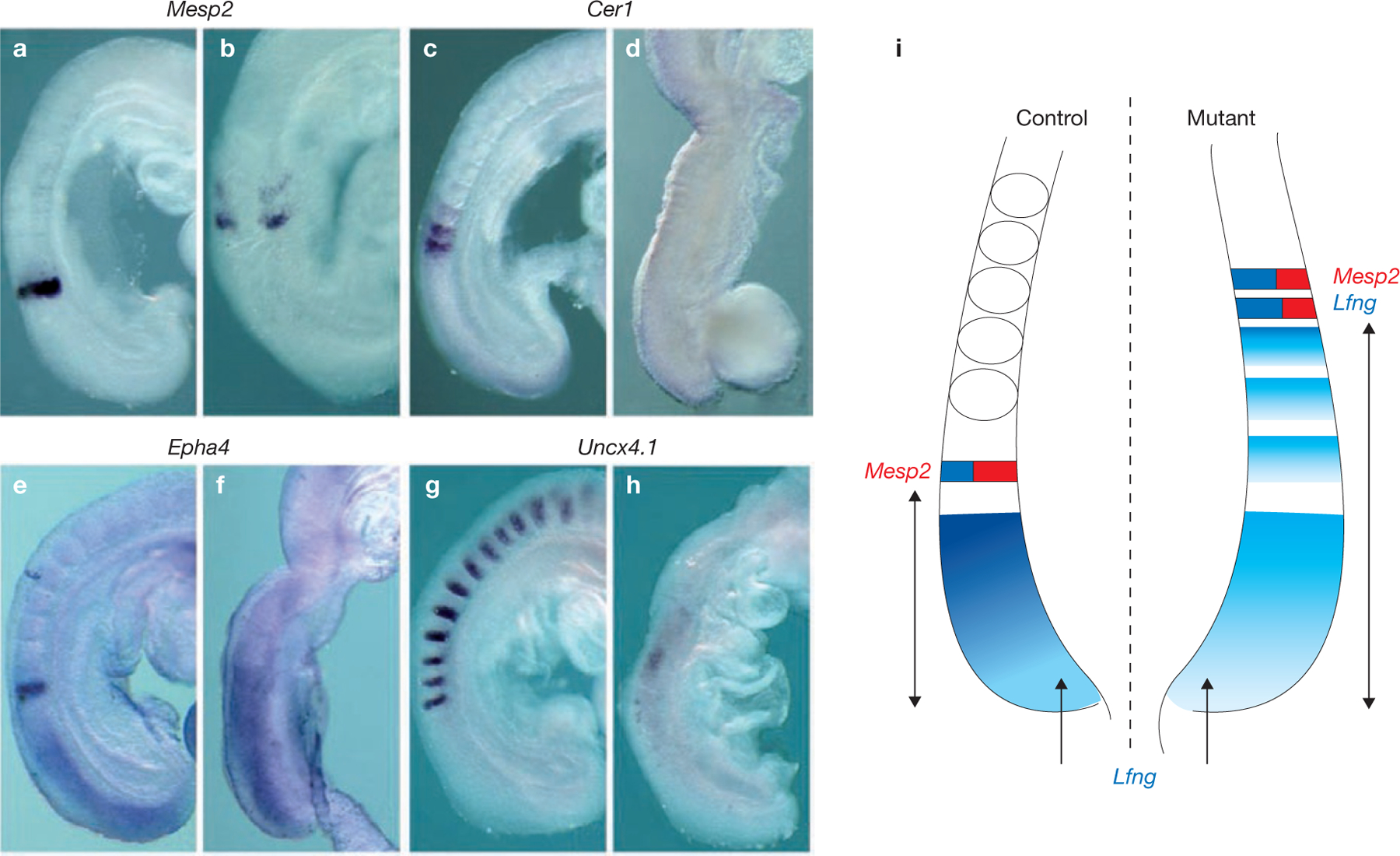
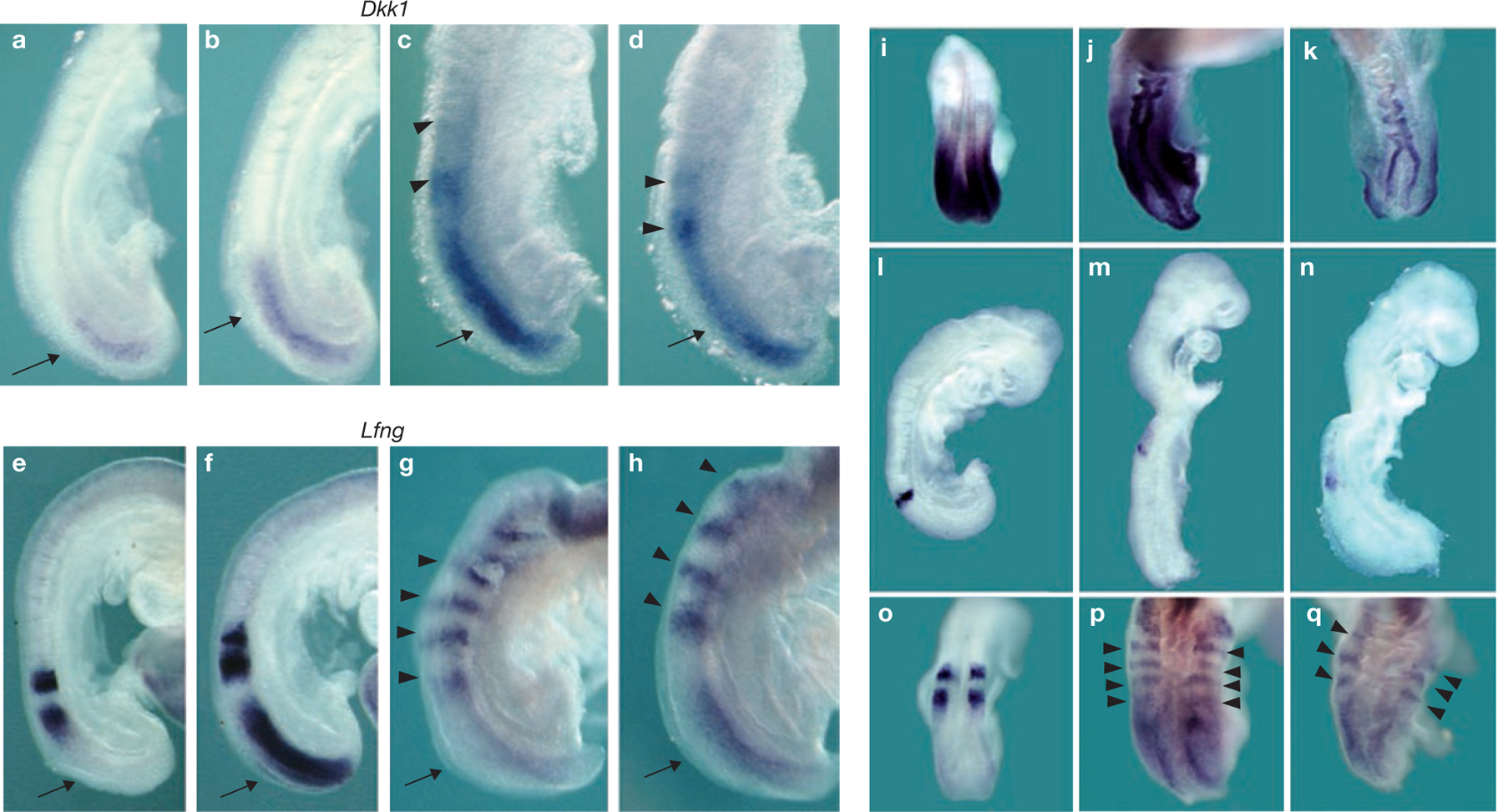
Rhythmic production of vertebral precursors, the somites, causes bilateral columns of embryonic segments to form. This process involves a molecular oscillator--the segmentation clock--whose signal is translated into a spatial, periodic pattern by a complex signalling gradient system within the presomitic mesoderm (PSM). In mouse embryos, Wnt signalling has been implicated in both the clock and gradient mechanisms, but how the Wnt pathway can perform these two functions simultaneously remains unclear. Here, we use a yellow fluorescent protein (YFP)-based, real-time imaging system in mouse embryos to demonstrate that clock oscillations are independent of beta-catenin protein levels. In contrast, we show that the Wnt-signalling gradient is established through a nuclear beta-catenin protein gradient in the posterior PSM. This gradient of nuclear beta-catenin defines the size of the oscillatory field and controls key aspects of PSM maturation and segment formation, emphasizing the central role of Wnt signalling in this process.
脊椎前体(体节)的节律性产生导致胚胎节段的双侧柱形成。这个过程涉及一个分子振荡器——分割时钟,其信号通过前体中胚层(PSM)内复杂的信号梯度系统转化为空间周期性模式。在小鼠胚胎中,Wnt信号通路与时钟和梯度机制都有关联,但Wnt通路如何同时执行这两种功能仍不清楚。在这里,我们使用基于黄色荧光蛋白(YFP)的实时成像系统在小鼠胚胎中证明,时钟振荡独立于β-连环蛋白的蛋白水平。相反,我们表明Wnt信号梯度是通过后PSM中的核β-连环蛋白蛋白梯度建立的。这种核β-连环蛋白梯度定义了振荡场的大小,并控制PSM成熟和节段形成的关键方面,强调了Wnt信号通路在这个过程中的核心作用。