Lam Marnix G E H, Dahmane Amel, Stevens Wil H M, van Rijk Peter P, de Klerk John M H, Zonnenberg Bernard A
Department of Nuclear Medicine, University Medical Center Utrecht, Utrecht, The Netherlands.
Eur J Nucl Med Mol Imaging. 2008 Apr;35(4):756-65. doi: 10.1007/s00259-007-0659-z. Epub 2007 Dec 22.
(153)Sm-ethylenediaminetetramethylenephosphonic acid (EDTMP; Quadramet) is indicated for the treatment of painful bone metastases, whereas zoledronic acid (Zometa) is indicated for the prevention of skeletal complications. Because of the different therapeutic effects, combining the treatments may be beneficial. Both, however, accumulate in areas with increased osteoblastic activity. Possible drug interactions were investigated.
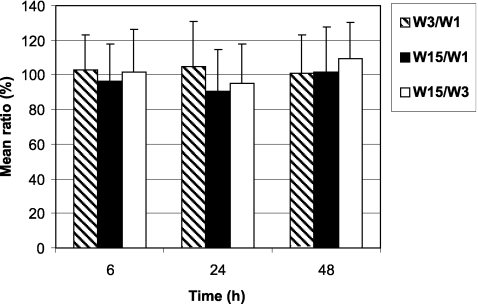
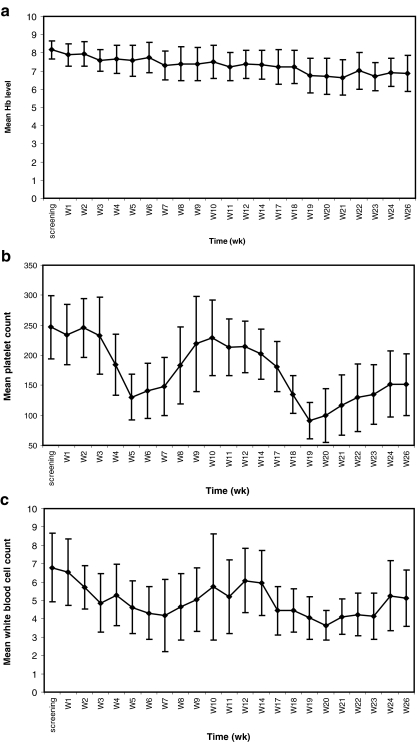
Patients with hormone-refractory prostate cancer were treated with 18.5 MBq/kg (153)Sm-EDTMP in weeks 1 and 3 and with 37 MBq/kg in week 15. Treatment with 4 mg zoledronic acid began in week 3 and continued every 4 weeks through week 23. In weeks 3 and 15, zoledronic acid was administered 2 days before (153)Sm-EDTMP treatment. Urine was collected 48 h after injection of (153)Sm-EDTMP, and whole-body images were obtained 6, 24 and 48 h post-injection. The effect of zoledronic acid on total bone uptake of (153)Sm-EDTMP was measured indirectly by the cumulative activity excreted in the urine in weeks 1, 3 and 15. Biodistribution, safety, tolerability and effect on prostate-specific antigen level were also studied.
The urinary excretion in week 3 divided by the urinary excretion in week 1 (baseline) times 100% was mean 98.4 +/- 11.6% (median 96.2%). From week 1 to 15, after four zoledronic acid treatments, the mean ratio was 101.9 +/- 10.7% (median 101.8%). Bioequivalence could be concluded by using a two-sample t test for both per-protocol (n = 13) and full-analysis sets (n = 18). Toxicity was comparable to of monotherapy with (153)Sm-EDTMP.
Zoledronic acid treatment does not influence (153)Sm-EDTMP skeletal uptake. Combined treatment is feasible and safe.
钐-153-亚乙基二胺四亚甲基膦酸(EDTMP;Quadramet)适用于治疗疼痛性骨转移,而唑来膦酸(Zometa)适用于预防骨骼并发症。鉴于治疗效果不同,联合治疗可能有益。然而,两者都会在成骨细胞活性增加的区域蓄积。对可能的药物相互作用进行了研究。
激素难治性前列腺癌患者在第1周和第3周接受18.5MBq/kg的钐-153-EDTMP治疗,第15周接受37MBq/kg治疗。4mg唑来膦酸的治疗从第3周开始,每4周持续一次,直至第23周。在第3周和第15周,唑来膦酸在钐-153-EDTMP治疗前2天给药。在注射钐-153-EDTMP后48小时收集尿液,并在注射后6、24和48小时获得全身图像。通过第1、3和15周尿液中排泄的累积活度间接测量唑来膦酸对钐-153-EDTMP骨摄取总量的影响。还研究了生物分布、安全性、耐受性以及对前列腺特异性抗原水平的影响。
第3周的尿排泄量除以第1周(基线)的尿排泄量再乘以100%,平均值为98.4±11.6%(中位数96.2%)。从第1周到第15周,经过4次唑来膦酸治疗后,平均比值为101.9±10.7%(中位数101.8%)。通过对符合方案集(n = 13)和全分析集(n = 18)使用双样本t检验,可以得出生物等效性结论。毒性与钐-153-EDTMP单药治疗相当。
唑来膦酸治疗不影响钐-153-EDTMP的骨骼摄取。联合治疗可行且安全。