Miralvès Julie, Magdeleine Eddy, Kaddoum Lara, Brun Hélène, Peries Sophie, Joly Etienne
Institut de Pharmacologie et Biologie Structurale, Centre National de Recherche Scientifique (CNRS), Toulouse, France.
PLoS One. 2007 Dec 26;2(12):e1354. doi: 10.1371/journal.pone.0001354.
The expression of MHC class I genes is repressed in mature neurons. The molecular basis of this regulation is poorly understood, but the genes are particularly rich in CpG islands. MeCP2 is a transcriptional repressor that binds to methylated CpG dinucleotides; mutations in this protein also cause the neurodevelopmental disease called Rett syndrome. Because MHC class I molecules play a role in neuronal connectivity, we hypothesised that MeCP2 might repress MHC class I expression in the CNS and that this might play a role in the pathology of Rett syndrome.
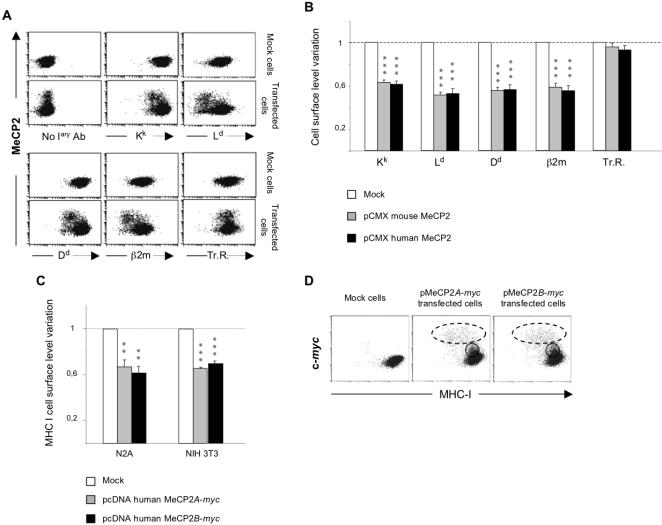
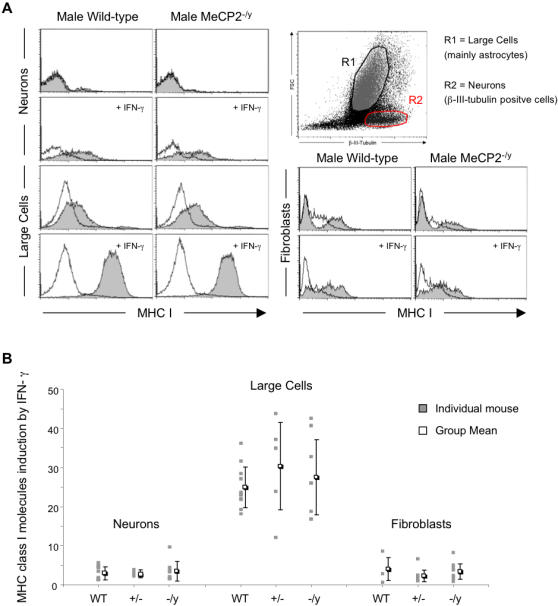
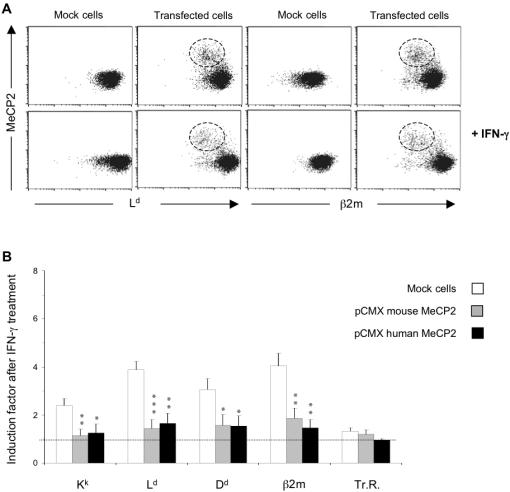
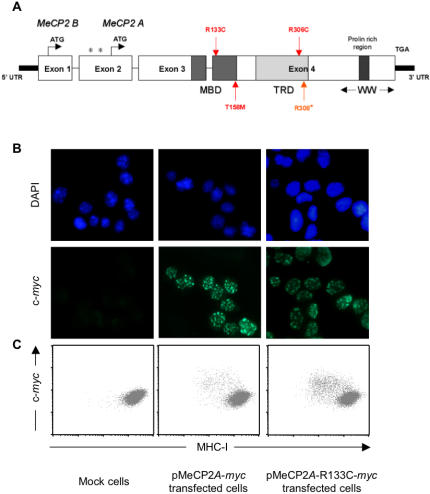
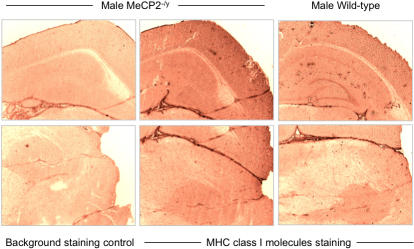
We show here that transiently transfected cells expressing high levels of MeCP2 specifically downregulate cell-surface expression of MHC class I molecules in the neuronal cell line N2A and they prevent the induction of MHC class I expression in response to interferon in these cells, supporting our first hypothesis. Surprisingly, however, overexpression of the mutated forms of MeCP2 that cause Rett syndrome had a similar effect on MHC class I expression as the wild-type protein. Immunohistological analyses of brain slices from MECP2 knockout mice (the MeCP2(tm1.1Bird) strain) demonstrated a small but reproducible increase in MHC class I when compared to their wild type littermates, but we found no difference in MHC class I expression in primary cultures of mixed glial cells (mainly neurons and astrocytes) from the knockout and wild-type mice.
These data suggest that high levels of MeCP2, such as those found in mature neurons, may contribute to the repression of MHC expression, but we find no evidence that MeCP2 regulation of MHC class I is important for the pathogenesis of Rett syndrome.
主要组织相容性复合体(MHC)I类基因在成熟神经元中表达受到抑制。这种调控的分子基础尚不清楚,但这些基因富含CpG岛。甲基化CpG结合蛋白2(MeCP2)是一种转录抑制因子,可与甲基化的CpG二核苷酸结合;该蛋白的突变也会导致名为雷特综合征的神经发育疾病。由于MHC I类分子在神经元连接中起作用,我们推测MeCP2可能会抑制中枢神经系统中MHC I类的表达,并且这可能在雷特综合征的病理过程中发挥作用。
我们在此表明,在神经元细胞系N2A中,短暂转染并表达高水平MeCP2的细胞会特异性下调MHC I类分子的细胞表面表达,并且它们会阻止这些细胞中因干扰素诱导的MHC I类表达,这支持了我们的第一个假设。然而,令人惊讶的是,导致雷特综合征的MeCP2突变形式的过表达对MHC I类表达的影响与野生型蛋白相似。对MeCP2基因敲除小鼠(MeCP2(tm1.1Bird)品系)脑切片的免疫组织学分析表明,与它们的野生型同窝小鼠相比,MHC I类有小幅但可重复的增加,但我们发现在基因敲除小鼠和野生型小鼠的混合胶质细胞(主要是神经元和星形胶质细胞)原代培养物中,MHC I类表达没有差异。
这些数据表明,成熟神经元中发现的高水平MeCP2可能有助于抑制MHC表达,但我们没有发现证据表明MeCP2对MHC I类的调控对雷特综合征的发病机制很重要。